
The following guide looks at reliable three phase heaters and related components commonly used in industrial, commercial, and heavy-duty HVAC or manufacturing applications. Below is a quick summary of the five selected products covered in detail.
| Product | Brand | Type |
|---|---|---|
| Dr Infrared Heater DR-P350, 5KW_3-Phase | DR. INFRARED HEATER | 3-Phase Electric Heater |
| U.S. Solid 25 KW High Frequency Induction Heater Furnace | U.S. Solid | Induction Heater (3-Phase) |
| Global Industrial Portable Electric Salamander Heater, 30 KW 3 Phase | Global Industrial | 3-Phase Portable Salamander |
| LCLCTC SSR Heat Sink With 120v Fan For 3 Phase SSR | LCLCTC | Heat Sink / Cooling Accessory |
| 3 Phase Heat Sink Aluminum SSR Heatsink (Walfront) | Walfront | Heat Sink / SSR Mounting |
Content Navigation
- Dr Infrared Heater DR-P350 5KW 3-Phase
- U.S. Solid 25KW 3-Phase Induction Heater Furnace
- Global Industrial 30KW Portable 3-Phase Salamander
- LCLCTC SSR Heat Sink With 120V Fan
- Walfront 3 Phase Aluminum SSR Heatsink
- Buying Guide For Selecting A 3 Phase Heater
- Electrical Compatibility And Supply
- Heating Method: Resistive Vs Induction Vs Catalytic
- Thermal Management And Control
- Duty Cycle And Continuous Operation
- Installation And Portability
- Safety And Compliance
- Performance And Efficiency Comparison Perspectives
- Compatibility With Control Systems
- Maintenance And Serviceability
Dr Infrared Heater DR-P350 5KW 3-Phase

This DR. INFRARED HEATER model is specified for single or three phase flexibility and supports voltages from 208 to 480 V. The unit is designed for uniform air distribution to fill larger rooms or workspaces. The fan motor is overheat protected, permanently lubricated, and totally enclosed for durability.
Key applications include workshops, large offices, or retrofit heating where multi-voltage compatibility is required. The 3-phase capability allows balanced power draw and compatibility with industrial power supplies. The design emphasis is on steady air distribution rather than radiant-only output.
U.S. Solid 25KW 3-Phase Induction Heater Furnace
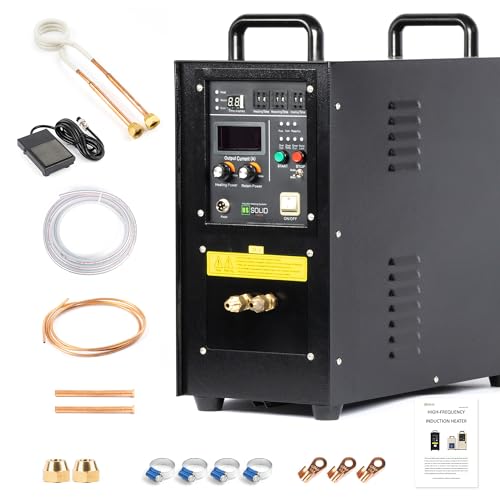
The U.S. Solid induction system is a high-power, three phase 480 V heater designed for induction heating tasks. It uses MOSFET and IGBT inverter technology for improved reliability, efficiency, and continuous operation at full load. The unit is built for heavy-duty industrial cycles and can operate 24/7 under rated conditions.
Call 888-896-7031 for Free Local HVAC Quotes – Compare and Save Today!
This type of system is suited to metal heating, brazing, shrink-fitting, or parts preheating where localized, high-frequency induction is required. The listing highlights higher efficiency and lower electrical load versus tube-based designs, and a focus on durability for production environments.
Global Industrial 30KW Portable 3-Phase Salamander
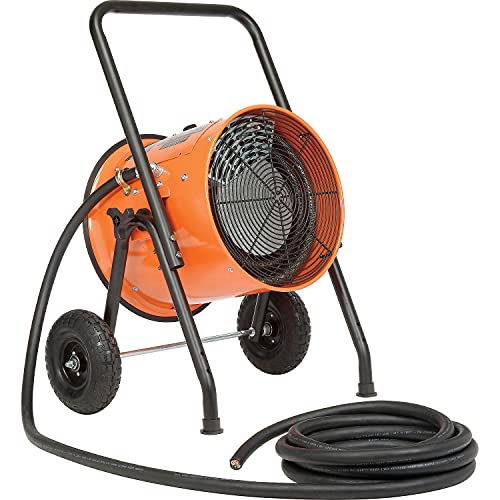
The Global Industrial unit is a 480 V, 30 KW portable salamander heater built for construction sites, workshops, and large temporary spaces. It features 10″ wheels for mobility and requires a 50 A circuit breaker for operation. The design supports direct wiring for rugged field usage.
This product emphasizes portability and high output for temporary heating tasks. The electrical requirements and wiring method mean installation planning and appropriate protective devices are essential. The form factor prioritizes robust handling in commercial environments.
LCLCTC SSR Heat Sink With 120V Fan

This accessory is a heat sink with a 120 V fan intended for use with three-phase solid state relays (SSRs) ranging roughly from 10 A to 100 A depending on SSR and duty cycle. The listing advises matching the radiator selection to the specific application conditions.
Call 888-896-7031 for Free Local HVAC Quotes – Compare and Save Today!
Key considerations include adequate thermal contact, fan airflow, and mounting compatibility for DIN or panel installation. For high-current three-phase heater control via SSRs, an appropriate heat sink and forced air cooling reduce thermal stress and improve reliability.
Walfront 3 Phase Aluminum SSR Heatsink
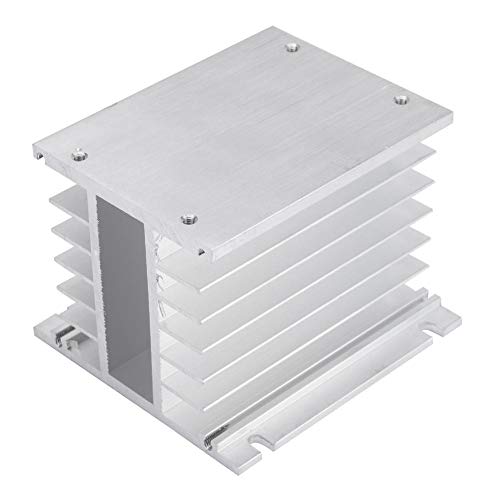
The Walfront heatsink is a purpose-made aluminum heat sink for mounting three-phase SSRs, control modules, and other power electronics. The product profile highlights durable construction and broad application in remote control, communication, and automatic control systems.
It is intended for cases where passive cooling and surface area are sufficient for heat dissipation. In mid-duty heater control systems, a well-designed heatsink can extend SSR life and ensure thermal stability without active fan cooling in lower ambient temperature conditions.
Buying Guide For Selecting A 3 Phase Heater
This buying guide walks through critical factors to match a three-phase heating solution to your application. Consider electrical compatibility, heating method, duty cycle, thermal management, safety, and installation requirements.
Electrical Compatibility And Supply
- Voltage And Phase: Verify the heater is rated for your facility voltage (e.g., 208 V, 240 V, 480 V) and three-phase wiring. Mismatched voltage requires transformers or alternative equipment.
- Current And Circuit Protection: Confirm circuit breaker and conductor sizing for the heater’s full-load amperage. Industrial heaters often require dedicated breakers and appropriate overload protection.
- Single-Phase To Three-Phase Conversion: If only single-phase power is available, consider a phase converter or a heater designed for single-phase operation. Phase converters add cost and complexity.
Heating Method: Resistive Vs Induction Vs Catalytic
- Resistive (Electric) Heaters: Provide broad-area heating via convection or radiant elements. Common for space heating and portable salamanders.
- Induction Heaters: Targeted, high-efficiency heating for metal parts and manufacturing processes. Require matched tooling and workpiece conductivity.
- Catalytic Heaters: Typically for low-output, specialized spaces; these are usually not three-phase and are more suited to small, flame-free heating needs.
Thermal Management And Control
- SSR And Heatsinks: For PWM/solid-state control, select SSRs sized for continuous current and pair with adequate heatsinks or forced-air cooling to prevent thermal runaway.
- Enclosures And Ventilation: Ensure heater enclosures are rated for the environment (dust, moisture) and provide ventilation or filtration to protect components.
- Temperature Control: Use thermostats, PID controllers, or SSR-based control for precise temperature regulation and to minimize energy waste.
Duty Cycle And Continuous Operation
- Continuous Vs Intermittent Use: Determine whether the heater must operate continuously. Induction and industrial-grade units often specify full-load continuous ratings.
- Cooling Requirements: Continuous high-power operation raises cooling demands for power electronics and elements. Factor in forced-air or liquid cooling where required.
Installation And Portability
- Mounting And Mobility: Portable salamanders emphasize wheels and quick deployment. Stationary systems require permanent wiring and mounting considerations.
- Direct Wire Vs Plug: Many industrial three-phase heaters are direct-wired. Plan for lockout/tagout provisions and secure wiring by qualified electricians.
Safety And Compliance
- Overheat Protection: Look for built-in motor or element overheat protection and tip-over or flame detection where applicable.
- Regulatory Listings: Check for UL, CE, or other relevant safety listings depending on application and location.
- Ventilation And Combustion Byproducts: For combustion or catalytic units, confirm ventilation needs and CO detection for enclosed spaces.
Performance And Efficiency Comparison Perspectives
- Output Density: Compare kW or BTU output relative to the volume or surface area you need to heat. Induction units offer high localized power; salamanders provide broad-area output.
- Energy Efficiency: Assess power draw versus useful heating. Induction heating is often more energy-efficient for metal processing, while resistive heaters may waste more energy warming air.
- Operational Costs: Account for maintenance, cooling, and control system costs, not just the heater’s rated power.
Compatibility With Control Systems
- Integration With PLCs And Automation: For production environments, ensure the heater and SSRs can be integrated with PLCs or timers for process control.
- Signal Interfaces: Verify control signal compatibility (e.g., 4-20mA, 0-10V, or PLC digital outputs) for precise control of power stages.
Maintenance And Serviceability
- Replaceable Components: Favor systems with accessible elements, replaceable fans, and modular power electronics to reduce downtime.
- Spare Parts And Support: Check manufacturer support for spare parts like SSRs, heatsinks, fans, and control boards.
Use the above criteria to compare the products considered here: the DR Infrared unit for general large-space electric heating, the U.S. Solid induction furnace for metal processing, the Global Industrial salamander for high-output temporary heating, and heatsinks from LCLCTC and Walfront for SSR thermal management. Match the product type to your application needs for safe and efficient operation.
Tips for Getting the Best HVAC Prices
- Prioritize Quality Over Cost
The most critical factor in any HVAC project is the quality of the installation. Don’t compromise on contractor expertise just to save money. - Check for Rebates
Always research current rebates and incentives — they can significantly reduce your overall cost. - Compare Multiple Quotes
Request at least three estimates before making your choice. You can click here to get three free quotes from local professionals. These quotes include available rebates and tax credits and automatically exclude unqualified contractors. - Negotiate Smartly
Once you've chosen a contractor, use the proven strategies from our guide — How Homeowners Can Negotiate with HVAC Dealers — to get the best possible final price.