
Finding the right 3000 watt baseboard heater setup means considering actual 3000W units, multiple-unit configurations, and compatible controls. Below is a quick summary of the five selected Amazon products that help you achieve or control 3000 watts of baseboard heating capacity.
| Product | Type | Notable Feature |
|---|---|---|
| DR. INFRARED HEATER DR218-3000W | Single 3000W Electric Heater | High/Low settings, IPX4 splash protection |
| Honeywell Home RLV3150A1004 Thermostat | Line-Voltage Thermostat | Rated For Up To 3000W @ 240V, Digital Controls |
| EZ-HEAT 1500W Baseboard Heater | 1500W Convection Baseboard | Adjustable Thermostat, Safety Features |
| Cadet F Series 48″ 1000W Baseboard | 1000W Baseboard Element | Fast Heating, Durable Steel Casing |
| KING 4K1210BW 1000W Baseboard | 1000W Baseboard | Aluminum Ribbon Fin, Safety Cutout |
Content Navigation
- DR. INFRARED HEATER DR218-3000W Greenhouse Garage Workshop Infrared Heater, 3000-watt
- Honeywell Home RLV3150A1004 Digital Electric Heat Thermostat For Baseboards
- EZ-HEAT 1,500 Watt Baseboard Space Heater With Adjustable Thermostat CZ600
- Cadet F Series 48″ Electric Baseboard Heater, 1000W, 120 Volt
- KING 4K1210BW K Series Baseboard Heater, 1000W, 120V
- Buying Guide: How To Choose A 3000 Watt Baseboard Heater Setup
DR. INFRARED HEATER DR218-3000W Greenhouse Garage Workshop Infrared Heater, 3000-watt

The DR. INFRARED DR218 is a dedicated 3000 watt infrared heating unit designed for large, open spaces such as garages, workshops, and greenhouses. The product listing highlights a 3000W output with high and low settings, which provides operational flexibility to match heat load and reduce energy use when full power is unnecessary.
Features include an IPX4-rated structure for protection against water splashing, which is relevant for greenhouse or partly exposed environments. As an infrared heater, it targets objects and occupants directly rather than relying solely on room air circulation, which can be more efficient in drafty or high-ceiling spaces.
Considerations: installation for 3000W units typically requires appropriate electrical service and wiring rated for the unit. The listing emphasizes suitability for plants and workshops but also implies the need to plan electrical circuits, mounting location, and any local electrical code requirements.
Honeywell Home RLV3150A1004 Digital Electric Heat Thermostat For Baseboards
Call 888-896-7031 for Free Local HVAC Quotes – Compare and Save Today!
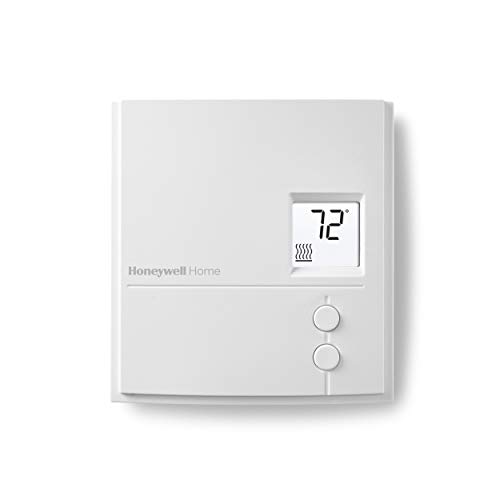
The Honeywell RLV3150A1004 is a non-programmable digital line-voltage thermostat designed specifically for electric baseboards, convectors, and radiant ceiling systems. The listing states it is a high-capacity thermostat (up to 3000W @ 240V), making it suitable for controlling a single 3000W unit or properly configured multi-unit circuits at 240 volts.
Key advertised features: easy push-button digital operation, compatibility with line-voltage heating, and suitability for various electric heating devices. As a line-voltage controller, this model eliminates the need for a separate relay when paired with an appropriately rated heater, but correct matching to the heater’s voltage and amperage rating is essential.
Considerations: this thermostat is non-programmable, so it provides manual setpoint control rather than scheduling. Installation should follow local codes and may require a licensed electrician for 240V 3000W circuits.
EZ-HEAT 1,500 Watt Baseboard Space Heater With Adjustable Thermostat CZ600

The EZ-HEAT CZ600 is a 1,500 watt convection baseboard heater targeted at medium-sized rooms. The listing emphasizes two heat settings and an adjustable thermostat for user comfort control. Safety features include tip-over switch, overheat protection, and a stay-cool body.
Relevance to 3000W setups: two 1500W units can be combined on separate circuits or on a properly sized single circuit, depending on voltage and wiring, to achieve 3000W of installed heating capacity. This modular approach allows flexibility for room partitioning and localized control.
Call 888-896-7031 for Free Local HVAC Quotes – Compare and Save Today!
Considerations: verify whether the unit is intended for hardwired installation or plug-in and confirm whether multiple units require individual thermostats or a single line-voltage control. The listing highlights quiet operation and safety protections, which may influence placement in bedrooms or living spaces.
Cadet F Series 48″ Electric Baseboard Heater, 1000W, 120 Volt
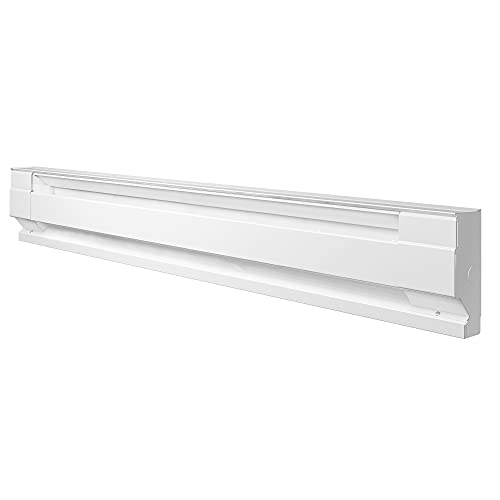
Cadet’s 48″ F Series baseboard delivers 1000 watts at 120 volts and is described as fast heating with a protective steel sheath. The product requires a thermostat to operate and features pre-punched casing holes and universal wiring for simplified installation.
Relevance to higher-capacity needs: multiple Cadet elements can be used in series or parallel installations to reach a combined capacity near 3000W, often used in systems where distributed baseboard heat is preferred. The listing notes durable construction with 25 gauge steel and a powder-coated finish.
Considerations: pairing several 120V units to sum to 3000W requires planning electrical circuits and control strategies. The listing states a thermostat is not included; choose a thermostat rated for the total connected load or individual thermostats per unit.
KING 4K1210BW K Series Baseboard Heater, 1000W, 120V

The KING 4K1210BW provides 1000W at 120V with an aluminum ribbon fin element and a full-length safety cutout. It is a hard-wired heater rather than a plug-in model. The listing indicates a focus on safe operation with built-in thermal protection.
Relevance: like the Cadet unit, multiple KING units can be combined to achieve approximately 3000W in a space. The aluminum ribbon fin design is noted for efficient heat transfer and even convection along the element length.
Considerations: installation and wiring requirements differ when using multiple 120V elements to reach 3000W. Confirm circuit breaker sizing, conductor gauge, and thermostat compatibility based on the total connected wattage.
Buying Guide: How To Choose A 3000 Watt Baseboard Heater Setup
1. Single 3000W Unit Vs. Multiple Smaller Units
- Single 3000W Unit: Offers centralized control and maximum output from one device. Ideal for large open areas like garages or workshops where IR or high-output convection is needed. Check for appropriate IP rating and mounting options.
- Multiple Units: Using two 1500W or three 1000W units allows distributed heat, easier placement, and localized control. This approach can improve comfort in partitioned interiors and reduce hot/cold spots.
2. Voltage And Circuit Requirements
- 3000W At 240V Draws ~12.5 Amps — typically a 15A or 20A circuit may be required depending on continuous-load rules in your local code. Always size circuits and breakers per code and manufacturer guidance.
- Three 1000W 120V Units Draw ~8.3A Each — separate circuits or a shared circuit must be planned to avoid overload. Use proper conductor gauge for the total current.
3. Thermostat And Control Options
- Line-Voltage Thermostats: Designed to switch the heater load directly. Ensure thermostat capacity matches the total wattage and voltage (e.g., Honeywell RLV3150A1004 rated up to 3000W @ 240V).
- Low-Voltage Controls With Relay: For sophisticated control or multi-zone systems, use a low-voltage thermostat with a contactor or relay sized for the heater load.
- Programmability: Non-programmable thermostats provide manual control; programmable or smart thermostats can improve energy efficiency through schedules.
4. Heating Method: Infrared Vs. Convection
- Infrared Heaters: Heat objects and people directly and can feel warmer at lower air temperatures. Good for high ceilings, open bays, or greenhouse workspaces.
- Convection Baseboards: Warm room air and provide steady, even background heat. Better for living spaces and bedrooms where quiet, consistent warmth is desired.
5. Safety Features And Installation
- Automatic Overheat Protection: Prevents sustained overheating. Critical for permanently installed units.
- Tip-Over Switch: Important for portable units; less common on hardwired baseboards.
- Ingress Protection (IP Ratings): Useful for damp locations like greenhouses (e.g., IPX4 splash protection).
- Professional Installation: High-capacity units and multi-unit installations often require a licensed electrician to ensure code compliance and safe wiring.
6. Placement And Coverage Calculations
- Estimate Heat Load: Use room area and insulation quality to estimate required wattage. A common rule of thumb is 10 watts per square foot for moderate climates, but actual needs vary.
- Distributed Units: Multiple baseboards placed along exterior walls improve comfort and reduce radiant heat loss through windows and outer walls.
7. Durability, Material, And Maintenance
- Steel Casing And Powder Coating: Provides durable protection for baseboard casings and improves longevity in high-traffic areas.
- Aluminum Ribbon Fin Elements: Offer efficient heat transfer and lighter weight compared to some other element types.
- Service And Parts: Choose models with available replacement parts and clear manufacturer documentation for wiring diagrams and installation instructions.
8. Comparison Perspectives
Tips for Getting the Best HVAC Prices
- Prioritize Quality Over Cost
The most critical factor in any HVAC project is the quality of the installation. Don’t compromise on contractor expertise just to save money. - Check for Rebates
Always research current rebates and incentives — they can significantly reduce your overall cost. - Compare Multiple Quotes
Request at least three estimates before making your choice. You can click here to get three free quotes from local professionals. These quotes include available rebates and tax credits and automatically exclude unqualified contractors. - Negotiate Smartly
Once you've chosen a contractor, use the proven strategies from our guide — How Homeowners Can Negotiate with HVAC Dealers — to get the best possible final price.
- Performance: Compare effective heat dispersion (convection vs infrared) relative to space type—open workshop vs insulated bedroom.
- Control Flexibility: Evaluate whether central control (single thermostat) or zone control (multiple thermostats) offers better energy management for your layout.
- Installation Complexity: Single high-power unit may need heavier wiring and dedicated breakers; multiple smaller units can reduce per-circuit load but increase wiring runs and thermostat count.
- Safety And Environment: For humid or splash-prone areas, choose units with appropriate IP ratings and protective enclosures.