
Choosing the right 36 inch baseboard heater or cover involves matching electrical or hydronic specs, installation needs, and room size. Below is a concise comparison table of the selected 36″ products covered in this guide, followed by focused product summaries and a practical buying guide.
| Product | Type | Key Feature |
|---|---|---|
| Cadet F Series 36″ (3F750W, 240/208V) | Electric Baseboard Heater | Multi-Watt 750/563 W; convection heat |
| Cadet F Series 36″ (3F750-1W, 120V) | Electric Baseboard Heater | 120V, 750W; requires thermostat |
| SDSNTE 3ft Slip-On Cover | Baseboard Heater Cover | 21-gauge steel; single-panel airflow |
| Baseboarders Basic Series 3 ft (BC001-36) | Hydronic Cover | Galvanized steel; for hydronic systems only |
| Caoooort Retractable 3–6ft Cover Kit | Adjustable Cover Kit | Retractable design; includes end covers |
Content Navigation
- Cadet F Series 36″ Electric Baseboard Heater (3F750W, 240/208V)
- Cadet F Series 36″ Electric Baseboard Heater (3F750-1W, 120V)
- 3ft Steel Easy Slip-On Baseboard Heater Cover With End Caps (SDSNTE)
- Baseboarders Basic Series 3 ft Galvanized Slip-On Cover (BC001-36)
- Baseboard Heater Cover 3FT-6FT Retractable Kit (Caoooort)
- Buying Guide: How To Choose A 36 Inch Baseboard Heater Or Cover
Cadet F Series 36″ Electric Baseboard Heater (3F750W, 240/208V)
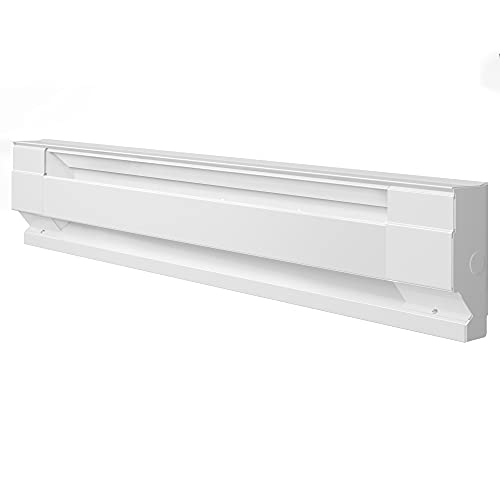
This Cadet F Series model is a 36-inch electric baseboard heater designed for 240/208V systems with selectable wattage of 750 or 563 watts. It operates using convection to circulate warm air across the room.
- Power Options: Multi-watt capability provides flexibility for different voltage supplies and circuit ratings.
- Installation: Universal wiring and pre-punched knockouts simplify hardwiring into existing circuits.
- Build: Powder-coated metal finish intended for durability and indoor use.
Ideal where a 240/208V circuit is available and where convection heat distribution is preferred. Confirm your circuit voltage and breaker sizing before installation. This unit is suitable for rooms where a compact, wall-mounted heater is required and where local electrical codes permit a hardwired baseboard unit.
Cadet F Series 36″ Electric Baseboard Heater (3F750-1W, 120V)
This Cadet model is a 36-inch, 120V, 750W baseboard heater designed for typical single-phase residential circuits. It requires an external thermostat to control room temperature.
Call 888-896-7031 for Free Local HVAC Quotes – Compare and Save Today!
- Voltage: 120V compatibility simplifies installation where only standard household voltage is present.
- Construction: 25-gauge steel with a 20-gauge junction box and grounding; all-metal design with powder coating.
- Control: Requires a compatible wall thermostat (not included) for regulated operation.
This unit is a practical choice for rooms lacking a 240V circuit, provided a thermostat is installed. Evaluate available thermostat options—line-voltage or low-voltage—based on wiring and user preference. Confirm box depth and clearances for code-compliant installation.
3ft Steel Easy Slip-On Baseboard Heater Cover With End Caps (SDSNTE)

This SDSNTE slip-on cover is a direct replacement cover for existing baseboard heaters up to 36 inches in length. It focuses on safety and visual refresh without altering heating elements.
- Material: 21-gauge steel with white stoving varnish offers rust resistance and a finished look.
- Design: Single-panel construction maintains airflow while preventing direct contact with the heating element.
- Fit Notes: Intended for units less than 3 ft; max height and width constraints apply—verify your heater dimensions prior to purchase.
Use this cover when replacing corroded or damaged factory covers on electric or hydronic units (verify compatibility). It’s a DIY-friendly slip-on design; cutting tools may be necessary for custom fit. Confirm clearances to avoid blocking airflow or violating manufacturer guidance.
Baseboarders Basic Series 3 ft Galvanized Slip-On Cover (BC001-36)

The Baseboarders Basic Series cover is specified for hydronic (water) baseboard systems. It is galvanized steel and comes in a 3 ft length with a lifetime protection guarantee against rust under normal use.
Call 888-896-7031 for Free Local HVAC Quotes – Compare and Save Today!
- Application: Designed exclusively for hydronic systems—do not use on electric baseboard heaters.
- Durability: Galvanized steel construction helps prevent corrosion in humid areas like bathrooms.
- Accessories: Additional attachments and longer lengths are available from the same series for consistent appearance.
This cover is appropriate when you need a corrosion-resistant replacement for hydronic baseboards. Check that your system is hydronic, and measure the existing cover height and width to ensure compatibility. Install per manufacturer guidance to maintain convection and service access.
Baseboard Heater Cover 3FT-6FT Retractable Kit (Caoooort)

The Caoooort kit includes two 3ft panels and end covers with an installation kit and offers an adjustable/retractable design enabling coverage from 3 to 6 feet when combined. Constructed from galvanized steel with a white powder coat.
- Adjustability: Panels can be extended or combined to fit longer runs, and screws are provided for secure attachment.
- Material Performance: Galvanized steel and powder-coated finish aim to resist rust and high temperatures.
- Packaging: Includes two 3ft covers and end caps—useful for multi-panel installations or paired replacement.
This kit suits installations requiring modular coverage or where a single rigid cover won’t fit. Ensure the cover’s airflow design is compatible with your baseboard type (hydronic vs. electric). For electric heaters, verify the manufacturer’s recommendations before fitting a slip-on cover.
Buying Guide: How To Choose A 36 Inch Baseboard Heater Or Cover
Selecting the correct 36″ baseboard heater or cover requires attention to system type, electrical compatibility, safety, and installation. Below are key considerations grouped for clarity.
System Type: Electric vs Hydronic
Electric Baseboard Heaters are self-contained units that connect to household voltage. They require correct voltage matching (120V or 240V) and a compatible thermostat or internal controls. Hydronic Baseboard Systems circulate hot water and use covers designed to allow convection without obstructing water-filled elements. Never use a hydronic-only cover on an electric heater unless the cover manufacturer explicitly allows it.
Voltage And Wattage
Verify room circuit voltage before buying. A 36″ electric unit may be specified for 120V (750W) or 240/208V with multi-watt settings. Wattage determines heat output—match output to room size and insulation levels. Ensure your breaker and wiring gauge align with the heater’s amperage requirements and local electrical code.
Thermostat And Controls
Determine whether the unit requires an external thermostat. Many 120V units require a line-voltage thermostat; 240V units may also need controls. Choose between manual line-voltage thermostats, digital line-voltage thermostats, or low-voltage thermostats depending on wiring and desired precision.
Cover Compatibility And Safety
Cover selection depends on baseboard type and dimensions. Check:
- Length, height, and width of the existing heater to ensure the cover will slip on properly.
- Material thickness and corrosion resistance—galvanized steel and powder coats extend life in humid areas.
- Airflow design—covers should not trap heat or impede convection; avoid adding mass that could alter heat transfer.
- Clearances required by manufacturer and local codes, especially for electric heaters to prevent overheating.
Installation And Access
Assess whether you will DIY or hire a pro. Slip-on covers often install with minimal tools, while heater replacement or hardwiring requires electrical expertise. Confirm junction box access, conduit knockouts, and that covers allow service access if repairs are needed.
Durability And Finish
Look for finishes and materials appropriate to the environment. Galvanized steel resists rust in moist rooms; powder coating improves appearance and provides a protective layer. Thicker gauge material may resist dents but could affect warmth distribution if not designed correctly.
Modular And Adjustable Options
Adjustable or multi-panel kits provide flexibility for uneven runs or long continuous baseboards. Verify how panels join and whether end caps and screws are included. Bundles that include end caps simplify matching aesthetic and provide a more finished look.
Regulatory And Code Considerations
Ensure installation adheres to national and local electrical codes. For electric heater installations, proper wire gauge, breaker sizing, and thermostat compatibility are essential. For hydronic systems, maintain manufacturer-recommended clearances to prevent overheating and preserve airflow.
Comparison Perspectives
When comparing heaters and covers consider three perspectives:
Tips for Getting the Best HVAC Prices
- Prioritize Quality Over Cost
The most critical factor in any HVAC project is the quality of the installation. Don’t compromise on contractor expertise just to save money. - Check for Rebates
Always research current rebates and incentives — they can significantly reduce your overall cost. - Compare Multiple Quotes
Request at least three estimates before making your choice. You can click here to get three free quotes from local professionals. These quotes include available rebates and tax credits and automatically exclude unqualified contractors. - Negotiate Smartly
Once you've chosen a contractor, use the proven strategies from our guide — How Homeowners Can Negotiate with HVAC Dealers — to get the best possible final price.
- Performance: Heater wattage and convection effectiveness versus room heat loss.
- Compatibility: Match cover type (hydronic vs electric) and physical dimensions.
- Longevity: Material gauge, finish, rust protection, and warranty or protection guarantees.
Practical Checklist Before Purchase
- Measure the existing heater: length, height, and width.
- Confirm system type: electric or hydronic.
- Verify voltage and circuit capacity for electric heaters.
- Decide whether you need a thermostat and which type.
- Confirm cover compatibility and any included end caps or installation hardware.
- Review manufacturer instructions for clearance and airflow requirements.