
Choosing a 3kW convector heater requires balancing output, mounting style, and safety features. Below is a concise comparison of five relevant models selected for performance, installation flexibility, and applicability to rooms, workshops, and greenhouses.
| Product | Type / Output | Key Feature |
|---|---|---|
| DR. INFRARED HEATER DR218-3000W | Electric Infrared / 3000W | High/Low settings, IPX4 water resistance |
| Dr Infrared Heater DR-P350, 5KW_3-Phase | Electric Convector / Up To 5kW | Single/Three Phase Flexibility |
| Dura Heat EUH1465 Electric Forced Air Heater | Forced Air / 1500W (PTC) | Pivoting Base, Rugged Steel |
| EZ-HEAT 1,500 Watt Baseboard Space Heater CZ600 | Convection Baseboard / 1500W | Adjustable Thermostat, Safety Features |
| Mr. Heater 1500W Portable Ceramic Forced Air Electric Heater | Forced Air / 1500W | Portable Ceramic Element, Small Room Coverage |
Content Navigation
- DR. INFRARED HEATER DR218-3000W Greenhouse Garage Workshop Infrared Heater
- Dr Infrared Heater DR-P350, 5KW 3-Phase Convector
- Dura Heat EUH1465 Electric Forced Air Heater With Pivoting Base
- EZ-HEAT 1,500 Watt Baseboard Space Heater With Adjustable Thermostat
- Mr. Heater 1500W Portable Ceramic Forced Air Electric Heater
- Buying Guide: Choosing The Right 3kW Convector Heater
DR. INFRARED HEATER DR218-3000W Greenhouse Garage Workshop Infrared Heater

Type: Electric infrared heater rated at 3000W. The unit offers high and low heat settings and is built for greenhouse and workshop environments.
Relevant Features: 3000W output with two heat settings improves control over delivered heat. The heater is described as IPX4 protected against water splashing, making it suitable where occasional moisture exposure is possible. The manufacturer positions it for plant environments and workspaces where steady radiant heat is preferred.
Use Cases: Ideal where a 3kW rated device is required for heating a medium-sized workshop or greenhouse with direct radiant heat needs. The high/low selector helps adapt output to different conditions.
Dr Infrared Heater DR-P350, 5KW 3-Phase Convector

Call 888-896-7031 for Free Local HVAC Quotes – Compare and Save Today!
Type: Industrial-style convector heater available in single or three-phase configurations, with voltage options from 208 to 480V. Rated up to 5kW in specific trims.
Relevant Features: Designed for uniform air distribution to evenly fill a large room. The motor is described as overheat protected, permanently lubricated and totally enclosed to improve longevity under continuous use.
Use Cases: Although rated higher than 3kW in some configurations, this model is relevant for users needing flexible electrical input and robust convection performance for larger spaces where steady air movement and distribution matter.
Dura Heat EUH1465 Electric Forced Air Heater With Pivoting Base
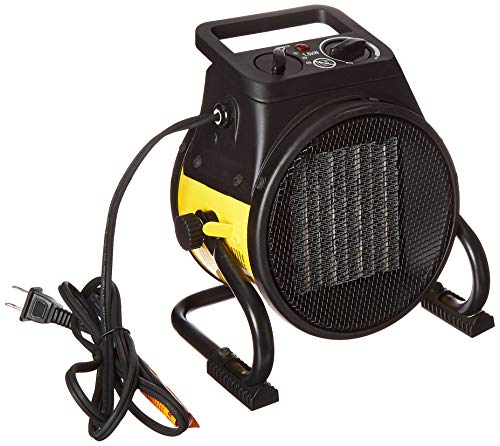
Type: Forced air electric heater using a PTC ceramic element, delivering 1500W of heat. Designed for quick localized warmth in smaller spaces such as a workshop corner or garage bay.
Relevant Features: Rugged steel construction and a pivoting base allow directional heat delivery. Settings include heat and fan-only operation for year-round use. The 1500W rating provides rapid warm-up but is half the 3kW threshold.
Call 888-896-7031 for Free Local HVAC Quotes – Compare and Save Today!
Use Cases: Suitable for spot heating where convective flow is desired. For rooms requiring 3kW total, two matched units could approximate the combined output while retaining portability and focused airflow.
EZ-HEAT 1,500 Watt Baseboard Space Heater With Adjustable Thermostat

Type: Convection baseboard heater delivering 1500W. Designed for wall-mounted installation and even room convection without forced-air noise.
Relevant Features: Adjustable thermostat, dent-proof end panels, overheat protection, tip-over switch and a stay-cool body. The unit emphasizes safety features and quiet operation for living areas.
Use Cases: A baseboard convector is optimal for permanent room installations where quiet, even heat and safety are priorities. Combining two 1500W baseboards can achieve a 3kW equivalent for larger rooms, maintaining balanced convection distribution.
Mr. Heater 1500W Portable Ceramic Forced Air Electric Heater

Type: Portable ceramic forced-air heater rated at 1500W and suited to small rooms up to approximately 170 sq ft according to manufacturer specs.
Relevant Features: Quick heat delivery via ceramic element; compact footprint and portability are emphasized. The unit produces about 5,118 BTU/h equivalent and is intended for localized heating tasks.
Use Cases: Good for supplemental heating in a focused zone. Users seeking a combined 3kW output could pair two identical units to approximate the desired wattage while retaining portability and redundancy.
Buying Guide: Choosing The Right 3kW Convector Heater
Selecting a heater near the 3kW range requires assessment across several criteria to match space, electrical capacity, and safety needs. Below are key considerations and comparison perspectives.
Heat Output And Coverage
Wattage vs Room Size: 3,000 watts produces roughly 10,000–11,000 BTU/h; actual coverage depends on insulation, ceiling height, and local climate. Use higher outputs for poorly insulated or larger spaces.
Convection vs Infrared vs Forced Air: Convector/baseboard units warm air via convection for even background warmth. Infrared models heat objects directly and are efficient for targeted areas. Forced-air heaters provide rapid warm-up and directional flow.
Electrical And Installation Requirements
Single Vs Three-Phase: Most residential circuits are single-phase 120/240V. Industrial three-phase units (like the DR-P350 options) require compatible wiring and possibly a professional electrician.
Circuit Capacity: A 3kW unit at 240V draws about 12.5 amps; at 120V it would draw 25 amps. Confirm circuit ampacity and breaker size before installation to avoid nuisance trips.
Safety Features And Certifications
Overheat Protection & Tip-Over Switch: Important for portable and floor-based units. Baseboard convectors often include thermal limiters. Forced-air or portable ceramic heaters should include tip-over and overheat shutoffs.
Ingress Protection: For greenhouse or damp areas, look for IP ratings (e.g., IPX4) to resist water splashes. Ensure the heater is rated for the intended environment.
Installation Style And Placement
Wall-Mounted Baseboards: Provide even convection and stay out of the way; good for permanent installations. Clearance requirements must be followed.
Portable Forced-Air Units: Offer flexibility and quick heat, but require floor or bench space and are often noisier.
Infrared Units: Mounting height and angle affect coverage; they deliver comfortable radiant heat without necessarily raising room air temperature quickly.
Efficiency And Operating Costs
Runtime And Controls: Thermostatic control and modulating settings reduce runtime and energy consumption. Dual-step settings (high/low) or continuous thermostats allow finer control.
Distributed Heat vs Spot Heat: Convector heaters for whole-room coverage can reduce localized overheating and cycling. Infrared or forced-air may be more efficient for spot heating.
Durability And Maintenance
Construction Materials: Steel housings and enclosed motors increase durability for workshop and commercial use. Regular dusting and periodic inspection improve long-term performance.
Motor And Fan Considerations: For forced-air models, check whether the motor is permanently lubricated and overheat protected to extend service life.
Multiple-Unit Strategies
If a single 3kW device is not available or ideal for a specific layout, consider pairing two 1500W units or combining one 1500W forced-air with a 1500W baseboard. Multiple units can improve distribution and redundancy but require attention to total circuit load and control synchronization.
Environmental And Use-Case Factors
Indoor Vs Outdoor/Unenclosed Spaces: Propane and high-BTU convection heaters are suited for open or well-ventilated areas; electric convectors and infrared are safer for enclosed spaces. Verify ventilation and fuel safety requirements.
Noise And Air Movement: Forced-air heaters produce airflow and sound. Baseboard convectors and infrared heaters are typically quieter, which may matter for living rooms or bedrooms.
Using these perspectives will help match a 3kW heating goal to the right technology, installation method, and safety profile for your space. Review electrical compatibility, environment rating, and whether even-room convection or targeted radiant/forced-air heating best fits your needs before selecting a model.
Tips for Getting the Best HVAC Prices
- Prioritize Quality Over Cost
The most critical factor in any HVAC project is the quality of the installation. Don’t compromise on contractor expertise just to save money. - Check for Rebates
Always research current rebates and incentives — they can significantly reduce your overall cost. - Compare Multiple Quotes
Request at least three estimates before making your choice. You can click here to get three free quotes from local professionals. These quotes include available rebates and tax credits and automatically exclude unqualified contractors. - Negotiate Smartly
Once you've chosen a contractor, use the proven strategies from our guide — How Homeowners Can Negotiate with HVAC Dealers — to get the best possible final price.