
The following guide compares high‑output garage and shop heaters relevant to buyers searching for around 50,000 BTU electric heating solutions and close alternatives. Below is a quick comparison of the five selected units chosen for output, power type, and suitability for garages, workshops, and large spaces.
| Product | Fuel Type | Reported Output | Coverage |
|---|---|---|---|
| Dyna‑Glo Dual Power Electric Garage Heater | Electric | Up To 51,180 BTU | Large Garages / Workshops |
| Dura Heat Hard‑Wired Ceiling Mount | Electric (Hard‑Wired) | 34,120 BTU | Up To 1,500 sq ft |
| Dura Heat EWH5510 Electric Forced Air | Electric (Hard‑Wired) | 17,060 BTU | Up To 750 sq ft |
| Dura Heat EUH1465 Forced Air | Electric (Portable) | 5,120 BTU | Small Work Areas |
| Mr. Heater Big Maxx Natural Gas Unit | Natural Gas | 80,000 BTU | Up To 2,000 sq ft |
Content Navigation
- Dyna‑Glo Dual Power Electric Garage Heater
- Dura Heat Hard‑Wired Ceiling Mount Heater
- Dura Heat EWH5510 Electric Forced Air Heater
- Dura Heat EUH1465 Electric Forced Air
- Mr. Heater Big Maxx Natural Gas Unit
- Buying Guide — Choosing A High‑Output Heater
- 1. Fuel Type And Operating Cost
- 2. Electrical Capacity And Installation
- 3. BTU vs Watt Conversion And Realistic Coverage
- 4. Mounting, Clearance, And Air Distribution
- 5. Controls, Thermostats, And Safety Features
- 6. Noise And Fan Operation
- 7. Installation Constraints And Permitting
- 8. Comparison Perspectives
- 9. Practical Tips Before Buying
Dyna‑Glo Dual Power Electric Garage Heater
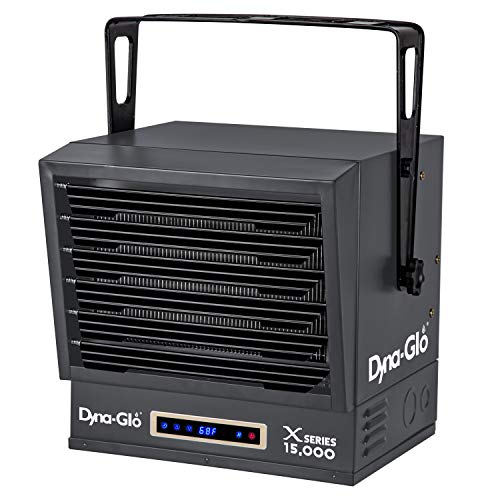
This dual‑power electric heater offers a high end output listed as 51,180 BTU when running at 15,000W, and a lower setting at roughly 11,300W (38,556 BTU equivalent). The unit is designed for ceiling or wall mounting in larger garages and workshop spaces where significant electric power is available.
Key features referenced include 24 heat settings and dual power options for flexibility in energy use. The multiple heat settings help match heat output to space size and application. As an electric model, it requires adequate circuit capacity and may need professional installation depending on wiring and mounting location.
For buyers prioritizing a near‑50k BTU electric solution, this product is the closest match on electric power alone. Consider your available electrical infrastructure and the heater’s physical mounting requirements before purchase.
Dura Heat Hard‑Wired Ceiling Mount Heater

Call 888-896-7031 for Free Local HVAC Quotes – Compare and Save Today!
This hard‑wired 240V electric heater is rated at 10,000W, producing approximately 34,120 BTU and designed for coverage up to 1,500 sq ft. The unit includes an ECO system and overheat protection, and comes with a remote and adjustable thermostat for temperature control.
Features emphasize a remote control with adjustable thermostat, LED display, and timer functions. Because it is hard‑wired, installation by a qualified electrician is recommended. This model is suitable where a high‑capacity electric heater is needed but full 50k BTU electric infrastructure is not available.
Consider this option when you need robust, mounted electric heating with programmable control but cannot accommodate 15kW single‑appliance loads or when permitting and wiring favor a 10kW solution.
Dura Heat EWH5510 Electric Forced Air Heater

The EWH5510 is a 5,000W / 17,060 BTU hard‑wired electric forced air heater intended for medium garages and larger workspaces up to about 750 sq ft. It includes remote control, adjustable thermostat, and an LED display settable between 45–99 degrees.
Key features listed are hard‑wired 240V operation and full remote control functionality. This model provides a balance between portable small heaters and the very large 15kW electric units. It requires proper electrical circuit sizing and professional installation due to hard‑wiring requirements.
Call 888-896-7031 for Free Local HVAC Quotes – Compare and Save Today!
Choose this unit if moderate electric heat and remote thermostat control are priorities, and if your space size aligns with the stated coverage area.
Dura Heat EUH1465 Electric Forced Air
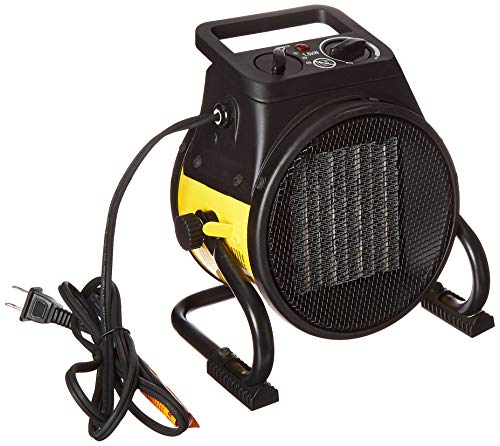
The EUH1465 is a compact 1,500W PTC ceramic forced air heater delivering about 5,120 BTU. It’s designed for portable use in garages, workshops, and commercial spaces where spot heating is needed rather than whole‑space heating.
Features include rugged steel construction and selectable heat and fan-only settings for flexible seasonal use. This unit is plug‑in and portable, requiring no hard‑wiring or professional installation for standard use cases.
Consider this model for supplemental heat, quick warm‑up of a workspace, or for use where large electric loads are impractical. It is not intended to match the total output of large 10kW–15kW ceiling heaters.
Mr. Heater Big Maxx Natural Gas Unit
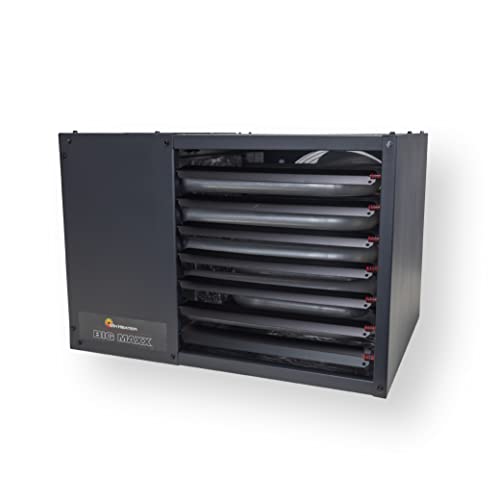
The Mr. Heater Big Maxx is a natural gas unit heater rated at 80,000 BTU and intended for large spaces up to about 2,000 sq ft. It includes angle brackets and a liquid propane conversion kit, while thermostat, regulator, and hose are not included.
Key product notes include category 1 vertical and category 3 horizontal venting, 120V power for blower, and a stated coverage area. This unit is gas‑fueled and differs from electric heaters in fuel type, venting requirements, and installation considerations.
Including this model provides a comparison point for buyers evaluating electric vs gas solutions at high BTU levels. Natural gas units can offer higher continuous BTU with different operating costs and venting/installation tradeoffs compared with high‑wattage electric heaters.
Buying Guide — Choosing A High‑Output Heater
This buying guide highlights key considerations when selecting a heater near the 50,000 BTU mark, with emphasis on electric units and relevant comparisons to gas models.
Tips for Getting the Best HVAC Prices
- Prioritize Quality Over Cost
The most critical factor in any HVAC project is the quality of the installation. Don’t compromise on contractor expertise just to save money. - Check for Rebates
Always research current rebates and incentives — they can significantly reduce your overall cost. - Compare Multiple Quotes
Request at least three estimates before making your choice. You can click here to get three free quotes from local professionals. These quotes include available rebates and tax credits and automatically exclude unqualified contractors. - Negotiate Smartly
Once you've chosen a contractor, use the proven strategies from our guide — How Homeowners Can Negotiate with HVAC Dealers — to get the best possible final price.
1. Fuel Type And Operating Cost
- Electric Heaters: Provide direct conversion of electrical power to heat. High BTU electric heaters typically draw large currents (10kW–15kW). Operating cost depends on local electricity rates and duty cycle.
- Natural Gas/Propane: Often deliver higher BTU capacity with lower operating fuel cost in some regions, but require venting, gas supply connections, and different safety considerations.
2. Electrical Capacity And Installation
- Check available service: a 15,000W heater requires heavy‑duty wiring and likely a dedicated 60–80A circuit or multi‑phase service depending on installation.
- Hard‑wired units often require professional installation and permit compliance. Portable plug‑in models are simpler but limited in output.
3. BTU vs Watt Conversion And Realistic Coverage
- Use conversion: 1 watt ≈ 3.412 BTU. A 15,000W electric heater ≈ 51,180 BTU.
- Coverage estimates depend on insulation, ceiling height, climate, and target indoor temperature. Published square footage is a guideline, not a guarantee.
4. Mounting, Clearance, And Air Distribution
- Ceiling‑mounted units free floor space and distribute heat across larger areas but require secure mounting and clearance from combustibles.
- Forced‑air electric and gas units use blowers to move heat; check airflow direction and whether pivoting or ducting is needed for even heat distribution.
5. Controls, Thermostats, And Safety Features
- Look for adjustable thermostats, remote controls, timers, and ECO modes to manage energy use.
- Overheat protection, tip‑over switches (for portable units), and proper venting features (for gas units) are critical for safe operation.
6. Noise And Fan Operation
- Forced‑air units have fans that create noise; QBT or quiet fan designs reduce operational noise. Consider decibel levels if noise is a concern for attached living spaces.
7. Installation Constraints And Permitting
- Gas units may require venting, gas line connections, and code inspections. Electric hard‑wired heaters may need permits depending on local regulation.
8. Comparison Perspectives
- Electric High‑Watt Heaters (10kW–15kW): Simplified venting, consistent heat, ideal where robust electrical service exists; real BTU equivalent depends on wattage.
- Gas Heaters (Propane/Natural Gas): Higher raw BTU possible with different infrastructure; consider venting, fuel availability, and potential conversion kits.
- Portable vs Permanently Mounted: Portable units offer flexibility and lower upfront installation complexity; ceiling/wall units provide more uniform heat for entire spaces.
9. Practical Tips Before Buying
- Measure your space volume (sq ft × ceiling height) and define the desired indoor delta‑T (temperature rise) to estimate required BTU.
- Check available electrical service or gas supply before selecting a model; factor in installation costs.
- Confirm product clearances, mounting hardware, and warranty coverage for commercial or heavy‑duty use.