
Choosing the right 500 watt baseboard heater matters for small rooms, bedrooms, offices, and energy-sensitive spaces. Below is a quick comparison of well-reviewed 500W baseboard heaters found on Amazon, followed by individual product overviews and a practical buying guide.
| Product | Brand | Key Features |
|---|---|---|
| Cadet F Series 30″ 2F500W | Cadet | Multi-watt (500/375), 240/208V, convection |
| KING 2K1205BW 27″ 500W | KING | 120V hardwire, aluminum ribbon fin, safety cutout |
| DIMPLEX LC2005W31 20″ 500W | DIMPLEX | Compact length, faster top heat discharge, shark-fin blade |
| Stelpro Brava B-Series 500W | Stelpro | Made in North America, full-length thermal protection |
| 09950 30.3″ 240V 500W Generic | Generic | 240V 500W hardwire, thermostat required |
Content Navigation
- Cadet F Series 30″ Electric Baseboard Heater (2F500W)
- KING 2K1205BW K Series 27″ 500W Baseboard Heater
- DIMPLEX LC2005W31 20″ 500W Compact Baseboard Heater
- Stelpro Baseboard Heater Brava B-Series 500W
- 09950 30.3″ 240V 500W Hardwire Baseboard Heater (Generic)
- Buying Guide: How To Choose A 500W Baseboard Heater
Cadet F Series 30″ Electric Baseboard Heater (2F500W)
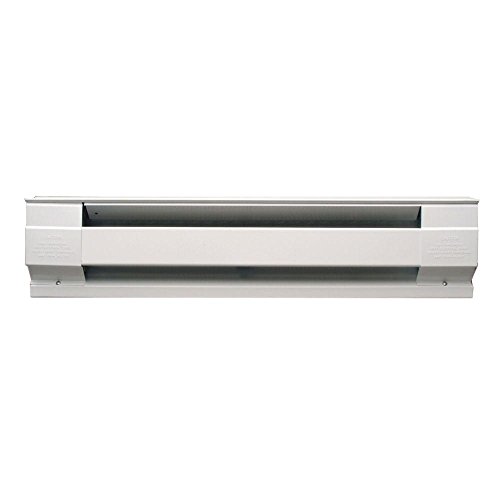
The Cadet F Series 2F500W is a 30-inch hardwired baseboard heater rated for 500/375 watts at 240/208 volts. It features multi-watt capability for flexible output and is designed for convection heating, which circulates warm air through the room.
Features noted by the manufacturer include easy installation with universal wiring and pre-punched knockouts, and a convection design to distribute heat evenly. The multi-watt option allows selecting lower power for milder needs.
This model is appropriate where 240/208V circuits are available and a slimmer 30″ footprint is desired. Wiring should follow local electrical code and typically requires a separate thermostat control.
KING 2K1205BW K Series 27″ 500W Baseboard Heater

Call 888-896-7031 for Free Local HVAC Quotes – Compare and Save Today!
The KING 2K1205BW is a 27-inch baseboard heater rated at 500 watts for 120V hardwire installations. This is not a plug-in model and requires hard-wiring by a qualified installer or electrician.
Key listed features include an aluminum ribbon fin element for efficient heat transfer and a full length safety cutout to protect against overheating. The heater’s element design aims to balance heat output and durability.
Suitable for rooms with a 120V supply, this model is designed for straightforward replacement of existing hardwired baseboards or new builds where a 120V circuit is used for localized heating.
DIMPLEX LC2005W31 20″ 500W Compact Baseboard Heater

The DIMPLEX LC2005W31 is a compact 20-inch baseboard heater delivering 500 watts. The reduced length claims up to 42% smaller footprint versus conventional units, making it useful where wall space is limited.
Manufacturer features include up to 40% faster heat dispersal through top heat discharge and a shark-fin blade design on a steel tubular element to improve heat transfer. The design emphasizes quiet operation and extended element life.
Call 888-896-7031 for Free Local HVAC Quotes – Compare and Save Today!
This unit is appropriate when rapid room center warming and a compact installation are priorities. Installation typically requires a dedicated thermostat and correct voltage match.
Stelpro Baseboard Heater Brava B-Series 500W

The Stelpro Brava 500W baseboard is marketed as made in North America and designed for small rooms up to approximately 50 sq. ft. The unit measures roughly 27 7/8″ by 5 7/8″.
Notable features include options for built-in or wall-mounted thermostats (sold separately), full-length thermal protection, and an automatic reset for safety. The product emphasizes reliable, energy-aware operation for targeted heating.
This model is suited to homeowners seeking regional manufacturing and explicit safety features. Thermostat compatibility allows flexible control strategies depending on room use.
09950 30.3″ 240V 500W Hardwire Baseboard Heater (Generic)

This 09950 generic baseboard heater lists 240V 500W operation and is a hardwired unit requiring a thermostat for control. The product page highlights a white finish and a standard baseboard form factor.
The listed feature set is minimal: hardwired electrical connection and thermostat requirement. This model is often chosen for basic replacement tasks where a straightforward 240V baseboard is needed.
As with other hardwired units, professional installation and matching to the correct voltage and circuit capacity are recommended to ensure safety and proper performance.
Buying Guide: How To Choose A 500W Baseboard Heater
Selecting a 500W baseboard heater involves matching electrical supply, room size, installation preferences, and safety features. Below are the key considerations to compare models and ensure proper performance.
Electrical Voltage And Circuit Compatibility
- Match Voltage: Confirm whether your space provides 120V, 208/240V, or 277V. Models listed include both 120V and 240V variants; installing the wrong voltage can damage the unit or create hazards.
- Circuit Capacity: Ensure the circuit and breaker are sized for the heater’s amperage. Hardwired units often require dedicated circuits and should be wired per local code.
Room Size And Heat Output
- Square Foot Guidance: A 500W heater is commonly suited for small rooms up to roughly 50 sq. ft., depending on insulation and climate.
- Multi-watt Options: Some models offer stepped wattage (e.g., 500/375W) which provides flexibility when full output isn’t needed.
Installation Type And Ease
- Hardwired Vs. Plug-in: Most 500W baseboards are hardwired. Verify if you need a removable plug or a hardwire-only model for professional installation.
- Pre-punched Knockouts & Wiring Access: Features like universal wiring access and pre-punched knockouts simplify installation and reduce labor time.
Heat Distribution And Element Design
- Convection Vs. Top Discharge: Convection models distribute warm air gently; top discharge or faster top heat dispersal can move heat to room center faster.
- Element Type: Aluminum ribbon fins and shark-fin or tubular steel elements affect heat transfer efficiency, noise, and element lifespan.
Safety Features
- Full-Length Thermal Cutout: Protects against overheating and is commonly found in KING and other branded units.
- Automatic Reset: Useful for handling temporary overloads without manual intervention.
Thermostat Compatibility And Control
- Thermostat Required: Some units explicitly require a separate thermostat. Confirm compatibility for wall-mounted or built-in thermostats.
- Control Granularity: Thermostats can offer simple on/off control or proportional control for finer temperature management.
Size, Aesthetics, And Placement
- Length Constraints: Compact units like the Dimplex 20″ suit tight wall spaces; standard 27–30″ units are more common for even heat spread.
- Appearance: Finishes are typically white or almond. Consider visual match with baseboards and trim.
Durability And Warranty Considerations
- Element Durability: Crushproof or heavy-gauge elements provide longer life under repeated use.
- Local Manufacturing: Units made regionally (for example, products made in North America) may have localized support and parts availability.
Comparison Perspectives
- Performance-Focused: Look for element designs and heat discharge claims (e.g., faster top heat) that improve room warm-up times.
- Safety-Focused: Prioritize full-length safety cutouts and automatic reset features when continuous unattended operation is expected.
- Installation-Focused: If wiring access is limited, models with universal wiring and pre-punched knockouts reduce complexity and labor costs.
- Space-Focused: Choose compact lengths when wall space or multiple obstacles limit heater placement.
When comparing these options, verify electrical compatibility with your home, plan for a matched thermostat, and consider installation effort. Reviewing manufacturer specs and local code requirements will ensure safe, reliable operation of a 500W baseboard heater in small spaces.
Tips for Getting the Best HVAC Prices
- Prioritize Quality Over Cost
The most critical factor in any HVAC project is the quality of the installation. Don’t compromise on contractor expertise just to save money. - Check for Rebates
Always research current rebates and incentives — they can significantly reduce your overall cost. - Compare Multiple Quotes
Request at least three estimates before making your choice. You can click here to get three free quotes from local professionals. These quotes include available rebates and tax credits and automatically exclude unqualified contractors. - Negotiate Smartly
Once you've chosen a contractor, use the proven strategies from our guide — How Homeowners Can Negotiate with HVAC Dealers — to get the best possible final price.