
Choosing the right 50,000 BTU garage heater depends on fuel type, installation, coverage, and ventilation. The table below summarizes five heaters selected for garage and workshop heating needs across gas, hydronic, kerosene, propane, and electric-mounted solutions.
| Product | Fuel / Type | BTU / Output | Use Case |
|---|---|---|---|
| Mr. Heater Big Maxx MHU80NG | Natural Gas Unit Heater | 80,000 BTU | Large garages, overhead mounting, continuous gas supply |
| American Royal 50,000 BTU Hot Water Hanging Heater | Hydronic (Hot Water) | 50,000 BTU | Workshops using boiler or wood boiler hydronic systems |
| Dyna-Glo KFA50DGD | Kerosene Forced Air | 50,000 BTU | Portable spot heating where kerosene is available |
| GasOne PH-8000 Propane Patio Heater | Propane Radiant | 50,000 BTU | Outdoor/vented garage areas, portable radiant warmth |
| Comfort Zone CZ230ER Ceiling Mount Space Heater | Electric Fan-Forced (Hard-Wired) | 7,500 Watt (~25,600 BTU Equivalent At Full Output) | Ceiling-mounted supplemental heating for insulated garages |
Content Navigation
- Mr. Heater F260560 Big Maxx MHU80NG Natural Gas Unit Heater
- 50,000 BTU Hot Water Hanging Heater With Remote Thermostat
- American Royal 50,000 BTU 2 Speed Hydronic Indoor Water Hanging Heater
- Dyna-Glo KFA50DGD 50,000 BTU Kerosene Forced Air Heater
- GasOne PH-8000 50,000 BTU Propane Outdoor Heater With Wheels
- Comfort Zone Hard-Wired Ceiling Mount Garage Heater CZ230ER
- Buying Guide: How To Choose A 50,000 BTU Garage Heater
- 1. Fuel Type And Availability
- 2. Indoor Vs. Outdoor / Ventilation Needs
- 3. Coverage Area And Ceiling Height
- 4. Mounting And Space Constraints
- 5. Controls, Thermostat, And Fan Speeds
- 6. Installation Complexity And Professional Requirements
- 7. Safety Features And Certifications
- 8. Operating Costs And Efficiency
- 9. Noise And Air Movement
- 10. Maintenance And Serviceability
- Comparison Perspectives
Mr. Heater F260560 Big Maxx MHU80NG Natural Gas Unit Heater
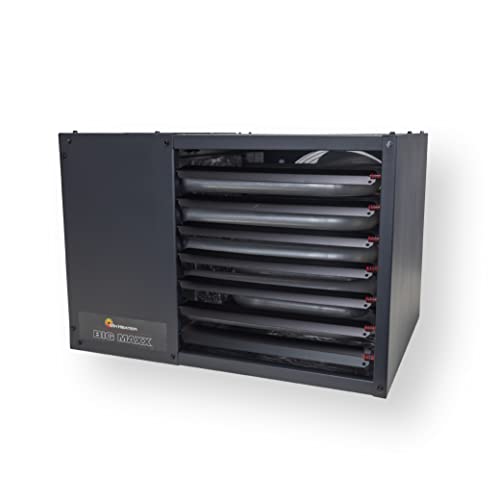
This natural gas unit heater is designed for mounting in larger garages and service bays. While the rated output is 80,000 BTU, its high capacity is relevant for users seeking more than 50k BTU for poorly insulated or high-ceiling garages.
- Includes two angle brackets and a liquid propane conversion kit (thermostat, hose & regulator not included).
- Heater dimensions: 29.33” L x 15.50” W x 26.37” H; recommended clearance: min 8 ft from floor to base.
- Coverage claim: up to 2,000 sq. ft.—practical performance depends on insulation and ceiling height.
- Electrical: 120 V, 2.3 amps; venting options: category 1 vertical or category 3 horizontal.
Use cases: fixed installation where natural gas is available and continuous operation is desired. Consider professional installation for gas connections and venting compliance. Clearance, venting category, and conversion kit use should be verified against local codes.
50,000 BTU Hot Water Hanging Heater With Remote Thermostat

This hydronic hot water hanging unit heater links to a boiler or wood-fired hot water source to deliver 50,000 BTU through an air handler fan. It is commonly used in shops with existing hydronic systems.
Call 888-896-7031 for Free Local HVAC Quotes – Compare and Save Today!
- Designed specifically for hydronic (water) heat; ideal for wood boilers and centralized hot water systems.
- Includes a remote thermostat and an on-off-on fan switch for two-speed operation and convenience.
- Hanging design for overhead mounting saves floor space and provides directed airflow.
Hydronic units are efficient when integrated into an existing boiler system. They require plumbing connections and a circulating pump. Performance depends on water temperature, flow rate, and fan setting. This style is best for continuous, low-odor heat without combustion in the garage itself.
American Royal 50,000 BTU 2 Speed Hydronic Indoor Water Hanging Heater

This model is a close variant of the hydronic hanging heater with emphasis on a 2-speed fan. It targets the same applications as the other American Royal offering: shops tied into hydronic boilers or wood-fired systems.
- 50,000 BTU hydronic output with adjustable fan speeds to balance airflow and noise.
- Hanging configuration optimizes heat delivery to work areas and reduces floor clutter.
- Best paired with hot water sources providing consistent temperature and flow.
Hydronic hangers provide quieter, steady heat than forced combustion unit heaters. Evaluate piping, pump capacity, and control integration before purchase to ensure the heater matches your system’s output and pump head.
Dyna-Glo KFA50DGD 50,000 BTU Kerosene Forced Air Heater

The Dyna-Glo kerosene forced-air heater is a portable solution that produces 50,000 BTU and claims coverage up to around 1,200 sq. ft. Its portability and simple fueling make it attractive for intermittent use.
Call 888-896-7031 for Free Local HVAC Quotes – Compare and Save Today!
- Forced-air design quickly moves heated air into the space using a blower.
- Features a carrying handle for portability and setup flexibility.
- Best used in well-ventilated garages or spaces where kerosene combustion byproducts are acceptable and safe.
Forced-air kerosene heaters provide rapid spot heating but require ventilation for combustion gases and regular maintenance. Consider CO monitoring and compliance with indoor fuel-burning regulations. They are practical where fuel access and ventilation are manageable.
GasOne PH-8000 50,000 BTU Propane Outdoor Heater With Wheels

This heavy-duty 50,000 BTU propane patio heater is designed for outdoor spaces and semi-open structures. Its radiant heat output warms people and objects directly rather than uniformly heating air.
- Designed for outdoor or open-air use; portable with wheels for repositioning.
- Produces radiant warmth suitable for patios, terraces, or garages with adequate ventilation and open doors.
- Powerful 50,000 BTU output intended for rapid localized warming.
Propane radiant heaters are efficient for spot comfort but are not intended for fully enclosed garages without proper venting. They are useful for semi-enclosed workshops, outdoor service bays, or temporary setups where radiant heat is preferred over air heating.
Comfort Zone Hard-Wired Ceiling Mount Garage Heater CZ230ER

Although not a 50,000 BTU combustion heater, this hard-wired electric ceiling heater is included for garages prioritizing clean, maintenance-free indoor heating with ceiling-mounted space-saving design.
- Fan-forced electric unit designed for ceiling mounting and hard-wired installation to free floor space.
- Features overheat protection, digital thermostat, and a 12-hour timer for scheduled operation.
- Constructed with heavy gauge steel and adjustable louvers to direct airflow.
Electric ceiling heaters are suitable for insulated garages with reliable electrical service and where combustion or fuel storage is undesirable. They deliver instant heat without venting but generally require higher electrical capacity for equivalent BTU output compared to gas models.
Buying Guide: How To Choose A 50,000 BTU Garage Heater
1. Fuel Type And Availability
Decide between natural gas, propane, kerosene, hydronic (hot water), or electric. Natural gas and hydronic systems are efficient for continuous use when a supply exists. Propane and kerosene offer portability. Electric heaters are clean and low-maintenance but may require substantial electrical capacity.
2. Indoor Vs. Outdoor / Ventilation Needs
Forced-combustion units (kerosene, propane, natural gas) require adequate ventilation and sometimes direct venting to the outdoors. Hydronic and electric units offer non-combustion heating inside the garage and reduce indoor combustion concerns.
3. Coverage Area And Ceiling Height
BTU ratings are guidelines. Factor in insulation quality, garage volume (floor area × ceiling height), and target temperature rise. Very high ceilings need more output or directed heaters. Radiant heaters warm objects and people rather than air, making them effective for high-ceiling spaces.
4. Mounting And Space Constraints
Choose ceiling-mounted or hanging units for floor space savings. Portable forced-air units provide flexibility but occupy floor area. Ceiling and hanging units often distribute heat more evenly in workspaces.
5. Controls, Thermostat, And Fan Speeds
Look for thermostatic control, remote control, multi-speed fans, or timers for energy efficiency and comfort. Hydronic units often use external thermostats tied to boiler controls; electric units commonly include digital thermostats and timers.
6. Installation Complexity And Professional Requirements
Gas and hydronic units may require licensed technicians for fuel connections, venting, and plumbing. Electric hard-wired ceiling heaters need qualified electricians for safe installation and to ensure proper circuit capacity.
7. Safety Features And Certifications
Verify overheat protection, ETL/UL listings, and CO/combustion safeguards where applicable. Portable combustion heaters require CO monitoring and adherence to indoor fuel-burning codes. Confirm venting categories and clearance specifications.
8. Operating Costs And Efficiency
Compare fuel costs in your area—natural gas and hydronic systems can be economical for continuous use. Propane/kerosene has variable costs and storage requirements. Electric units can be costly at high outputs but offer simple installation and low maintenance.
9. Noise And Air Movement
Forced-air units move warm air quickly but can be noisy. Hydronic units with fans are typically quieter. Consider fan speeds and muffling options if noise in the workspace is a concern.
10. Maintenance And Serviceability
Combustion heaters need regular inspection of burners, filters, and venting. Hydronic units require periodic checks of pumps and valves. Electric heaters have minimal maintenance but should still be inspected for wiring and fan wear.
Comparison Perspectives
Performance Perspective: High-BTU natural gas units (like Mr. Heater) produce the most raw heat for very large volumes. Hydronic 50k units provide steady, comfortable heat economy when tied to an efficient boiler.
Safety Perspective: Electric and hydronic systems reduce indoor combustion risk. Portable combustion heaters require strict ventilation and CO detection.
Cost Perspective: Consider upfront installation vs. operating costs. Gas and hydronic installations may cost more initially but often run cheaper per hour than electric in many US regions.
Flexibility Perspective: Portable kerosene or propane units offer mobility; ceiling-mounted units and hydronic hangers prioritize permanent, clean workspace solutions.
Tips for Getting the Best HVAC Prices
- Prioritize Quality Over Cost
The most critical factor in any HVAC project is the quality of the installation. Don’t compromise on contractor expertise just to save money. - Check for Rebates
Always research current rebates and incentives — they can significantly reduce your overall cost. - Compare Multiple Quotes
Request at least three estimates before making your choice. You can click here to get three free quotes from local professionals. These quotes include available rebates and tax credits and automatically exclude unqualified contractors. - Negotiate Smartly
Once you've chosen a contractor, use the proven strategies from our guide — How Homeowners Can Negotiate with HVAC Dealers — to get the best possible final price.