
Choosing a single unit that both cools and heats can simplify seasonal comfort. Below is a quick comparison table of the five selected AC-and-heater-in-one units chosen for versatility, installation type, and coverage. Use this summary to narrow options before reading the detailed product sections.
| Product | Type | Heating Function | Approx. Coverage |
|---|---|---|---|
| SereneLife 8000 BTU Portable AC With Heat | Portable AC | Yes (Integrated) | Up To ~300–350 Sq Ft |
| SereneLife 14000 BTU Portable AC With Heating | Portable AC | Yes (Integrated) | Up To ~500 Sq Ft |
| GarveeTech 10,000 BTU Portable AC With Heater | Portable AC | Yes (Integrated) | ~350–450 Sq Ft |
| ROVSUN 12000 BTU Window AC With Heat | Window Unit | Yes (Heat Mode) | Up To ~550 Sq Ft |
| RecPro 15K RV Ducted/Non-Ducted AC With Heat Pump | Rooftop RV Unit | Yes (Heat Pump) | Designed For RV/Camper Spaces |
Content Navigation
- SereneLife 8000 BTU Portable Air Conditioner With Heat
- SereneLife 14000 BTU Portable Air Conditioner With Heating
- GarveeTech 10,000 BTUs Portable Air Conditioner With Heater
- ROVSUN 12000 BTU Air Conditioner Window Unit With Heat
- RecPro RV 15K Ducted Or Non-Ducted AC With Heat Pump
- Buying Guide: How To Choose An AC-And-Heater-In-One
SereneLife 8000 BTU Portable Air Conditioner With Heat
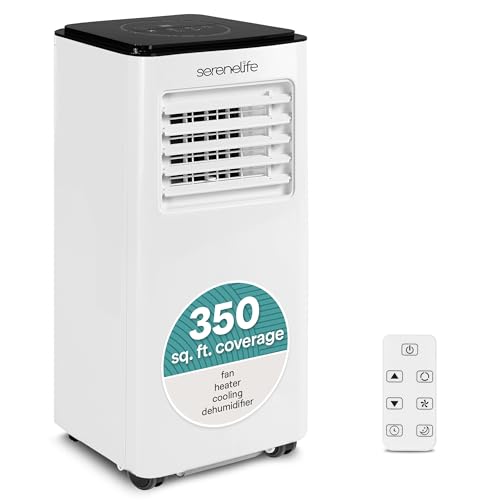
This compact 4-in-1 portable AC combines cooling, heating, dehumidifying, and fan functions in one unit. It lists an 8000 BTU (ASHRAE) cooling capacity and uses R32 refrigerant. The product features a metal control box for safety, multiple operating modes including auto and sleep, and power failure memory for convenience.
Key performance points include versatility across modes and a targeted coverage area around 300 sq. ft. The inclusion of a heater mode makes it useful for mild winter conditions in small rooms. Controls include a remote and a window-mount kit for setup. The product notes a power output of 880W, and documentation highlights multiple modes to tailor comfort and energy use.
SereneLife 14000 BTU Portable Air Conditioner With Heating
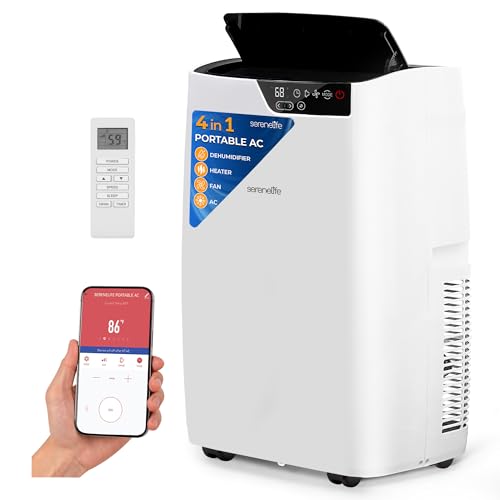
The SereneLife 14000 BTU model is a larger 4-in-1 portable AC designed for bigger rooms. It lists cooling coverage up to 500 sq. ft. and includes heating, fan, and dehumidifier functions. Features include WiFi connectivity, a touch control panel, LCD remote control, and a GMCC compressor for improved reliability.
Call 888-896-7031 for Free Local HVAC Quotes – Compare and Save Today!
This unit emphasizes energy efficiency with R32 refrigerant and a CEER rating, and it supports automatic modes and memory functions. The combined cooling and heating capability aims to serve year-round needs in larger living spaces where a single portable unit is preferred over separate systems.
GarveeTech 10,000 BTUs Portable Air Conditioner With Heater

The GarveeTech portable AC provides 10,000 BTU cooling and approximately 7,000 BTU heating performance, covering mid-sized rooms. It lists three operational modes—cooling, dehumidifying, and fan—with multiple fan speeds and a sleep mode for quieter operation at night.
Installation notes emphasize adjustable window panels for varied window sizes and simple setup. Temperature control between 65°F and 86°F is supported. The product positions itself as a balance of mid-level cooling with an integrated heating option for seasonal transitions, making it suitable for rental units or homes without ductwork.
ROVSUN 12000 BTU Air Conditioner Window Unit With Heat

This 4-in-1 window air conditioner includes cooling, heating, dehumidifying, and fan modes and is rated at 12,000 BTU. It is intended for rooms up to approximately 550 sq. ft., and includes an LED display, remote control, ECO and auto modes, and a 24-hour timer.
Call 888-896-7031 for Free Local HVAC Quotes – Compare and Save Today!
ROVSUN highlights quick cooling and heating capability and user-friendly setup with included side panels and mounting parts. The unit requires verification of window type and voltage before purchase. For fixed-window installations, this window-type unit delivers stronger BTU capacity and consistent heat mode functionality compared to smaller portable units.
RecPro RV 15K Ducted Or Non-Ducted AC With Heat Pump

The RecPro rooftop unit targets RV, camper, and mobile environments with a combined heat pump and cooling solution. It is offered in a 15,000 BTU size, low amp draw for energy efficiency, and a quiet operation around 55 dB. The product is built for road-ready durability with UV-resistant components.
Designed for either ducted or non-ducted installation, this unit suits vehicle installations where space, noise, and power draw matter. The heat pump offers heating capability without electric resistance heating in many cases, which can be advantageous for off-grid or generator-reliant setups. Installation and compatibility with RV roofs should be verified prior to purchase.
Buying Guide: How To Choose An AC-And-Heater-In-One
Selecting a combined AC-and-heater unit requires matching the unit’s capabilities to your space, power, and installation constraints. The following factors will help you compare models objectively.
1. Type And Installation
- Portable AC With Heat: Flexible placement; requires exhaust hose and window kit. Best for renters or rooms without ductwork.
- Window AC With Heat: Higher BTU for fixed installations; no hose but requires compatible window and secure mounting.
- Rooftop RV Unit: Built for mobile homes and RVs; designed around low amp draw and mounting specifications unique to vehicles.
2. Heating Method And Performance
- Electric Resistance Heat: Common in portable and window units; fast heat but higher power draw.
- Heat Pump: More efficient in moderate cold; used in some rooftop/RV and larger units. Check operating temperature range for cold climates.
- BTU And Coverage: Match BTU ratings to room size. Manufacturers often list coverage—verify against room square footage and ceiling height.
3. Energy Efficiency And Refrigerant
- Look for CEER or DOE/ASHRAE ratings on portable units. Higher efficiency reduces operating costs.
- R32 refrigerant is common on newer portable units; check local regulations and service availability.
4. Noise Level And Comfort Features
- Noise ratings or sleep mode are useful if the unit will operate in bedrooms.
- Features like auto mode, timers, remote control, and WiFi add convenience for daily use.
5. Safety And Certifications
- ETL/UL listings, overheat protection, and cool-touch housing are important for continuous operation and household safety.
- For RV use, low amp draw and compatibility with on-board power systems should be verified.
6. Installation And Maintenance
- Portable units often need regular condensate drainage or have self-evaporative systems. Confirm whether a window kit or vent hose is included.
- Window and rooftop units require secure mounting and may need professional installation for electrical or structural fit.
- Consider filter access and cleaning frequency; washable filters prolong performance and air quality.
7. Seasonal And Climate Considerations
- In mild climates, combined units with moderate heating capacity suffice year-round.
- In very cold climates, confirm the heater’s effective operating range; heat pumps lose efficiency at lower temperatures and may need supplemental heat.
8. Comparison Perspectives
- Small Rooms: Look at portable 8k–10k BTU models with integrated heat for flexibility.
- Large Rooms Or Whole Rooms: Higher BTU portables (12k–14k) or window units capable of 12k BTU and up provide stronger performance.
- Mobile Or Off-Grid Use: Prioritize low amp draw, heat pump options, and rugged rooftop designs for RVs and campers.
Using the criteria above will help you objectively compare units based on installation type, coverage, energy use, and seasonal performance. Evaluate manufacturer specifications and verify installation requirements for the best match to your space and usage patterns.
Tips for Getting the Best HVAC Prices
- Prioritize Quality Over Cost
The most critical factor in any HVAC project is the quality of the installation. Don’t compromise on contractor expertise just to save money. - Check for Rebates
Always research current rebates and incentives — they can significantly reduce your overall cost. - Compare Multiple Quotes
Request at least three estimates before making your choice. You can click here to get three free quotes from local professionals. These quotes include available rebates and tax credits and automatically exclude unqualified contractors. - Negotiate Smartly
Once you've chosen a contractor, use the proven strategies from our guide — How Homeowners Can Negotiate with HVAC Dealers — to get the best possible final price.