
Mini split systems combine cooling and heating in one compact unit ideal for homes, garages, and additions. Below is a concise product summary to help you compare capacity, features, and suitability at a glance.
| Model | BTU / Coverage | Key Features |
|---|---|---|
| COSTWAY 12000BTU Mini Split | 12,000 BTU / Up To 750 Sq. Ft | Inverter, 5 Modes, Quiet Operation |
| Mountman 12000 BTU Mini Split | 12,000 BTU / Up To 750 Sq. Ft | Auto-Clean, ECO Mode, Silent 26dB |
| MRCOOL 18000 BTU Easy Pro | 18,000 BTU / Up To 800 Sq. Ft | DIY Capable, Higher Capacity, 230V |
| Senville LETO 24000 BTU | 24,000 BTU / 2 Ton Coverage | Alexa Enabled, SEER2 18, Inverter |
| ROVSUN 9000 BTU Mini Split | 9,000 BTU / Up To 400 Sq. Ft | WiFi Enabled, 19 SEER2, Ultra-Quiet 28dB |
Content Navigation
- COSTWAY 12000BTU Mini Split Air Conditioner & Heater
- Mountman 12000 BTU Mini Split AC/Heating System
- MRCOOL 18000 BTU 230V Ductless Inverter Mini Split
- Senville LETO Series 24000 BTU Mini Split Heat Pump
- ROVSUN 9000 BTU Wifi Enabled Mini Split Air Conditioner & Heater
- Buying Guide: How To Choose A Mini Split AC Heater
- 1. Sizing And BTU Capacity
- 2. Energy Efficiency Ratings
- 3. Heating Performance And Low-Temperature Operation
- 4. Noise Levels
- 5. Controls And Smart Features
- 6. Installation Considerations
- 7. Maintenance And Air Quality Features
- 8. Warranty, Certifications, And Support
- 9. Multi-Zone Versus Single-Zone
- 10. Cost Of Operation
- Comparison Perspectives
COSTWAY 12000BTU Mini Split Air Conditioner & Heater

This 12,000 BTU wall-mounted unit features an AHRI certified pre-charged condenser and inverter technology for both cooling and heating. The inverter reduces compressor cycling for improved energy efficiency and extended service life.
- Modes: Auto, Cool, Dry, Heat, Fan; plus Sleep, ECO, iFEEL and Turbo functions.
- Control: Handheld remote with 0.5–24 hour timer and auto display shutoff to avoid nighttime disturbance.
- Performance: Rated for spaces up to approximately 750 sq. ft with low-noise operation suitable for bedrooms and living spaces.
The unit emphasizes steady temperature control and energy savings via inverter operation. Its feature set supports all-season use and offers flexible fan speeds and specialized modes for dehumidifying or rapid temperature shifts.
Mountman 12000 BTU Mini Split AC/Heating System

The Mountman 12,000 BTU mini split focuses on low noise operation and automated maintenance features. It includes an ultra-quiet mode that operates at around 26 dB and intelligent self-cleaning to reduce mold and odors.
Call 888-896-7031 for Free Local HVAC Quotes – Compare and Save Today!
- Modes: Cool, Heat, Dry, Fan with 4 fan speeds and Sleep mode.
- Energy: ECO Mode promises up to 30% savings and a Turbo Boost for rapid conditioning.
- Maintenance: High-temperature self-clean, washable anti-dust filter, and auto-defrost down to -4°F.
Mountman targets users who prioritize quiet bedrooms or offices and want low-maintenance operation. The included remote and 24-hour timer offer routine scheduling and convenience without frequent manual interaction.
MRCOOL 18000 BTU 230V Ductless Inverter Mini Split

The MRCOOL Easy Pro 18,000 BTU model is designed for higher-capacity zones up to about 800 sq. ft and supports DIY-oriented installation workflows in many setups.
- Capacity: 18,000 BTU suitable for larger rooms, small open-plan areas, or multi-room modulation when paired with multiple heads.
- Use Case: Designed for homes, offices, and light commercial areas requiring robust all-season performance.
- Installation: 230V electrical requirement and modular components aim to simplify professional or experienced DIY installs.
MRCOOL’s 5th generation system emphasizes higher capacity and flexible installation. It is appropriate where greater cooling or heating power is needed while retaining the efficiency of inverter-driven compressors.
Senville LETO Series 24000 BTU Mini Split Heat Pump
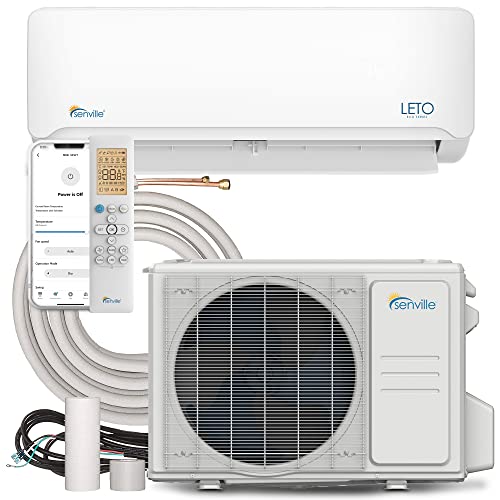
The Senville LETO 2-ton unit is a higher-capacity option with Alexa and app integration, offering flexible remote operation and automation routines compatible with smart home setups.
Call 888-896-7031 for Free Local HVAC Quotes – Compare and Save Today!
- All-Season: Functions as AC, heat pump, dehumidifier, and fan with a turbo function for quick adjustments.
- Efficiency: SEER2 18 rating and DC inverter technology for efficient performance.
- Smart Control: App and voice control support including routines and remote temperature adjustments.
Senville is positioned for homeowners who prioritize smart integration, a high SEER2 rating, and larger area conditioning. It supports consistent heating down to low ambient temperatures and suits larger living spaces or business zones.
ROVSUN 9000 BTU Wifi Enabled Mini Split Air Conditioner & Heater

The ROVSUN 9,000 BTU unit is a compact option for rooms up to about 400 sq. ft. It highlights WiFi connectivity, inverter efficiency, and whisper-quiet operation.
- Energy: 19 SEER2 rating with advanced inverter tech to adjust compressor speed for energy savings.
- Noise: Ultra-quiet 28 dB mute mode for minimal disturbance in sleeping or working areas.
- Range: Rapid cooling/heating across a wide thermostat range and integrated dehumidification.
ROVSUN targets users needing an efficient, small-footprint solution with modern connectivity and low sound levels. Ideal for bedrooms, small living rooms, or compact home offices that require both heating and cooling.
Buying Guide: How To Choose A Mini Split AC Heater
Selecting the right mini split involves evaluating capacity, efficiency, installation, controls, and features aligned to your space and priorities. Below are the core considerations to weigh.
1. Sizing And BTU Capacity
Match the unit’s BTU rating to room size. Under-sizing causes running constantly; oversizing leads to short cycling and poor dehumidification. Use manufacturer guidelines: typical ranges include 9,000 BTU for ~300–400 sq. ft, 12,000 BTU for ~600–750 sq. ft, 18,000 BTU for ~700–800 sq. ft, and 24,000 BTU for larger open areas.
2. Energy Efficiency Ratings
Look for SEER2 and HSPF/HSPF2 ratings for cooling and heating efficiency respectively. Higher SEER2 values indicate better cooling efficiency and lower operating costs. Inverter compressors typically use less energy by modulating speed rather than cycling on/off.
3. Heating Performance And Low-Temperature Operation
If you need winter heating, verify the heat pump’s operational low-temperature limit and HSPF rating. Units with auto-defrost and proven low-ambient heating extend reliable performance in colder climates.
4. Noise Levels
Check published decibel levels for both indoor and outdoor units. Quiet indoor operation (mid-20s to low-30s dB) is preferable for bedrooms and offices. Turbo modes may increase noise temporarily for rapid conditioning.
5. Controls And Smart Features
Decide if WiFi, app control, or voice assistant compatibility matters. Smart integration adds convenience for remote scheduling, energy tracking, and automation but requires secure network setup.
6. Installation Considerations
Mini splits require an outdoor condenser and at least one indoor head with refrigerant lines. Some systems are DIY-friendly (with pre-charged lines), while others require certified HVAC installation. Confirm voltage (115V vs 230V), line set length limits, and whether an installation kit is included.
7. Maintenance And Air Quality Features
Look for washable filters, self-cleaning functions, and operations that reduce mold or odors. HEPA-level filtration is rare in standard mini splits, so consider supplemental air purification if indoor air quality is a priority.
8. Warranty, Certifications, And Support
Review manufacturer warranties and check for AHRI or ETL/UL certifications. Warranty length, customer support availability, and access to replacement parts or service technicians impact long-term ownership experience.
9. Multi-Zone Versus Single-Zone
Decide whether you need a single indoor head for one room or a multi-zone system serving multiple zones from one outdoor condenser. Multi-zone setups save outdoor space but increase system complexity and cost.
10. Cost Of Operation
Estimate operating cost using local electricity rates, unit efficiency (SEER2/HSPF), and expected run hours. Higher-efficiency units often cost more upfront but reduce monthly energy expenses in moderate-to-heavy-use scenarios.
Comparison Perspectives
Compare units by use case: small rooms and bedrooms favor lower BTU quiet models like ROVSUN. Larger living areas or open plans require higher-capacity units such as MRCOOL or Senville. If smart-home integration is important, Senville and WiFi-enabled models provide robust connectivity.
For users prioritizing low maintenance and automatic cleaning, Mountman includes features that minimize manual upkeep. For DIY-friendly installation and higher capacity balance, MRCOOL’s Easy Pro series is commonly chosen where 230V power is available.
Energy-conscious buyers should prioritize inverter-driven units with higher SEER2 ratings, and ensure the system’s rated coverage aligns with actual room characteristics: ceiling height, insulation, sun exposure, and occupancy all affect performance.
Tips for Getting the Best HVAC Prices
- Prioritize Quality Over Cost
The most critical factor in any HVAC project is the quality of the installation. Don’t compromise on contractor expertise just to save money. - Check for Rebates
Always research current rebates and incentives — they can significantly reduce your overall cost. - Compare Multiple Quotes
Request at least three estimates before making your choice. You can click here to get three free quotes from local professionals. These quotes include available rebates and tax credits and automatically exclude unqualified contractors. - Negotiate Smartly
Once you've chosen a contractor, use the proven strategies from our guide — How Homeowners Can Negotiate with HVAC Dealers — to get the best possible final price.