
The following guide compares top-rated mini split AC heater units suited for American homes, garages, and small commercial spaces. This selection focuses on energy efficiency, heating performance, inverter technology, SEER2/HSPF2 ratings, and smart features. The table below summarizes core specs for quick comparison.
| Model | Capacity | Key Feature | Coverage |
|---|---|---|---|
| COSTWAY 12000BTU | 12,000 BTU | 20 SEER2, Inverter Heat Pump | Up to 750 sq.ft |
| ROVSUN 9000BTU | 9,000 BTU | 19 SEER2, WiFi Enabled | Up to 400 sq.ft |
| ROVSUN 11500BTU | 11,500 BTU | 17 SEER2, WiFi & Voice Control | Approx. 500–600 sq.ft |
| MRCOOL 18000BTU | 18,000 BTU | High Capacity, 230V | Up to 800 sq.ft |
| YITAHOME 12000BTU | 12,000 BTU | 20 SEER2, Alexa Compatible | Up to 750 sq.ft |
Content Navigation
COSTWAY 12000BTU Mini Split Air Conditioner & Heater

This wall-mounted ductless system combines a 12,000 BTU capacity with a heat pump and inverter technology designed to reduce cycling and energy use. The unit is AHRI certified and described as suitable for spaces up to 750 square feet.
Operational modes include auto, cool, dry, heat, and fan, with four fan speeds, sleep and ECO modes, iFEEL temperature sensing and turbo function. The included remote has a display that auto-turns off to minimize disturbance.
Key technical highlights are the inverter compressor for smoother power modulation and quieter run cycles. The features emphasize energy-efficient cooling and heating, programmable timers (0.5–24 hours), and a focus on low-noise operation to support bedrooms or living areas.
ROVSUN 9000 BTU Wifi Enabled Mini Split

Call 888-896-7031 for Free Local HVAC Quotes – Compare and Save Today!
The ROVSUN 9,000 BTU unit is a compact ductless split with inverter technology and a 19 SEER2 efficiency rating. It provides heating and cooling for areas up to approximately 400 square feet and supports a wide operating range.
Features include WiFi connectivity, a heat pump for year-round use, and a dehumidification mode to control humidity. The product claims up to 35% energy savings via frequency-adjusting inverter control.
Acoustics are emphasized with a 28 dB mute mode, intended for quiet spaces like bedrooms or offices. The system lists broad applicability for residential and light commercial installations and highlights rapid temperature response between 61°F and 88°F.
ROVSUN 11500 BTU Wifi Enabled Mini Split

The 11,500 BTU ROVSUN model is described as an all-season integrated mini split with cooling, heating, dehumidification, and automated defrost. It advertises ETL and AHRI certifications and a 17 SEER2 rating.
Connectivity options include WiFi and compatibility with voice assistants (Alexa/Google Assistant). The system supports remote control via mobile app and routines for scheduled temperature changes.
Call 888-896-7031 for Free Local HVAC Quotes – Compare and Save Today!
Key usability features are a 24-hour timer, self-diagnosis, sleep and ECO modes, wind swing, and iFEEL functionality. The manufacturer highlights energy savings through inverter modulation and claims operation across a broad temperature range (5°F–122°F).
MRCOOL 18000 BTU 230V Ductless Inverter Mini Split

MRCOOL’s Easy Pro series is a higher-capacity 18,000 BTU, 230V ductless inverter mini split intended for larger rooms up to about 800 square feet. The system integrates a heat pump to deliver year-round climate control.
The product positioning stresses suitability for both residential and light commercial use. Being a 5th generation DIY-design product, MRCOOL emphasizes simplified installation when paired with compatible installation kits.
Performance highlights are its higher capacity for larger zones and combined heating/cooling operation. The unit is presented as a robust option where higher BTU output and wider coverage are required compared with 9,000–12,000 BTU models.
YITAHOME 12000 BTU Mini Split Air Conditioner Heat Pump
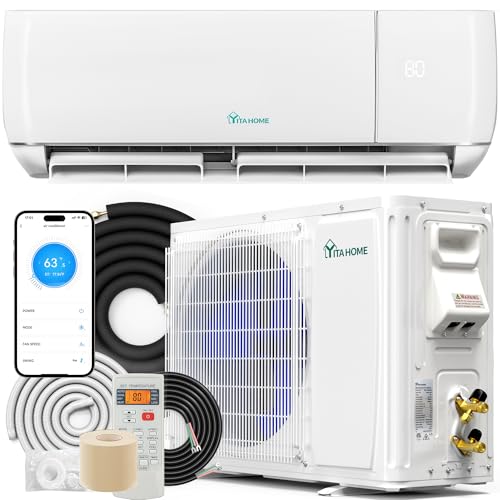
The YITAHOME 12,000 BTU unit pairs a high-power compressor with a heat pump and inverter control, claiming 20 SEER2 efficiency and coverage near 750 square feet. It’s ETL and AHRI certified and supports Alexa for voice control.
Operational modes include auto, cool, dry, heat and fan along with iFEEL sensing, automatic defrosting, self-cleaning, and a HEALTH mode featuring negative ions, electrostatic dust removal, and PM2.5 filtration claims.
Additional features include WiFi control, sleep and energy-saving modes, and noise levels reported under 41 dB. The product focuses on integrated air quality functions and smart home compatibility.
Buying Guide: How To Choose The Right AC Heater Split Unit
Selecting a ductless mini split depends on capacity, efficiency, installation, and control features. Below are key considerations to evaluate across multiple perspectives.
Capacity And Room Coverage
- BTU Sizing: Choose capacity based on room square footage, ceiling height, insulation and sun exposure. Typical guidance: 9,000 BTU ~ 300–450 sq.ft, 12,000 BTU ~ 450–750 sq.ft, 18,000 BTU ~ 650–900+ sq.ft.
- Multiple Zones: For open plans or several rooms, consider multiple indoor heads or a larger multi-zone system rather than one oversized unit.
Energy Efficiency Ratings
- SEER2: Higher SEER2 indicates better cooling-season efficiency. Look for models with SEER2 ratings aligned to your energy goals.
- HSPF2 / Heat Pump Efficiency: For heating, HSPF2 provides a measure of heat pump performance in heating mode. Higher HSPF2 means lower operating cost in cold months.
- Inverter Technology: Inverter compressors modulate power instead of on/off cycling, improving comfort and lowering energy consumption.
Electrical Requirements And Voltage
- 115V vs 230V: Many residential mini splits use 115V for single rooms; larger capacities (18,000 BTU and up) often require 230V. Verify existing home wiring and panel capacity.
- Dedicated Circuit: Most units require a dedicated circuit and proper breaker sizing; consult an electrician for compatibility and safety.
Installation And DIY Considerations
- Pre-Charged Lines: Some systems include a pre-charged condenser and an installation kit, simplifying refrigerant handling. Pre-charged kits can enable a DIY-friendly install for qualified homeowners.
- Professional Installation: For multi-zone systems, complex routing, or local code compliance, professional HVAC installation ensures proper refrigerant handling and warranty coverage.
Controls, Connectivity, And Air Quality
- Smart Features: WiFi, app control, and voice assistant compatibility offer remote control and scheduling convenience. Confirm platform compatibility with your ecosystem.
- Modes And Sensors: Look for iFEEL, sleep, ECO, dehumidify and auto-defrost for tailored comfort and efficiency.
- Filtration & Health Modes: Some models advertise PM2.5 removal, ionization or electrostatic filters. Verify filter types and maintenance needs for indoor air quality goals.
Noise Levels And Comfort
- Decibel Ratings: Lower dB ratings are preferable for bedrooms and living rooms. Manufacturers often list quiet/mute modes for nighttime use.
- Air Distribution: Wide swing and multiple fan speeds support more even temperature distribution and reduce hot/cold spots.
Warranty, Certifications & Support
- Certifications: AHRI, ETL, or similar certifications indicate independent performance verification and safety compliance.
- Warranty: Check compressor and parts warranty terms. Installation by an authorized contractor may be required to preserve warranty coverage.
Comparison Perspectives
- Value vs Efficiency: Higher SEER2 units usually cost more up front but save more on operating bills. Balance initial cost against expected runtime and electricity rates.
- Smart Features vs Simplicity: WiFi and voice control add convenience but can introduce dependency on software updates. Simpler models may be more straightforward for long-term reliability.
- Capacity vs Location: An oversized unit will short-cycle and reduce comfort; undersized leads to insufficient dehumidification and continuous runtime. Right-sizing is critical.
Use this guide to match the selected unit’s capacity, efficiency, installation needs, and smart features to your space and lifestyle. Confirm electrical compatibility and local code requirements before purchase and installation.
Tips for Getting the Best HVAC Prices
- Prioritize Quality Over Cost
The most critical factor in any HVAC project is the quality of the installation. Don’t compromise on contractor expertise just to save money. - Check for Rebates
Always research current rebates and incentives — they can significantly reduce your overall cost. - Compare Multiple Quotes
Request at least three estimates before making your choice. You can click here to get three free quotes from local professionals. These quotes include available rebates and tax credits and automatically exclude unqualified contractors. - Negotiate Smartly
Once you've chosen a contractor, use the proven strategies from our guide — How Homeowners Can Negotiate with HVAC Dealers — to get the best possible final price.