
Choosing the right air heater system means balancing capacity, efficiency, installation type, and smart features. Below is a quick summary of five ductless mini-split and heat pump systems selected for varied home and small commercial needs.
| Product | Key Feature |
|---|---|
| COSTWAY 12000BTU Mini Split Air Conditioner & Heater | Inverter Heat Pump, 20 SEER2, 12000 BTU |
| MRCOOL 18000 BTU Easy Pro Mini Split | DIY-Friendly, 18000 BTU, 230V |
| YITAHOME 12000 BTU Wifi Enabled Mini Split | WiFi + Alexa Compatible, 20 SEER2 |
| Senville LETO Series 24000 BTU Mini Split | 2-Ton Capacity, Works With Alexa, SEER2 18 |
| ROVSUN 9000 BTU Wifi Enabled Mini Split | Quiet Operation, 19 SEER2, 9000 BTU |
Content Navigation
- COSTWAY 12000BTU Mini Split Air Conditioner & Heater
- MRCOOL 18000 BTU 230V Ductless Inverter Mini Split
- YITAHOME 12000 BTU Wifi Enabled Mini Split
- Senville LETO Series 24000 BTU Mini Split Heat Pump
- ROVSUN 9000 BTU Wifi Enabled Mini Split Air Conditioner & Heater
- Buying Guide: How To Choose An Air Heater System
COSTWAY 12000BTU Mini Split Air Conditioner & Heater

The COSTWAY 12000BTU mini split is a wall-mounted ductless system combining cooling and heating via a heat pump. It uses inverter technology to modulate compressor speed, reducing cycling and improving efficiency. The unit is AHRI certified and designed for spaces up to roughly 750 sq. ft.
Operational modes include auto, cool, dry, heat, and fan, plus four fan speeds and specialty functions like sleep, ECO, iFEEL, and turbo. Remote control offers a 0.5–24 hour timer and a display that auto-dims for nighttime use. Quiet operation is emphasized for bedrooms or living areas.
Installation requires mounting the indoor head and outdoor condenser with a lineset; the product comes pre-charged to simplify setup when installed per instructions. Key considerations include ensuring appropriate circuit and breaker compatibility for 115V operation.
MRCOOL 18000 BTU 230V Ductless Inverter Mini Split

Call 888-896-7031 for Free Local HVAC Quotes – Compare and Save Today!
The MRCOOL 18000 BTU Easy Pro mini split offers a higher capacity option suitable for larger rooms up to ~800 sq. ft. It combines a heat pump with inverter-driven compressor technology to provide steady temperature control and energy savings compared with non-inverter units.
This model emphasizes DIY installation features that can reduce labor complexity for experienced homeowners or contractors familiar with electrical and refrigerant connections. It operates on 230V power and supports both heating and cooling year-round use.
When evaluating this system, confirm the electrical supply and breaker sizing for 230V operation, and assess whether indoor airflow, mounting location, and outdoor clearance meet manufacturer guidelines for performance and warranty compliance.
YITAHOME 12000 BTU Wifi Enabled Mini Split

The YITAHOME 12000 BTU mini split integrates WiFi and Alexa compatibility for remote control and scheduling via mobile apps or voice control. It advertises up to 25% energy savings through inverter operation and is ETL and AHRI certified for reliability.
Key modes include auto, cool, dry, heat, and fan, plus a HEALTH mode offering negative ion generation and particulate removal features (PM2.5/ electrostatic dust removal). Noise levels are reported below 41 dB for quiet operation in residential settings.
Call 888-896-7031 for Free Local HVAC Quotes – Compare and Save Today!
Consider compatibility with your home automation ecosystem, signal reliability for WiFi controls, and whether advanced filtration or health-oriented features align with indoor air quality goals in the target space.
Senville LETO Series 24000 BTU Mini Split Heat Pump
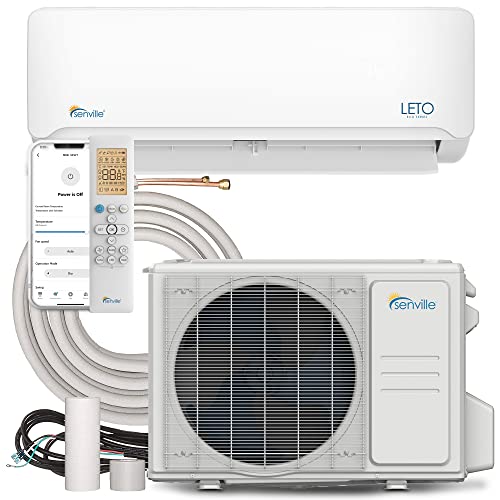
The Senville LETO Series delivers a 24000 BTU, 2-ton capacity for large open areas, small apartments, or multi-room scenarios when used with multi-zone configurations. It features inverter technology and a SEER2 rating of 18, balancing performance and efficiency.
This model supports Alexa integration for voice control and app-based routines. It functions as a 4-in-1 system: air conditioning, heat pump, dehumidifier, and fan, and is rated to operate efficiently in cool conditions (heat pump functional down to low ambient temps depending on settings).
For proper sizing, match capacity to conditioned space load; larger units may short-cycle in undersized rooms, while undersized units will struggle in very cold climates. Verify local code and electrical requirements for 208/230V installations.
ROVSUN 9000 BTU Wifi Enabled Mini Split Air Conditioner & Heater

The ROVSUN 9000 BTU mini split is a compact option for smaller rooms up to ~400 sq. ft. It highlights ultra-quiet operation with noise levels down to 28 dB in mute mode and a 19 SEER2 efficiency rating for energy savings through inverter modulation.
This unit covers both heating and cooling needs with a heat pump and offers dehumidification, auto modes, and WiFi-enabled controls. The system is pre-charged and supplied with an installation kit, simplifying the mechanical setup when performed per instructions by a qualified installer.
Small-capacity systems like this are appropriate for bedrooms, small offices, and garages. Confirm insulation, window area, and ceiling height when estimating effective coverage to avoid underperformance during extreme weather.
Buying Guide: How To Choose An Air Heater System
Selecting the right air heater system requires evaluating capacity, efficiency, installation complexity, and control features. Below are objective considerations and comparison perspectives to guide purchase decisions.
Capacity And Sizing
- Match BTU To Room Size: Estimate area in square feet; mini-splits commonly range from 9,000 BTU (small rooms) to 24,000+ BTU (large spaces). Oversizing can lead to short-cycling; undersizing causes continuous running and poor comfort.
- Consider Heat Load: Account for insulation, window area, ceiling height, occupant count, and regional climate. Use a heat-load calculator or consult an HVAC professional for accurate sizing.
Efficiency Ratings And Operating Costs
- SEER2/EER/ HSPF: Higher SEER2 and HSPF values indicate better seasonal efficiency for cooling and heating. Inverter systems generally offer better part-load efficiency than fixed-speed compressors.
- Inverter Technology: Modulates compressor speed to maintain set temperatures with fewer cycles, improving comfort and reducing energy use over time.
Heating Technology
- Heat Pump vs Resistive Heat: Heat pumps provide efficient heating by moving heat and work well in moderate climates. Electric resistance heaters provide reliable heat at lower upfront cost but typically higher operating expense.
- Low-Temperature Performance: If you live in cold climates, verify the heat pump’s rated low-ambient performance and defrost cycle characteristics.
Installation And Compatibility
- Voltage And Electrical Requirements: Confirm available circuits (115V vs 230V) and breaker capacity prior to purchase. Larger units usually require 208/230V.
- DIY vs Professional Install: Some systems are marketed for DIY installation but still require refrigerant and electrical expertise. Check warranty conditions related to installation.
- Outdoor Unit Placement: Provide clearance for airflow and service access. Consider noise and visual impact for neighbors and living areas.
Controls, Connectivity, And Features
- Smart Controls: WiFi and voice assistant integration enable remote scheduling and energy monitoring; ensure app compatibility and security.
- Air Quality Functions: Some systems include ionizers, electrostatic filters, or PM2.5-rated features. These assist with particulate reduction but do not replace dedicated air purifiers for severe indoor air quality concerns.
- Noise Levels: Check indoor and outdoor dB ratings if quiet operation is important for bedrooms or offices.
Durability, Certification, And Warranty
- Certifications: AHRI, ETL/UL listings, and ENERGY STAR recognition (when applicable) indicate tested performance and safety compliance.
- Warranty Terms: Compare compressor, parts, and labor warranty coverage and any requirements for professional installation to maintain warranty validity.
Comparison Perspectives
- Small Room Use: Choose compact units with 9,000–12,000 BTU and low-noise operation (e.g., ROVSUN 9000 BTU).
- Large Spaces / Multi-Zone: Consider higher capacity 18,000–24,000 BTU systems or multi-zone solutions (e.g., Senville LETO 24000 BTU).
- Smart Home Integration: If remote control and automation are priorities, select WiFi-enabled units with Alexa or app support (e.g., YITAHOME).
- DIY Installation Preference: Models marketed for Easy Pro or DIY installation may reduce installation costs, but check local codes and electrical requirements (e.g., MRCOOL Easy Pro).
Maintenance And Long-Term Considerations
- Filter Access And Cleaning: Confirm filter accessibility and replacement frequency to maintain airflow and efficiency.
- Seasonal Service: Plan for occasional professional inspections of refrigerant charge, electrical connections, and condensate drainage to sustain performance.
- Operating Modes: Modes like dehumidify, ECO, and iFEEL can improve comfort and reduce runtime in many conditions.
These objective considerations should help narrow options between compact, quiet mini-splits and higher-capacity heat pump systems. For exact sizing and installation, consult product documentation and a licensed HVAC professional to ensure safe, code-compliant installation and to preserve warranty coverage.
Tips for Getting the Best HVAC Prices
- Prioritize Quality Over Cost
The most critical factor in any HVAC project is the quality of the installation. Don’t compromise on contractor expertise just to save money. - Check for Rebates
Always research current rebates and incentives — they can significantly reduce your overall cost. - Compare Multiple Quotes
Request at least three estimates before making your choice. You can click here to get three free quotes from local professionals. These quotes include available rebates and tax credits and automatically exclude unqualified contractors. - Negotiate Smartly
Once you've chosen a contractor, use the proven strategies from our guide — How Homeowners Can Negotiate with HVAC Dealers — to get the best possible final price.