
Short Introduction: Choosing the right band heater or pipe heating solution depends on pipe diameter, material, environment, and whether you need freeze protection or improved heat reclamation. The table below summarizes five relevant products covering heating cables, stove-pipe reclaim rings, and adjustable metal strap clamps useful for fitting band-style heaters.
| Product | Type | Key Feature |
|---|---|---|
| WUKHG 12FT Pipe Heat Tape | Self-regulating Heat Cable | Built-in thermostat, -40°F capability |
| HEATIT Heating Cable 6ft | Self-regulating Heat Tape | CSA & ETL certified, thermostat |
| TredNot 8″ Stovepipe Rings | Stovepipe Heat Reclaimer | 28 ga. aluminum, radiates stove heat |
| Detex 6″ Stovepipe Rings | Stovepipe Heat Reclaimer | Improves room heat from stovepipe |
| Steelsoft 12FT Metal Strap Kit | Adjustable Metal Band/Strapping | Cut-to-fit metal strap + fasteners |
Content Navigation
12FT Pipe Heat Tape With Thermostat (WUKHG)

This product is a self-contained heat cable designed to prevent pipe freezing. It lists a built-in thermostat that automatically activates at colder temperatures, and the manufacturer states protection down to -40°F. The cable runs at 7W/ft and is rated for use on both metal and plastic pipes.
Features cited include an automatic temperature control (turns on near 41°F and off near 55.4°F), a weather-resistant PVC jacket for durability, and an end seal treated for improved waterproofing. The 12-foot length fits many short pipe runs or can be cut/connected according to installation instructions from the maker.
Use case: freeze protection for exterior or poorly insulated pipes, basement risers, and other exposed plumbing where consistent low-temperature performance is needed. Installation requires following the provided guide for spacing, securing, and insulating over the cable where recommended.
HEATIT Heating Cable Self-Regulating 6ft

Call 888-896-7031 for Free Local HVAC Quotes – Compare and Save Today!
The HEATIT heating cable is a self-regulating heat tape that includes a plug with indicator, built-in thermostat, and is CSA & ETL certified. It operates at 7W/ft and is intended for water-filled pipes—both metal and certain plastics like PEX—according to the product notes.
Certification is emphasized: the cable and plug meet recognized safety standards for North America. The product comes with an installation recommendation of up to 1/2-inch fiberglass insulation over the cable for colder conditions, and instructions caution against overlapping the cable on itself.
Use case: Situations where verified safety certifications are a priority, such as municipal or commercial installations, or homeowners seeking a tested, plug-and-play heating cable for vulnerable indoor plumbing lines.
TredNot 8″ Stovepipe Heat Reclaim Rings

TredNot offers 28-gauge aluminum collars that clip around an 8-inch diameter stovepipe. These collars are 1.5 inches wide and designed to reclaim and radiate heat from a stovepipe before it exits to the chimney, increasing usable room heat and apparent stove efficiency.
The product notes a fit for a ~25-inch circumference (8-inch diameter) pipe and emphasizes simple, passive heat exchange. The aluminum construction provides thermal conductivity to transfer heat outward into the living space rather than allowing all heat to continue up the flue.
Call 888-896-7031 for Free Local HVAC Quotes – Compare and Save Today!
Use case: wood or pellet stove owners who want passive heat reclamation without adding active electrical heating. These collars are not electrical heaters, but they function like radiator fins to increase emitted heat.
Detex 6″ Stovepipe Heat Reclaimer Rings

Detex provides similar stovepipe radiator bands sized for 6-inch diameter stovepipes. Constructed from high thermal conductivity aluminum, the rings are intended to capture wasted heat and exchange it into the room. The product lists approximate fit for a ~19-inch circumference pipe.
These collars are passive, require no power, and are commonly used to boost room warmth around stoves and wood burners where added convection or radiation is desired closer to living space.
Use case: Smaller stovepipes and compact stoves where a 6-inch reclaim ring fits the pipe and where users want passive heat dispersion without electrical components or wiring concerns.
Steelsoft 12FT Stainless Metal Strap Kit
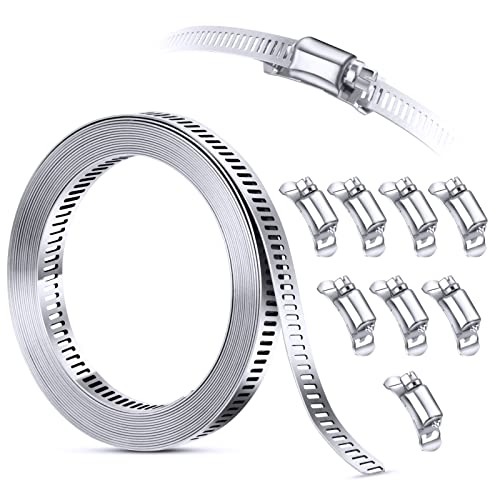
Steelsoft supplies a cut-to-fit metal strap kit with 12 feet of 304 stainless steel banding and multiple fasteners to form adjustable worm-drive style clamps or custom bands. The kit is presented as a DIY solution to create large-diameter clamps up to 45 inches circumference by trimming the strap and inserting fasteners.
Key features include easy-to-follow instructions, compatibility with simple tools (tin snips, pliers, screwdriver or nut driver), and the flexibility to produce odd-sized bands for ducting, hoses, or as a mounting strap for heating cable or wrap-around heating elements.
Use case: When a pre-made band heater or clamp is not available for a particular pipe diameter or when a custom metal band is needed to secure a heating cable, insulation, or a passive reclaim ring, this strap kit can adapt to many sizes and shapes.
Buying Guide: How To Choose A Pipe Band Heater
Below are key considerations and comparison perspectives to guide selection between active heating cables, passive stovepipe rings, and custom metal banding.
1. Heating Objective
- Freeze Prevention: Choose self-regulating heat cable or heat tape with thermostat and appropriate wattage per foot.
- Heat Reclamation: Passive aluminum rings or collars capture flue/stovepipe heat for room heating.
- Surface Heating Or Process Temperature: Metal band heaters designed for industrial pipes are separate product class; for home plumbing, heat tape is typical.
2. Pipe Material And Diameter
- Plastic Pipes (PEX, PVC): Confirm manufacturer permission. Many heating cables specify suitability for water-filled plastic pipes.
- Metal Pipes: Both heating cable and passive rings work; metal conducts heat well and benefits from taped cable contact.
- Diameter Fit: Measure circumference/diameter. Passive rings come in fixed diameters; strap kits allow custom sizing.
3. Power, Thermostat, And Control
- Self-Regulating Cables: Adjust output with ambient temperature — safer for variable conditions.
- Built-In Thermostats: Automatic on/off minimizes energy use. Look for activation temperatures that match your freeze risk.
- Manual Controls: Some systems need an external thermostat for precise control.
4. Safety And Certification
- Certifications: CSA, ETL, UL marks indicate compliance with regional safety standards; prefer certified cables for home or commercial use.
- Installation Guidelines: Avoid overlapping heating cables on themselves. Follow insulation thickness limits and instructions for attachment methods.
5. Durability And Environment
- Outdoor/Harsh Conditions: Weather-resistant jackets and treated end seals are important for longevity.
- Indoor/Stove Use: Passive rings should resist high temperature and oxidation; aluminum is common for stovepipe rings.
6. Attachment Methods
- Clamps And Straps: Worm-drive clamps, custom metal straps, or factory band heater clamps secure heating cable or bands. Stainless steel kits provide adaptability for unusual sizes.
- Adhesives Or Tape: Use manufacturer-approved tapes or ties when securing heat cable. Avoid materials that melt at operating temperatures.
7. Insulation And Energy Efficiency
- Insulate Exposed Pipes: Proper insulation over heat tape increases efficiency and reduces energy draw while maintaining the target temperature.
- Passive Systems: Reclaimer rings increase usable heat without energy input but don’t prevent freezing.
8. Installation Complexity And Maintenance
- Plug-In Cables: Easier, often include indicator lights and user guides.
- Hardwired Systems: May require electrician installation for permanent solutions.
- Maintenance: Inspect heat tape annually for wear; metal rings and straps should be checked for corrosion or loosening.
9. Cost Perspective And Value
- Upfront Cost vs Long-Term Savings: Heat cables with thermostats can reduce energy use; passive rings save no electricity but improve stove efficiency.
- Custom vs Off-The-Shelf: Metal strap kits offer flexibility and may reduce the need to buy multiple clamp sizes.
10. Comparison Summary
- Use Heat Cable When: Freeze protection, long pipe runs, and need for active temperature control are priorities.
- Use Passive Rings When: Reclaiming stove/flue heat into living spaces without electricity is the goal.
- Use Strap Kits When: Custom band sizes or retrofitting nonstandard pipes or securing heating elements is required.
Final note: Always consult product documentation and local codes, and when in doubt about electrical or plumbing work, consult a licensed professional to ensure safe, code-compliant installation.
Tips for Getting the Best HVAC Prices
- Prioritize Quality Over Cost
The most critical factor in any HVAC project is the quality of the installation. Don’t compromise on contractor expertise just to save money. - Check for Rebates
Always research current rebates and incentives — they can significantly reduce your overall cost. - Compare Multiple Quotes
Request at least three estimates before making your choice. You can click here to get three free quotes from local professionals. These quotes include available rebates and tax credits and automatically exclude unqualified contractors. - Negotiate Smartly
Once you've chosen a contractor, use the proven strategies from our guide — How Homeowners Can Negotiate with HVAC Dealers — to get the best possible final price.