
Choosing the right baseboard heater dial or thermostat ensures accurate temperature control and safe operation. Below is a quick comparison of five selected replacement dials and thermostats suited for electric baseboard heaters. Use the table to match features, compatibility, and control type before reading the detailed product sections.
| Product | Type | Voltage/Amps | Key Feature |
|---|---|---|---|
| 2PCS Baseboard Heater Thermostat Dial Knob (Generic) | Mechanical Replacement Knob | Accessory | Physical knob dimensions, pack of 2 |
| Marley Engineered Products Thermostat Knob | Mechanical Replacement Knob | Accessory | Ribbed grip, fits many heater models |
| Cadet Single Pole Built-In Thermostat Kit (BTF1W) | Built-In Mechanical Thermostat | 22 Amp, 240/208/120 Volt | 45°F–80°F range, mounts to heater end |
| Honeywell T410A1013 Electric Baseboard Thermostat | Line Voltage Wall Thermostat | Two-wire, line voltage | Color-coded leads, micro switch mechanism |
| YeloDeer Dual Voltage Manual Thermostat | Electronic Manual Thermostat | 120/240V, Max 20A | Higher accuracy, 40°F–80°F range |
Content Navigation
- 2PCS Baseboard Heater Thermostat Temperature Control Dial Knob Replacement
- Marley Baseboard Heater Thermostat Temperature Control Knob
- Cadet Single Pole Built-In Thermostat Kit For Cadet Baseboard Heaters
- Honeywell T410A1013 Electric Baseboard Heat Thermostat
- YeloDeer Dual Voltage 4-Wire Manual Electric Baseboard Thermostat
- Buying Guide: How To Choose The Right Baseboard Heater Dial Or Thermostat
- 1. Compatibility And Mounting
- 2. Voltage, Amperage, And Wiring
- 3. Mechanical Knob Replacement Vs Full Thermostat
- 4. Mechanical (Bimetal/Microswitch) Vs Electronic Control
- 5. Temperature Range And Control Granularity
- 6. Physical Fit And Shaft Interface
- 7. Installation Complexity And Tools
- 8. Safety And Certification
- 9. Longevity And Mechanism Type
- 10. Room Size And Heater Capacity
- 11. User Interface Preferences
- 12. Maintenance And Replacement Strategy
- Comparison Perspectives
2PCS Baseboard Heater Thermostat Temperature Control Dial Knob Replacement

This replacement knob pack includes two knobs sized for common baseboard heater shafts. The listed dimensions show an outer diameter of 2 inches and a D-shaped opening approximately 1/4″ long by 5/32″ wide. The knobs have ribbed sides to assist grip and are intended for use on the left or right front of compatible heaters.
- Package Size And Weight: 4.3″ x 2.95″ x 0.5″, 0.03 LB; includes 2 pieces.
- Fit Notes: Designed for shafts with D-shaped openings; confirm shaft dimensions before purchase.
- Use Case: Ideal when the original knob is damaged or missing and the heater’s thermostat mechanism is functional.
As a simple mechanical accessory, this option replaces the manual interface only; it does not change thermostat behavior or electrical characteristics.
Marley Baseboard Heater Thermostat Temperature Control Knob

The Marley replacement knob is manufactured for a range of baseboard heaters that use a front-mounted control knob. The product listing notes it may not be compatible with units that have end-mounted knobs. The ribbed sides are intended to improve user grip for setting adjustments.
Call 888-896-7031 for Free Local HVAC Quotes – Compare and Save Today!
- Included Items: 1 knob per package.
- Compatibility Scope: Designed for many heater models by Marley, Fahrenheat, Dayton, Qmark, and Berko; check mounting location before ordering.
- Installation: Manual mechanical replacement—no wiring changes required.
This knob serves as a direct physical replacement and is useful in maintenance scenarios where the control interface is worn but the thermostat unit remains operative.
Cadet Single Pole Built-In Thermostat Kit For Cadet Baseboard Heaters
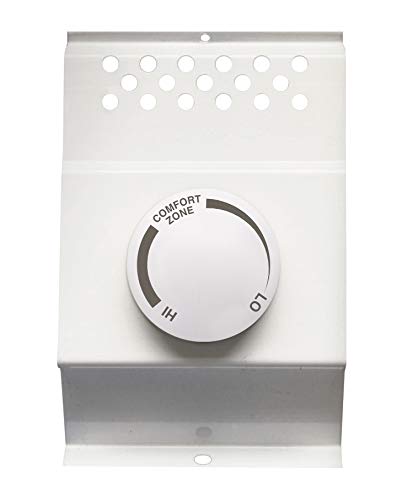
The Cadet BTF1W is a built-in mechanical thermostat kit specifically made for Cadet F-series electric baseboard heaters. It provides a simple twist-dial interface and was designed to mount to either end of the heater, which can help avoid extra wiring runs.
- Temperature Range: 45°F to 80°F (7°C to 27°C).
- Electrical Rating: 22 Amp suitable for 120/208/240 Volt systems (model specification indicates compatibility).
- Installation Notes: Mounts to heater end to eliminate additional wiring; intended for Cadet F-series heaters only.
This kit offers a factory-style replacement or upgrade for Cadet heaters and preserves mechanical simplicity. Confirm model compatibility before replacing to ensure secure mounting and electrical matching.
Honeywell T410A1013 Electric Baseboard Heat Thermostat

The Honeywell T410A1013 replaces many two-wire (T410A) line-voltage wall-mounted electric heating thermostats. It uses a durable micro switch mechanism and includes 6-inch color-coded leads for wiring. This unit is intended for wall mounting rather than direct baseboard mounting.
Call 888-896-7031 for Free Local HVAC Quotes – Compare and Save Today!
- Compatibility: Fits most two-wire line-voltage baseboard heating circuits that accept T410A-style thermostats.
- Installation: Includes color-coded leads to simplify wiring; requires basic electrical knowledge or a qualified electrician for safe installation.
- Mechanism: Uses a long-lasting micro switch for on/off control.
The Honeywell model is a standard replacement for wall-mounted line voltage controls and emphasizes straightforward electrical replacement with proven mechanical reliability.
YeloDeer Dual Voltage 4-Wire Manual Electric Baseboard Thermostat

The YeloDeer thermostat is an electronic manual control designed for both 120V and 240V baseboard systems. It supports up to 20 Amps and provides a temperature range from 40°F to 80°F (4.4°C to 26.7°C). The listing highlights improved accuracy over traditional mechanical thermostats.
- Power And Rating: Max 20A, 2400W@120V and 4800W@240V; supports 4-wire connections.
- Accuracy: Electronic sensing for tighter temperature control compared to mechanical dials.
- Standards: CE and UKCA marked; check local code compliance for line-voltage electronic controls.
Electronic thermostats like this model can reduce temperature swing and improve comfort. Installation may be more complex than swapping a mechanical knob and may require compatibility checks for wiring and load capacity.
Buying Guide: How To Choose The Right Baseboard Heater Dial Or Thermostat
Selecting the correct dial or thermostat for a baseboard heater requires matching electrical specifications, mounting style, and user control preferences. Below are the primary considerations to evaluate.
1. Compatibility And Mounting
Confirm whether the control is heater-mounted (built into the baseboard) or wall-mounted. Some thermostat kits are designed to mount to the heater end (e.g., Cadet BTF1W), while others are wall-mounted replacements (e.g., Honeywell T410A). Also verify whether your heater’s knob is front-mounted or end-mounted; mechanical knobs listed may not fit end-mounted shafts.
2. Voltage, Amperage, And Wiring
Match the thermostat’s voltage and current rating to your heater circuit. Typical ratings include 120V or 240V and amperage ratings like 20A or 22A. Electronic models may specify separate wattage capacities at each voltage. If you are unsure about wiring, consult a qualified electrician to verify compatibility and ensure compliance with electrical codes.
3. Mechanical Knob Replacement Vs Full Thermostat
Replacement knobs restore the user interface without altering temperature control accuracy or electrical behavior. Choose knobs when the original control mechanism is intact. Replace the entire thermostat when the control mechanism, sensor, or switch is faulty or when upgrading from mechanical to electronic control for improved accuracy.
4. Mechanical (Bimetal/Microswitch) Vs Electronic Control
Mechanical thermostats use thermostatic elements and switches and are simple and durable. Electronic thermostats use sensors and solid-state control for finer temperature regulation. Consider accuracy needs, potential for temperature swing, and the complexity of wiring when choosing between these types.
5. Temperature Range And Control Granularity
Check the thermostat’s control range (e.g., 40°F–80°F or 45°F–80°F). Electronic models often offer more precise control and smaller temperature differentials. Decide whether you need coarse manual control or tight room-temperature stability.
6. Physical Fit And Shaft Interface
For replacement knobs, confirm shaft shape and dimensions. The Generic 2PCS knob specifies a D-shaped opening and exact measurements; matching these prevents loose fit or slippage. Ribbed knobs provide better grip for older users or frequent adjustments.
7. Installation Complexity And Tools
Many knobs are simple push-on replacements. Built-in thermostat kits and wall thermostats require wire connections; some include color-coded leads to simplify installation. Electronic thermostats may require more complex wiring and sometimes a neutral connection or a specific wiring configuration.
8. Safety And Certification
Verify that the product meets relevant safety standards for your region (UL, CE, etc.). Line-voltage devices should comply with local electrical codes. For electronic units, check manufacturer guidance about ambient temperature, enclosure, and ventilation to prevent overheating.
9. Longevity And Mechanism Type
Mechanical thermostats and knobs are simple, often long-lived, and easy to replace. Micro switch mechanisms (as in Honeywell models) are robust. Electronic units may include surge protection or more complex components—review manufacturer specifications for expected lifespan and maintenance notes.
10. Room Size And Heater Capacity
While the dial itself doesn’t change heat output, ensure the thermostat rating aligns with the heater capacity. Some baseboard units require a specific thermostat rating or kit. For larger rooms or higher wattage heaters, select controls rated for the appropriate current and voltage.
11. User Interface Preferences
Decide between a simple twist dial and more advanced electronic displays or programmable options. If precise scheduling or remote control is desired, consider thermostats that offer those features—keeping in mind additional wiring and configuration requirements.
12. Maintenance And Replacement Strategy
Keep spare knobs on hand if dials are prone to wear or breakage. For older heaters with failing thermostats, consider a full thermostat replacement rather than repeated knob swaps to resolve underlying control or safety issues.
Comparison Perspectives
- Simplicity: Replacement knobs (Generic, Marley) are fastest to install with minimal risk.
- Compatibility Focus: Cadet kits are optimized for Cadet F-series heaters and avoid extra wiring when mounted to the heater.
- Accuracy: Electronic thermostats (YeloDeer) generally offer better temperature stability than basic mechanical dials.
- Versatility: Honeywell wall-mounted units fit many two-wire line-voltage systems and are a standard replacement option.
Use the above considerations to match physical fit, electrical requirements, and control precision to your heating setup before selecting a replacement dial or thermostat.
Tips for Getting the Best HVAC Prices
- Prioritize Quality Over Cost
The most critical factor in any HVAC project is the quality of the installation. Don’t compromise on contractor expertise just to save money. - Check for Rebates
Always research current rebates and incentives — they can significantly reduce your overall cost. - Compare Multiple Quotes
Request at least three estimates before making your choice. You can click here to get three free quotes from local professionals. These quotes include available rebates and tax credits and automatically exclude unqualified contractors. - Negotiate Smartly
Once you've chosen a contractor, use the proven strategies from our guide — How Homeowners Can Negotiate with HVAC Dealers — to get the best possible final price.