
Basements need durable, efficient heating to manage damp, cool spaces and uneven insulation. This guide compares five baseboard and wall-mounted electric heaters suited for basements, highlighting installation type, power, safety features, and suitability by room size.
| Product | Type / Key Feature | Power |
|---|---|---|
| Cadet F Series 48″ Electric Baseboard Heater | Hard-wired baseboard, high wattage, thermal shutoff | 1000/750W (240/208V) |
| Cadet F Series 36″ Electric Baseboard Heater | 120V model; requires thermostat | 750W (120V) |
| KING 4K1210BW K Series Baseboard Heater | Aluminum ribbon fin element, full-length safety cutout | 1000W (120V) |
| EZ-HEAT 1500W Baseboard Heater | Adjustable thermostat, overheat & tip-over protection | 1500W (convection) |
| Heat Storm HS-1500-PHX-WIFI Infrared Heater | Wall-mounted infrared, Wi‑Fi control | 1500W (infrared) |
Content Navigation
Cadet F Series 48″ Electric Baseboard Heater
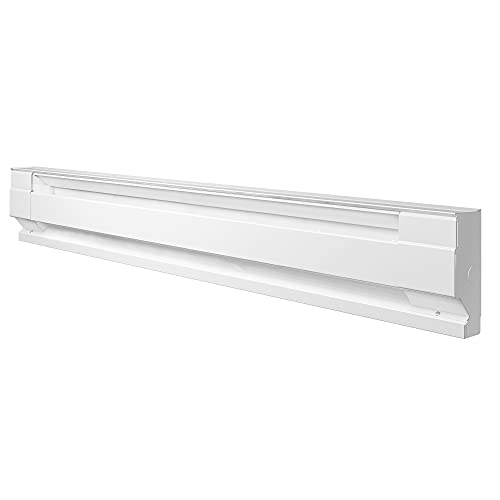
Overview: The Cadet F Series 48″ model is a hard-wired baseboard heater designed for small to medium rooms. It supports 1000/750 watts at 240/208 volts, making it suitable for larger basement areas when wired to the proper circuit.
Key Features: The unit includes pre-punched knockouts for easier wiring, and a high-temperature safety shutoff to reduce overheating risk. The design supports floor or wall mounting and universal wiring to simplify installation.
Basement Fit: Best for finished basements with dedicated 240V lines and where a higher wattage heater is needed to overcome poor insulation or cooler floor surfaces. Requires proper electrical setup and a compatible thermostat for room temperature control.
Cadet F Series 36″ Electric Baseboard Heater
Call 888-896-7031 for Free Local HVAC Quotes – Compare and Save Today!
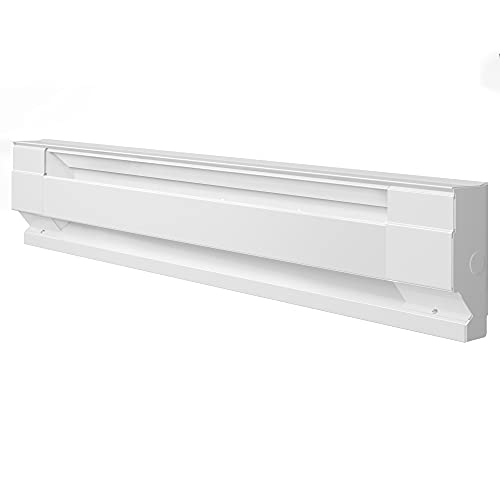
Overview: The Cadet 36″ is a 120V, 750W model intended for smaller rooms or zones. It requires a thermostat for temperature control and is constructed from 25-gauge steel with a 20-gauge junction box.
Key Features: The heater is all metal with powder coating and includes grounding. It’s a straightforward convection baseboard heater for retrofit or new installations where a 120V circuit is available.
Basement Fit: Suitable for small finished sections of a basement, workshops, or utility rooms. Use where a dedicated thermostat can manage the zone and where lower wattage is sufficient to maintain comfort without 240V wiring.
KING 4K1210BW K Series Baseboard Heater

Overview: The KING K Series 4′ baseboard heater is a 1000W, 120V hard-wired unit featuring an aluminum ribbon fin element for efficient heat transfer and a full-length safety cutout.
Key Features: Designed for direct wiring (non plug-in), this model emphasizes consistent convection heating and integrated safety measures. Installation requires standard electrical wiring and can be placed along cold walls or windows common in basements.
Call 888-896-7031 for Free Local HVAC Quotes – Compare and Save Today!
Basement Fit: Appropriate for single rooms or zones in a basement where 120V hard-wiring is available and a reliable, maintenance‑free convection heater is preferred. The aluminum ribbon fin improves heat dispersal over the unit length.
EZ-HEAT 1500W Baseboard Heater With Thermostat

Overview: The EZ-HEAT CZ600 is a convection baseboard heater delivering 1500 watts and featuring an adjustable thermostat and multiple safety systems including overheat protection and tip-over switch.
Key Features: The unit advertises whisper-quiet operation, two heat settings, dent-proof end panels, and a stay-cool exterior. Safety features include an overheat sensor and tip-over shutoff for added protection in flexible basement layouts.
Basement Fit: Useful in medium-sized finished basement rooms where a plug-in or easily installed convection unit is desired. The higher wattage aids faster temperature recovery in cooler subterranean spaces but verify circuit capacity before installation.
Heat Storm HS-1500-PHX-WIFI Infrared Wall Heater

Overview: The Heat Storm HS-1500 is a Wi‑Fi enabled infrared wall-mounted heater that delivers targeted warmth using infrared heating elements without relying solely on convection.
Key Features: Includes smartphone control via Wi‑Fi, a digital thermostat, remote, tip-over safety shutoff, and a space-saving wall mount design. Infrared heating warms objects and people directly, which can feel efficient in drafty basement areas.
Basement Fit: Best for basements where wall mounting is possible and where instant, zone-specific heating is preferred. Infrared is effective for occupied areas or workspaces and minimizes heat lost to cold floors and high ceilings.
Buying Guide: Choosing A Baseboard Heater For Your Basement
Basement heating needs vary by square footage, insulation, ceiling height, and intended use. Below are the primary factors to compare when selecting a unit for a basement.
Heating Type And Efficiency
- Convection Baseboards: Heat air that rises from the unit. Best for whole-room, even heating and continuous background warmth.
- Infrared / Radiant Heaters: Heat objects and people directly. Useful for spot heating, drafty basements, or areas with high ceilings.
- Wattage And Room Size: More watts equal more heat. Estimate 10–15 watts per square foot as a baseline, with higher amounts for poorly insulated basements.
Electrical Requirements And Installation
- 120V vs 240V: 120V units typically offer up to 1500W; 240V units allow higher combined wattage and are preferable for larger spaces. Confirm circuit capacity and breaker availability.
- Hard‑Wired vs Plug-In: Permanent baseboards like Cadet and KING require hard-wiring and professional installation. Portable or plug-in models can be easier to install but may limit placement.
- Thermostat Compatibility: Some units require a wall thermostat; others have built-in thermostats or smart controls. Decide whether whole-room zoning or smart scheduling matters.
Safety Features
- Overheat Protection: Shuts unit off if temperatures exceed safe levels—important in enclosed basement areas.
- Tip‑Over Switch: Relevant for portable or freestanding units, not fixed baseboards.
- Surface Temperatures: Models with stay-cool exteriors and protective covers reduce burn risk for children and pets.
Durability And Maintenance
- Material And Finish: Steel or powder-coated finishes resist rust in humid basements. Aluminum fins improve heat transfer while being lightweight.
- Covers And Replacement Fronts: Consider replaceable covers for rusted or dented units—covers like 6ft slip-on options can renew an older system.
- Cleaning: Dust accumulation reduces efficiency. Choose units with accessible grills for periodic vacuuming or wiping.
Placement And Room Layout
- Cold Walls And Windows: Place baseboards under windows or along exterior walls to counteract cold air infiltration.
- Open Areas: For open-plan basements, multiple smaller units or 240V higher-wattage models often distribute heat more evenly than a single unit.
- Moisture Considerations: In damp basements, use corrosion-resistant units and ensure electrical connections meet local code for basement installations.
Control Options And Convenience
- Built-In Thermostats: Provide local control at the unit but may not reflect whole-room average temperature.
- Wall Thermostats And Zoning: Offer centralized control and are recommended for larger, finished basement areas with multiple zones.
- Smart/Wi‑Fi Controls: Allow scheduling and remote adjustments—useful for occupied workspaces or when integrating with smart home systems.
Comparing Models For Basement Use
- High Wattage & 240V Models (Cadet 48″): Better for larger or poorly insulated basements; requires professional wiring.
- Moderate Wattage & Easy Installation (Cadet 36″, KING 1000W): Good for smaller rooms or workshops where a reliable hard-wired heater is needed.
- High‑Output Portable/Plug Options (EZ-HEAT 1500W): Flexible placement and built-in thermostat; ideal for zone heating without rewiring.
- Infrared Wall Heaters (Heat Storm): Efficient for occupied zones and instant comfort; smart control adds convenience for occasional use.
When selecting a unit, balance installation complexity against ongoing operating needs. Verify local electrical codes and consult a licensed electrician for hard-wired installations or when converting to 240V. Prioritize safety features and corrosion-resistant construction for basement-specific conditions.
Tips for Getting the Best HVAC Prices
- Prioritize Quality Over Cost
The most critical factor in any HVAC project is the quality of the installation. Don’t compromise on contractor expertise just to save money. - Check for Rebates
Always research current rebates and incentives — they can significantly reduce your overall cost. - Compare Multiple Quotes
Request at least three estimates before making your choice. You can click here to get three free quotes from local professionals. These quotes include available rebates and tax credits and automatically exclude unqualified contractors. - Negotiate Smartly
Once you've chosen a contractor, use the proven strategies from our guide — How Homeowners Can Negotiate with HVAC Dealers — to get the best possible final price.