
Choosing between oil-filled baseboard-style heaters and traditional electric baseboard units requires understanding heat retention, installation, and room size needs. Below is a quick summary of the five selected products covered in this guide to help you compare features at a glance.
| Product | Type | Key Feature |
|---|---|---|
| Amazon Basics Oil Space Heater (7 Fins) | Oil-Filled Portable Radiator | 1500W, 3 Heat Settings, Thermostat |
| EZ-HEAT 1,500W Baseboard Space Heater (CZ600) | Electric Baseboard/Portable | Adjustable Thermostat, Tip-Over, Stay-Cool Body |
| KING 4K1210BW K Series 4′ 1000W | Hard-Wired Electric Baseboard | Aluminum Ribbon Fin, Full-Length Safety Cutout |
| Cadet F Series 36″ Electric Baseboard (3F750-1W) | Hard-Wired Electric Baseboard | 120V, 750W, All Metal Construction |
| Cadet F Series 96″ Electric Baseboard (8F2500W) | Hard-Wired Electric Baseboard | 240/208V, Up To 2500W, Safety Shutoff |
Content Navigation
- Amazon Basics Oil Space Heater, 7 Fins, 1500W
- EZ-HEAT 1,500 Watt Baseboard Space Heater With Thermostat
- KING 4K1210BW K Series 4′ Baseboard Heater, 1000W
- Cadet F Series 36″ Electric Baseboard Heater 120V 750W
- Cadet F Series 96″ Electric Baseboard Heater 240/208V 2500W
- Buying Guide: Choosing Between Oil-Filled And Electric Baseboard Heaters
- Heat Transfer And Retention
- Installation And Placement
- Room Size And Wattage Requirements
- Energy Efficiency And Operating Costs
- Safety Features To Look For
- Controls And Thermostat Options
- Durability And Build Material
- Noise And Comfort
- Maintenance And Longevity
- Retrofit And Aesthetic Considerations
- Use Case Scenarios
- Comparison Summary
- Final Considerations Before Purchase
Amazon Basics Oil Space Heater, 7 Fins, 1500W

This oil-filled radiator uses sealed oil and seven fins to provide convection heating that retains warmth after the element cycles off. The product offers three heat settings (1500W/900W/600W) and an adjustable thermostat for room-by-room control. Built-in safety features include tip-over protection and ETL certification. The sealed oil design eliminates the need for refilling and reduces surface temperature spikes compared with some direct-element units, while delivering steady heat and longer heat retention after shutdown.
EZ-HEAT 1,500 Watt Baseboard Space Heater With Thermostat

This convection-style baseboard heater is designed for medium-sized rooms and offers two heat settings plus an adjustable thermostat. Key safety features include an overheat protection sensor, tip-over switch, and a stay-cool exterior. The design targets quiet, continuous operation with a focus on safety and easy placement. The unit is presented as suitable for scenarios where a portable or wall-surface baseboard alternative is needed without hard-wiring.
KING 4K1210BW K Series 4′ Baseboard Heater, 1000W

Call 888-896-7031 for Free Local HVAC Quotes – Compare and Save Today!
The KING K Series baseboard is a hard-wired 120V unit designed to replace built-in baseboard heaters and provide steady convection heat. It uses an aluminum ribbon fin element to spread heat and includes a full-length safety cutout. This model is not a plug-in heater; it requires electrical installation. Its profile suits retrofit applications or rooms where a permanent baseboard solution is preferred over portable oil radiators.
Cadet F Series 36″ Electric Baseboard Heater 120V 750W
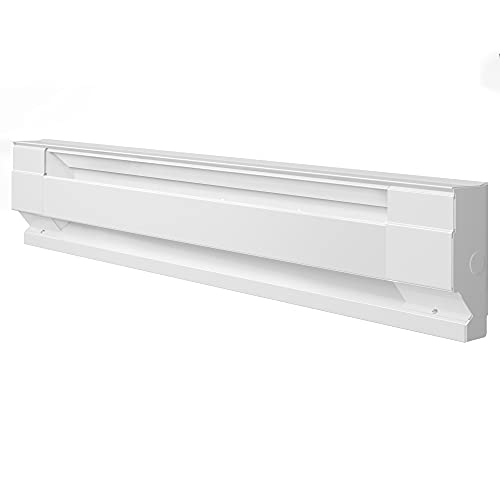
The Cadet 36″ F Series baseboard is a compact 120V hard-wired heater designed for smaller rooms or supplementing central heat. Constructed from 25-gauge steel with a 20-gauge junction box and all-metal powder-coated finish, it requires a separate thermostat for temperature control. The unit’s metal build and convection design emphasize durability and consistent airflow for room heating.
Cadet F Series 96″ Electric Baseboard Heater 240/208V 2500W

The Cadet 96″ model is a high-capacity electric baseboard built for medium to large rooms. It supports 240/208V connections and multi-watt operation (2500/1875W), includes universal wiring and pre-punched knockouts for easier installation, and features a high-temperature safety shutoff. This unit is intended for permanent installation and provides a strong convection output for whole-room heating.
Buying Guide: Choosing Between Oil-Filled And Electric Baseboard Heaters
This buying guide covers the main considerations when choosing between oil-filled radiators and traditional electric baseboard heaters. We’ll compare performance, installation, maintenance, safety, operating costs, and situational fit so you can match the right technology to your needs.
Call 888-896-7031 for Free Local HVAC Quotes – Compare and Save Today!
Heat Transfer And Retention
Oil-filled heaters operate by heating a sealed thermal fluid, then allowing the heated fins to radiate and convect warmth. This leads to longer heat retention after the element cycles off, which can reduce short cycling and provide steadier room temperatures. Electric baseboard heaters heat air directly via exposed elements or finned assemblies; they respond faster to thermostat changes but cool faster when turned off.
Installation And Placement
Portable oil radiators require no wiring beyond plugging into a standard outlet and are simple to move room-to-room. Electric baseboard heaters often require hard-wiring or permanent mounting, especially higher-powered models and those sized for whole-room heating. Consider whether you need a permanent heating solution (hard-wired baseboard) or flexible supplementary heat (portable oil heater).
Room Size And Wattage Requirements
Match wattage to room size: a common rule of thumb is about 10 watts per square foot for typical insulation and ceiling heights, but local climate and room conditions can change this number. For example, a 1500W oil heater suits a small to medium room, while larger rooms may require multiple units or a 2500W hard-wired baseboard.
Energy Efficiency And Operating Costs
Electric resistance heating converts nearly all input into heat, so instantaneous efficiency is high. However, operating costs depend on wattage and local electricity rates. Oil-filled radiators may reduce run cycles due to retained heat, potentially lowering runtime. For whole-house or primary heating, compare expected runtime and thermostat behavior rather than relying solely on wattage numbers.
Safety Features To Look For
- Tip-Over Protection: Important for portable units to cut power if knocked over.
- Overheat/High-Temperature Shutoff: Prevents unsafe internal temperatures in both portable and fixed units.
- Cool-Touch Surfaces: Helpful in homes with children or pets to reduce burn risk.
- Proper Mounting And Electrical Compliance: Hard-wired heaters should be installed per code, ideally by a licensed electrician.
Controls And Thermostat Options
Simple mechanical thermostats are common on oil radiators and some baseboard units. For more precise control, consider models compatible with programmable or electronic thermostats. Some hard-wired baseboards require a separate wall thermostat; ensure the heater and thermostat are electrically compatible (voltage and load ratings).
Durability And Build Material
Look for durable metals and corrosion-resistant finishes for long service life. Oil-filled heaters use sealed metals and are less prone to oxidation if maintained; baseboard units rely on painted steel housings and may include powder-coated finishes and thicker gauge materials for robustness.
Noise And Comfort
Oil-filled radiators run very quietly, producing heat primarily through convection and radiation. Convection baseboards are typically quiet as well, but some ribbon-element designs or those with built-in fans (if any) can produce noise. If silent operation is important, prioritize oil-filled or low-profile convection units noted for quiet operation.
Maintenance And Longevity
Oil-filled units are low-maintenance—no refills are necessary and the sealed fluid does not require replacement under normal conditions. Hard-wired baseboards may need periodic cleaning of dust from fins and verification of electrical connections; regular inspections for paint chipping or rust can extend life.
Retrofit And Aesthetic Considerations
If replacing existing baseboards, consider cover dimensions and mounting methods. Replacement covers are available for hydronic or electric systems to improve looks and safety. Portable radiators avoid installation but may not fit aesthetic goals for permanent heating.
Use Case Scenarios
- Supplemental Or Zoned Heating: Oil radiators provide flexible, quiet supplemental heat for bedrooms or offices.
- Primary Room Heating: Hard-wired baseboards with higher wattage units are suitable for consistently heating larger rooms.
- Retrofit Replacements: Use a hard-wired baseboard of appropriate length and wattage if replacing an existing built-in baseboard system.
Comparison Summary
Oil-Filled Radiators: Provide steady warmth, excellent heat retention, portability, and quiet operation. Best for supplemental, room-by-room heating where portability and surface safety matter.
Electric Hard-Wired Baseboards: Offer higher continuous output options and fit permanent installations. Best for whole-room heating, retrofit replacements, or where wall-mounted solutions are preferred.
Tips for Getting the Best HVAC Prices
- Prioritize Quality Over Cost
The most critical factor in any HVAC project is the quality of the installation. Don’t compromise on contractor expertise just to save money. - Check for Rebates
Always research current rebates and incentives — they can significantly reduce your overall cost. - Compare Multiple Quotes
Request at least three estimates before making your choice. You can click here to get three free quotes from local professionals. These quotes include available rebates and tax credits and automatically exclude unqualified contractors. - Negotiate Smartly
Once you've chosen a contractor, use the proven strategies from our guide — How Homeowners Can Negotiate with HVAC Dealers — to get the best possible final price.
Final Considerations Before Purchase
- Confirm room size and calculate required wattage based on insulation and climate.
- Verify electrical service and panel capacity for hard-wired models; consult an electrician when in doubt.
- Check product safety certifications (ETL, UL) and warranty coverage.
- Balance mobility needs versus permanence: portable oil units for flexibility, fixed baseboards for consistent whole-room heating.
- Plan for thermostat compatibility if precise temperature control or scheduling is needed.