
Choosing the right baseboard heater relay or compatible control part affects safety, performance, and installation ease. Below is a concise comparison of five relevant replacement relays, thermostats, and compatible baseboard models to help you match relay capacity, wiring, and compatibility with your system.
| Product | Type | Key Feature |
|---|---|---|
| Heater Relay Board Replace 77119 | Relay Board | Replacement for Watkins 77119/74618 |
| 77119 Heater Relay Board Compatible | Relay Board Kit | Upgraded 77119 with improved terminal blocks |
| Honeywell RLV3150A1004 | Line-Voltage Thermostat | Digital control up to 3000W @240V |
| Cadet F Series 48″ 4F1000W | Electric Baseboard Heater | 1000/750W, 240/208V with safety shutoff |
| Cadet F Series 36″ 3F750 | Electric Baseboard Heater | 750W, 120V; requires thermostat |
Content Navigation
- Heater Relay Board Replace 77119 (Fits IQ2020)
- 77119 Heater Relay Board Compatible With IQ2020
- Honeywell RLV3150A1004 Line Voltage Thermostat
- Cadet F Series 48″ Electric Baseboard Heater
- Cadet F Series 36″ 3F750 Electric Baseboard
- Buying Guide: Choosing The Right Baseboard Heater Relay Or Control
- 1. Electrical Compatibility
- 2. Relay vs Line-Voltage Thermostat
- 3. Form-Fit And Compatibility
- 4. Safety Features And Certifications
- 5. Diagnostic Capabilities
- 6. Included Hardware And Installation Ease
- 7. Load Distribution And Relay Sizing
- 8. Application Context
- 9. Longevity And Mechanical Considerations
- 10. Troubleshooting And Replacement Indicators
Heater Relay Board Replace 77119 (Fits IQ2020)

This replacement board is marketed as a direct fit for Watkins IQ2020 heater systems and replaces legacy part numbers including 74618 and 73357. It targets users needing a like-for-like relay board swap to restore heater relay function. The listing notes compatibility rather than claimed enhancements beyond OEM fit.
- Compatibility: Replaces Watkins 74618, 73357, and 77119 models.
- Use Case: Swap-in replacement for spas or heater units using IQ2020 style control boxes.
- Installation: Intended for users comfortable with electrical diagnostics and board replacement steps.
77119 Heater Relay Board Compatible With IQ2020
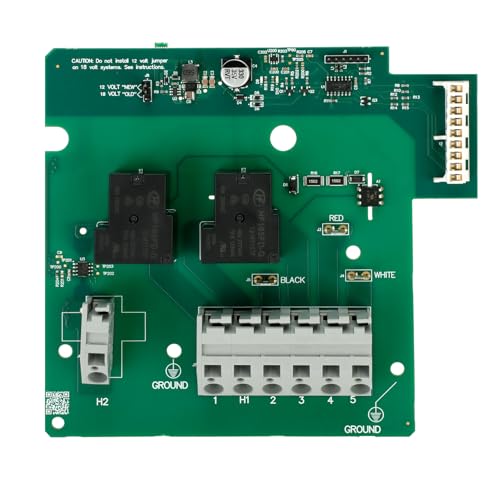
This kit supplies an upgraded heater relay board intended as the latest revision for the IQ2020 control box. The seller includes power jumpers, shortened screws for front cover fitment, and updated terminal blocks designed to reduce relay fatigue and improve heater cord connections.
- Included Kit Items: Upgraded board, power jumpers, screws for cover fit, and revised terminal blocks.
- Design Notes: Improved connection method routes heater power to the H1/H2 positions via large gray terminal blocks to reduce mechanical stress.
- Diagnostics: Seller guidance lists heater LED behavior, voltage checks at H1/H2, and fault D9 flash as indicators that replacement is needed.
Honeywell RLV3150A1004 Line Voltage Thermostat
Call 888-896-7031 for Free Local HVAC Quotes – Compare and Save Today!
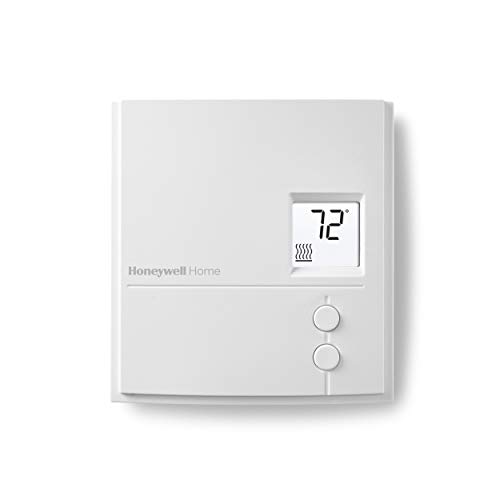
The Honeywell RLV3150A1004 is a digital, non-programmable line-voltage thermostat designed for electric baseboards and convectors. It supports up to 3000W at 240V and is intended for direct control of high-capacity heaters without an intermediate relay in many installations.
- Capacity: Controls up to 3000W @ 240V, suitable for single large baseboard or multi-unit setups if wiring allows.
- User Interface: Push-button digital controls that set temperature and mode without programming cycles.
- Installation: Compatible with line-voltage wiring; installation should follow local electrical codes and may require a junction box and proper mounting.
Cadet F Series 48″ Electric Baseboard Heater
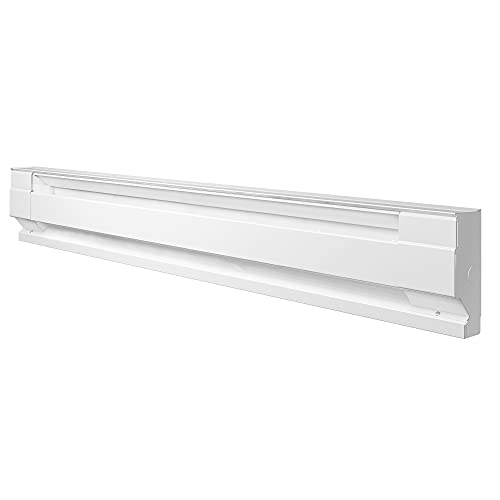
The Cadet 48″ F Series baseboard heater is a conventional electric baseboard rated at 1000W/750W for 240/208V operation. It includes safety shutoff features and universal wiring provisions, making it a common choice paired with thermostats or relay control systems for room-by-room heating.
- Electrical Specs: 1000/750 Watts at 240/208 Volt; suitable for medium rooms when paired with correct controls.
- Safety: High-temperature safety shutoff included; factory features designed to meet typical residential safety expectations.
- Compatibility: Requires a compatible line-voltage thermostat or relay that can handle the heater’s current draw.
Cadet F Series 36″ 3F750 Electric Baseboard
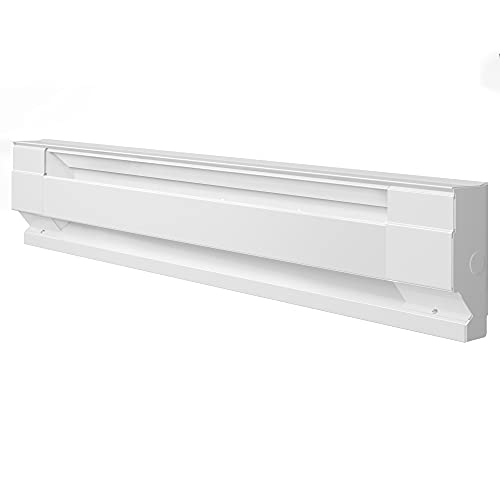
This Cadet 36″ baseboard heater is rated at 750W, 120V and is marketed as requiring a thermostat for operation. It is a lower-power option often used in smaller rooms, closets, or areas where a full 240V heater is not practical.
- Voltage And Power: 120V, 750W; requires a compatible thermostat rated for the heater load.
- Construction: Steel housing and junction box with ground for standard installation practices.
- Use Case: Common choice for retrofit or replacement when lower wattage and single-pole control are sufficient.
Buying Guide: Choosing The Right Baseboard Heater Relay Or Control
Selecting a relay or control for baseboard heaters requires matching electrical, operational, and installation factors. This guide covers the key considerations and comparison perspectives to make an informed selection.
Call 888-896-7031 for Free Local HVAC Quotes – Compare and Save Today!
1. Electrical Compatibility
Confirm the voltage (120V vs 240V) and the current/wattage of your heater. Relays and thermostats must be rated equal to or above the heater’s full-load amps. For example, a 240V 1000W heater draws approximately 4.17A; multiple heaters on one relay increase the required ampacity.
2. Relay vs Line-Voltage Thermostat
Relays are used when central or low-voltage controls (like a smart thermostat or control board) signal a high-current switch. Line-voltage thermostats (like the Honeywell RLV3150) switch the heater directly and remove the need for an intermediate relay when the thermostat is rated for the heater load.
3. Form-Fit And Compatibility
Replacement boards (77119 series) are often designed for specific control boxes (IQ2020). Check mounting points, connector positions, and terminal labels (H1/H2 positions) to ensure a direct swap without modifying wiring harnesses extensively.
4. Safety Features And Certifications
Look for thermal cutoffs, overcurrent protection recommendations, and adherence to local electrical codes. Built-in high-temperature shutoff on heaters and proper terminal blocks on relay boards reduce long-term failure risk.
5. Diagnostic Capabilities
Boards that provide diagnostic LEDs or clear failure indicators (for example, LED fault codes) make troubleshooting easier. Sellers that list detection steps—like verifying voltage at H1/H2 and LED behaviors—aid in diagnosing whether a board replacement is necessary.
6. Included Hardware And Installation Ease
Kits that include jumpers, screws sized for specific covers, or upgraded terminal blocks can reduce installation time and avoid compatibility headaches. If you are not an electrician, plan for a qualified installer; complex relay swaps involve mains wiring.
7. Load Distribution And Relay Sizing
When a relay controls multiple baseboards, ensure the relay’s continuous current rating exceeds cumulative heater current. Consider inrush and continuous ratings, and prefer relays with margin above the calculated load to reduce stress and extend life.
8. Application Context
For single small rooms, a properly rated line-voltage thermostat may be the simplest solution. For centralized control, timed schedules, or remote control via low-voltage thermostats, select relays or relay boards designed to work with your control ecosystem.
9. Longevity And Mechanical Considerations
Look for robust terminal blocks and mechanical designs that reduce wire fatigue. Upgraded designs that route heater power with sturdier connectors reduce long-term relay and wiring failures.
10. Troubleshooting And Replacement Indicators
Common failure signs include heater LEDs not illuminating when set, no voltage present at heater terminals, or visible burning on board components. Confirm simple checks—thermostat calls for heat, breaker states, and voltage at H1/H2—before replacing a board.
When evaluating parts and heaters for your installation, match electrical ratings precisely, prefer parts with clear diagnostics and hardware inclusion, and consult a licensed electrician when in doubt. Proper matching prevents failures, improves safety, and helps ensure consistent heating performance.
Tips for Getting the Best HVAC Prices
- Prioritize Quality Over Cost
The most critical factor in any HVAC project is the quality of the installation. Don’t compromise on contractor expertise just to save money. - Check for Rebates
Always research current rebates and incentives — they can significantly reduce your overall cost. - Compare Multiple Quotes
Request at least three estimates before making your choice. You can click here to get three free quotes from local professionals. These quotes include available rebates and tax credits and automatically exclude unqualified contractors. - Negotiate Smartly
Once you've chosen a contractor, use the proven strategies from our guide — How Homeowners Can Negotiate with HVAC Dealers — to get the best possible final price.