
Baseboard radiator heaters provide targeted room warming with simple installation and reliable performance. This guide covers top electric baseboard heaters and popular replacement covers to help you choose the best solution for your space. Below is a quick comparison of the selected products to get started.
| Product | Type | Key Feature |
|---|---|---|
| Comfort Zone CZ600 | Electric Baseboard Heater | 1500W, adjustable thermostat, safety sensors |
| Comfort Zone CZ650B | Electric Baseboard Heater | 1500W, digital thermostat, silent operation |
| Cadet F Series 36″ (3F750-1W) | Electric Baseboard Heater | 750W, all-metal construction, requires thermostat |
| Caoooort Retractable Cover | Slip-On Baseboard Heater Cover | Adjustable 3–6 ft, galvanized steel, includes end covers |
| Baseboarders Basic Series 3 ft | Slip-On Cover (Hydronic) | 3 ft galvanized steel, lifetime rust protection (hydronic) |
Content Navigation
- Comfort Zone CZ600 Electric Baseboard Heater
- Comfort Zone CZ650B With Digital Thermostat
- Cadet F Series 36″ Electric Baseboard Heater
- Caoooort Retractable Galvanized Baseboard Cover
- Baseboarders Basic Series 3 ft Slip-On Cover
- Buying Guide: How To Choose The Right Baseboard Radiator Heater
- 1. Confirm Heating System Type
- 2. Determine Wattage And Room Coverage
- 3. Thermostat And Control Options
- 4. Safety Features And Build Quality
- 5. Noise And Operation Characteristics
- 6. Compatibility And Installation
- 7. Durability And Corrosion Resistance
- 8. Aesthetic And Functional Cover Choices
- 9. Energy Efficiency And Usage Patterns
- 10. Safety And Code Compliance
- Comparison Perspectives
Comfort Zone CZ600 Electric Baseboard Heater

The Comfort Zone CZ600 is a convection electric baseboard heater rated at 1500 Watts, designed for medium-sized rooms. It offers two heat settings and an adjustable thermostat to control room temperature. The unit emphasizes safety with a tip-over switch and an overheat protection sensor, plus a stay-cool body to reduce burn risks during operation.
Additional notable points from the listed features: efficient convection heating for consistent warmth, whisper-quiet operation for minimal noise impact, and dent-proof end panels to resist physical damage. The feature set suits bedrooms, home offices, and similar living spaces where quiet, even heating and basic safety mechanisms are priorities.
Comfort Zone CZ650B With Digital Thermostat

The Comfort Zone CZ650B is a 1500 Watt electric baseboard heater that retains the brand’s safety focus while adding a digital adjustable thermostat for precise temperature setting and a clear display. It features two heat settings and convection-style heat distribution for even room warmth.
Call 888-896-7031 for Free Local HVAC Quotes – Compare and Save Today!
Safety features mirror the CZ600 with a tip-over switch, overheat protection, and a stay-cool body. The product listing highlights whisper-quiet operation, which may be helpful in noise-sensitive rooms. Dent-proof end panels are included for durability. The digital controller provides more precise control compared to simpler manual dials.
Cadet F Series 36″ Electric Baseboard Heater
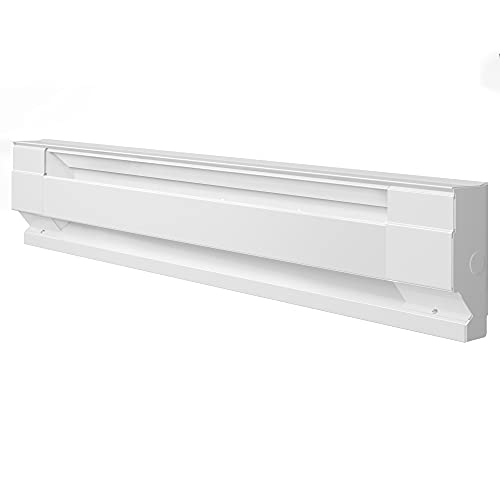
The Cadet F Series 36″ (Model 3F750-1W) is a compact electric baseboard heater specified at 750 Watts and intended for smaller rooms or supplemental heating. It is built with all-metal construction including 25 gauge steel and a 20 gauge junction box with ground, which aligns with heavy-duty installation preferences.
Key installation consideration: the unit requires a separate thermostat for temperature control rather than including one. The metal, powder-coated finish and grounded junction box point to a durable, code-conscious design. This model is useful where a lower wattage, robust construction, and external thermostat integration are preferred.
Caoooort Retractable Galvanized Baseboard Cover

This Caoooort product is an adjustable slip-on baseboard heater cover made from galvanized steel with a white powder-coated finish. It ships as two 3 ft panels, an installation kit, and end covers, and can be adjusted to cover lengths from 3 to 6 feet. The listing emphasizes rust resistance and high-temperature durability.
Call 888-896-7031 for Free Local HVAC Quotes – Compare and Save Today!
Features include screws for a secure fit, included end covers, and a design intended for decorative replacement or upgrade of existing baseboard covers. The cover is described as suitable for bathroom and hydronic home heating systems; verify compatibility with electric units before installation. The adjustability offers flexibility when replacing damaged covers without exact-length replacement pieces.
Baseboarders Basic Series 3 ft Slip-On Cover

The Baseboarders Basic Series 3 ft cover is tailored for hydronic (water) baseboard systems and is not intended for electric baseboard heaters. It is a 3 ft galvanized steel slip-on cover with a lifetime protection guarantee against rust for normal use, per the product features.
This cover is positioned as a simple, effective DIY replacement for old or rusty hydronic covers and supports add-on attachments from the brand to complete the aesthetic. Important: the listing explicitly notes it is not for electric baseboard heaters, so confirm system type before purchase to ensure compatibility and safety.
Buying Guide: How To Choose The Right Baseboard Radiator Heater
Selecting the right baseboard heater or cover depends on room size, heating needs, system type, safety preferences, and installation constraints. Below are objective considerations and comparison angles to guide an informed purchase.
1. Confirm Heating System Type
- Electric Baseboard Heaters: Contain electric heating elements and require compatibility with electric controls and electrical codes. Verify whether the product includes a thermostat or requires an external thermostat.
- Hydronic (Water) Baseboards: Use hot water circulated from a boiler; covers designed for hydronic units may not be safe or optimized for electric heaters. Check manufacturer notes to avoid mismatches.
2. Determine Wattage And Room Coverage
- Wattage Selection: Common electric units are 750W, 1500W, etc. Higher wattage delivers more heat; match wattage to room size. A 1500W unit suits medium rooms, while 750W fits small spaces or supplemental heating.
- Multiple Units: Large rooms might need multiple baseboards or a higher total wattage to achieve consistent temperature across the space.
3. Thermostat And Control Options
- Built-In Thermostats: Units like those with digital thermostats provide on-unit control and ease of use.
- External Thermostats: Some robust units (e.g., Cadet F Series) require separate thermostats, allowing integration with wall thermostats or programmable systems for energy management.
4. Safety Features And Build Quality
- Overheat Protection: Automatically shuts the unit off if internal temperatures exceed safe thresholds.
- Tip-Over Switch: Common in portable or freestanding units; useful in multi-use rooms.
- Stay-Cool Housing And Metal Construction: Reduces surface temperatures and may improve durability. All-metal units and powder-coated finishes resist damage and rust.
5. Noise And Operation Characteristics
- Convection Heating: Typically quiet and circulates warm air; look for listings that specify whisper-quiet operation if sound is a concern.
- Fans: Some heaters include fans for forced air; these may be louder but can distribute heat quicker.
6. Compatibility And Installation
- Electrical Requirements: Verify voltage, circuit capacity, and if professional electrical hookup is needed. Cadet-style units often require hardwired installation and a thermostat circuit.
- Cover Fitment: For replacement covers, measure length, height, and maximum width to ensure a proper slip-on fit. Adjustable covers provide more flexibility across varied lengths.
- Tools And Hardware: Some covers boast easy installation with common household tools; others include installation kits and end caps for a more finished look.
7. Durability And Corrosion Resistance
- Galvanized Or Powder-Coated Steel: Provides rust resistance for humid environments like bathrooms.
- Thickness And End Caps: Heavier-gauge steel and secure end caps add longevity and better protection against dents and impacts.
8. Aesthetic And Functional Cover Choices
- Retractable/Adjustable Covers: Useful when exact replacement lengths are unavailable; provide a cleaner look while protecting elements.
- Hydronic-Specific Covers: Intended for water-based systems; avoid using them on electric heaters unless explicitly rated.
9. Energy Efficiency And Usage Patterns
- Thermostat Precision: Digital thermostats allow tighter temperature control and can reduce wasted energy.
- Setback Controls: Integrating programmable thermostats or using units that support external controls helps optimize energy use for occupied and unoccupied periods.
10. Safety And Code Compliance
- Local Electrical Codes: Confirm that installation meets local codes, especially for hardwired units and junction box grounding.
- Manufacturer Guidance: Follow manufacturer recommendations on clearances, compatible coverings, and system type to maintain safety and warranty coverage.
Comparison Perspectives
- Performance vs. Size: Compare wattage ratings (e.g., 1500W vs. 750W) and estimated room coverage to match heating performance to the room’s square footage.
- Control vs. Integration: Built-in digital thermostats offer simple control; models requiring external thermostats allow centralized control and better integration with whole-home systems.
- Durability vs. Budget: All-metal constructions and heavier gauge steel increase longevity; adjustable galvanized covers reduce replacement frequency in damp or high-use areas.
- Hydronic vs. Electric Covers: Ensure covers match system type — hydronic-only covers should not be used on electric heaters for safety and performance reasons.
Use the product feature lists and these buying considerations to compare candidates side-by-side. Confirm compatibility, installation requirements, and safety features before completing any purchase.
Tips for Getting the Best HVAC Prices
- Prioritize Quality Over Cost
The most critical factor in any HVAC project is the quality of the installation. Don’t compromise on contractor expertise just to save money. - Check for Rebates
Always research current rebates and incentives — they can significantly reduce your overall cost. - Compare Multiple Quotes
Request at least three estimates before making your choice. You can click here to get three free quotes from local professionals. These quotes include available rebates and tax credits and automatically exclude unqualified contractors. - Negotiate Smartly
Once you've chosen a contractor, use the proven strategies from our guide — How Homeowners Can Negotiate with HVAC Dealers — to get the best possible final price.