
Basement heating needs reliable temperature control, safety features, and effective coverage. This guide compares five basement-appropriate heaters that include thermostats or precise temperature controls: wall-mounted units, portable ceramic heaters, and a hard-wired ceiling model for larger spaces. The table below summarizes the selected options to help you match features to your basement layout and insulation level.
| Product | Type | Thermostat/Control | Key Benefit |
|---|---|---|---|
| Heat Storm HS-1500-PHX-WIFI | Wall-mounted infrared | Digital thermostat, Wi‑Fi app control | Space-saving wall mount with remote/Wi‑Fi |
| Dreo Smart Wall Heater WH719S | Wall-mounted smart heater | Precise thermostat (1°F), app & voice | 120° oscillation for vertical heat distribution |
| Dreo Space Heater (1500W PTC) | Portable ceramic tower | Adjustable thermostat, multiple modes | Quiet operation and safety protections |
| Comfort Zone CZ230ER | Ceiling-mounted fan-forced | Digital thermostat, hard-wired | High output for large or poorly insulated basements |
| Cadet Com-Pak CSC202TW | Electric wall heater | Built-in mechanical thermostat | Compact wall unit with quick coil heating |
Content Navigation
- Heat Storm HS-1500-PHX-WIFI Infrared Heater, Wifi Wall Mounted
- Dreo Smart Wall Heater, Electric Space Heater For Bedroom 1500W, WH719S
- Dreo Space Heater, 1500W Electric Heaters For Indoor Use
- Comfort Zone Hard-Wired Ceiling Mount Garage Space Heater CZ230ER
- Cadet Com-Pak Electric Wall Heater With Thermostat CSC202TW
- Buying Guide: How To Choose A Basement Heater With Thermostat
- 1. Heating Capacity And Coverage
- 2. Thermostat Type And Accuracy
- 3. Installation And Mounting Options
- 4. Heat Distribution Method
- 5. Safety Features
- 6. Energy Efficiency And Operating Cost
- 7. Noise And Comfort Considerations
- 8. Control And Smart Features
- 9. Durability And Environmental Suitability
- 10. Maintenance And Serviceability
- Comparison Perspectives
Heat Storm HS-1500-PHX-WIFI Infrared Heater, Wifi Wall Mounted

The Heat Storm HS-1500 is a wall-mounted infrared heater designed to save floor space and deliver direct radiant warmth. It includes a touch screen with digital thermostat plus remote control. Wi‑Fi connectivity enables smartphone thermostat control, scheduling, and remote adjustments when integrated into a home network.
- Features tip-over safety shutoff (unit is wall-mounted for added stability).
- Infrared heating provides targeted warmth to people and objects rather than only heating air.
- Space-saving design is suitable for finished basements, hobby rooms, or supplemental heat zones.
Use cases: Best when you want a mounted solution that frees floor space and supports remote temperature management. Consider basement ceiling/wall placement to optimize radiant coverage.
Dreo Smart Wall Heater, Electric Space Heater For Bedroom 1500W, WH719S

The Dreo WH719S combines a precise thermostat (1°F increments) with smart controls via the Dreo app and voice assistants. Its 120° vertical oscillation helps distribute heat along walls and toward the floor, which can be helpful in basements with cool floor areas.
Call 888-896-7031 for Free Local HVAC Quotes – Compare and Save Today!
- Smart scheduling and remote access let you preheat the basement before use.
- PTC ceramic heating element provides steady output and quick recovery.
- Multiple safety protections common to wall-mounted electric heaters.
Use cases: Suitable where wall mounting is preferred and you want accurate setpoint control and smart scheduling for intermittent basement use or zoned heating strategies.
Dreo Space Heater, 1500W Electric Heaters For Indoor Use

This portable Dreo tower heater uses a 1500W PTC ceramic element and an adjustable thermostat to maintain room temperature. It includes safety features such as tip-over and overheat protection, a timer, quiet operation, and is ETL‑certified.
- Heating coverage listed for typical small-to-medium rooms; suitable for finished basement rooms up to the specified square footage.
- Quiet fan and multiple modes support overnight or office use in a basement converted to living space.
- Portable design allows relocating the unit to target cold spots or to supplement central heat.
Use cases: Best when you need flexible, localized heating with reliable thermostat control and portable safety features. Avoid using with extension cords per manufacturer guidance.
Comfort Zone Hard-Wired Ceiling Mount Garage Space Heater CZ230ER

The Comfort Zone CZ230ER is a hard-wired, ceiling-mounted fan-forced heater intended for larger, poorly insulated spaces. It includes a digital thermostat and adjustable louvers to direct airflow. With high wattage output, it’s designed to heat expansive basements, workshops, or garages.
Call 888-896-7031 for Free Local HVAC Quotes – Compare and Save Today!
- Ceiling mount preserves floor space and distributes heat from above for broader coverage.
- Heavy-gauge steel construction intended for demanding environments.
- 12-hour timer and overheat protection provide additional operational control and safety.
Use cases: Appropriate for large basements, unfinished spaces, or when you need central distribution and hard-wired installation by a qualified electrician.
Cadet Com-Pak Electric Wall Heater With Thermostat CSC202TW
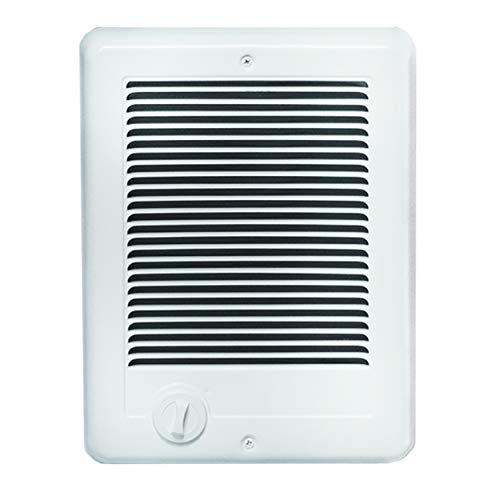
The Cadet Com-Pak is a compact electric wall heater with a built-in mechanical thermostat designed for fast coil heat and quiet fan distribution. It’s intended for zone heating up to approximately the manufacturer’s recommended square footage.
- Quick heating coil element provides near-instant warmth to the occupied area.
- Compact footprint integrates into basements where a small, permanent wall heater is preferred.
- Safety features include automatic shutoff if temperatures exceed safe thresholds.
Use cases: Useful for smaller finished basements, utility rooms, or as a dedicated supplemental heater for a single basement zone with reliable mechanical thermostat control.
Buying Guide: How To Choose A Basement Heater With Thermostat
Selecting the right basement heater requires comparing coverage, control accuracy, installation needs, and safety features. Below are key considerations and comparison perspectives to guide a basement heating decision.
1. Heating Capacity And Coverage
Consider the square footage and ceiling height of the basement. Portable 1500W ceramic units typically heat a small-to-medium room effectively. Hard-wired ceiling or high-wattage fan-forced units are better for larger or poorly insulated basements. Use manufacturer coverage guidance as a starting point and increase capacity for high ceilings or uninsulated areas.
2. Thermostat Type And Accuracy
Thermostat choices include mechanical thermostats, built-in digital thermostats, and smart thermostats with app control. For precise comfort and energy savings, choose a unit with at least 1°F accuracy and programmable scheduling if the space is used intermittently. Smart controls are useful when you want to preheat before arrival.
3. Installation And Mounting Options
Wall-mounted and ceiling-mounted heaters require more permanent installation and, in some cases, electrician services (especially for hard-wired units). Portable heaters provide flexibility but may not be suitable for permanent solutions in larger basements. Evaluate available mounting surfaces and clearance requirements.
4. Heat Distribution Method
Infrared and radiant heaters warm objects and people directly, which can feel efficient in zones where occupants are stationary. Fan-forced and oscillating ceramic heaters warm the air and distribute it more evenly. Choose radiant for targeted warmth and fan-forced or oscillating for broader air circulation.
5. Safety Features
Basements can present moisture, stored items, and higher foot traffic. Prioritize units with overheat protection, tip-over shutoff (for portable heaters), automatic shutoff, and ETL/UL certification. Hard-wired units should include thermal cutoffs and be installed per local electrical codes.
6. Energy Efficiency And Operating Cost
All-electric heaters convert input to heat at similar efficiency, but the effective cost depends on usage patterns. Use thermostats and timers to avoid unnecessary run time. Zoned heating with a targeted heater can be more economical than heating the entire house from a central system.
7. Noise And Comfort Considerations
Fan-forced heaters produce audible airflow; check decibel ratings if the basement doubles as a bedroom, office, or media room. Ceramic PTC heaters and infrared panels often run quieter.
8. Control And Smart Features
Smart thermostats and Wi‑Fi control enable remote scheduling, geofencing, and integration with voice assistants. These features help maintain temperature consistency and can reduce operating time when the space is unoccupied.
9. Durability And Environmental Suitability
For unfinished basements, select industrial-grade or metal-bodied units designed for garages and workshops. For finished basements, aesthetic integration and lower noise may be higher priorities.
10. Maintenance And Serviceability
Consider filter accessibility (if applicable), fan and motor quality, and replaceable parts. Hard-wired units may offer longer service life but require professional maintenance; portable units are easier to replace or relocate.
Comparison Perspectives
When comparing models, weigh these typical trade-offs:
- Flexibility vs. Permanence: Portable towers (Dreo portable) are flexible but less ideal for whole-basement heating compared to ceiling-mounted or hard-wired units (Comfort Zone).
- Precision vs. Simplicity: Smart wall heaters (Dreo WH719S) provide the most precise control and automation; mechanical thermostats (Cadet) are simpler and require no network setup.
- Coverage vs. Targeted Warmth: Fan-forced ceiling units distribute heat widely; infrared and small wall units offer targeted warmth for specific zones.
- Installation Cost vs. Efficiency: Hard-wired units may require an electrician but can heat larger areas more efficiently, while plug-in units avoid installation but may be limited by outlet capacity.
Match your choice to the basement’s insulation, usage patterns, and installation constraints to achieve reliable thermostat-controlled comfort and safety.
Tips for Getting the Best HVAC Prices
- Prioritize Quality Over Cost
The most critical factor in any HVAC project is the quality of the installation. Don’t compromise on contractor expertise just to save money. - Check for Rebates
Always research current rebates and incentives — they can significantly reduce your overall cost. - Compare Multiple Quotes
Request at least three estimates before making your choice. You can click here to get three free quotes from local professionals. These quotes include available rebates and tax credits and automatically exclude unqualified contractors. - Negotiate Smartly
Once you've chosen a contractor, use the proven strategies from our guide — How Homeowners Can Negotiate with HVAC Dealers — to get the best possible final price.