
Choosing the right wall heater for a basement involves balancing heating power, installation type, and energy efficiency. Below is a quick comparison of five wall heaters selected for basement use, followed by detailed product sections and a practical buying guide to help you decide.
| Product | Type | Key Feature | Ideal For |
|---|---|---|---|
| Heat Storm HS-1500-PHX-WIFI | Infrared Wall Mounted | Wi‑Fi control, touchscreen | Smart control & space-saving walls |
| Dreo Smart Wall Heater WH719S | PTC Oscillating Electric | 120° vertical oscillation, app/Alexa | Basements needing wide airflow |
| ENVI Plug-in Electric Panel Heater | Low-Wattage Panel (Plug-In) | Fan-less, quiet, continuous use | Low-noise, allergy-friendly rooms |
| Broan-NuTone 9815WH | High Capacity Wall Heater | Adjustable built-in thermostat | Reliable, higher-capacity rooms |
| Cadet CSC151TW 1500W | Electric Wall Heater Unit | Fast heating coil, quiet fan | Traditional durable basement heating |
Content Navigation
- Heat Storm HS-1500-PHX-WIFI Infrared Heater, Wifi Wall Mounted
- Dreo Smart Wall Heater WH719S
- ENVI Plug-in Electric Panel Wall Heaters For Indoor Use
- Broan-NuTone 9815WH High Capacity Wall Heater
- Cadet Com-Pak Electric Wall Heater CSC151TW 1500W
- Buying Guide: How To Choose A Basement Wall Heater
- Heating Performance And Coverage
- Installation Type And Electrical Requirements
- Control Features And Smart Integration
- Noise, Airflow, And Indoor Air Quality
- Safety Features And Reliability
- Energy Efficiency And Operating Cost
- Room Layout And Heat Distribution
- Maintenance And Longevity
- Comparison Perspectives
Heat Storm HS-1500-PHX-WIFI Infrared Heater, Wifi Wall Mounted

This infrared wall-mounted heater is designed to deliver direct radiant heat while preserving floor space. Its Wi‑Fi connectivity and touchscreen thermostat allow remote temperature control and scheduling via a smartphone.
- Features tip-over safety shut off and a digital thermostat with remote.
- Space-saving wall mount design suited for finished basement walls where floor heaters are impractical.
- Infrared element provides targeted warmth to people and objects, which can feel efficient in small to medium basement zones.
Consider wall location and line-of-sight for radiant heating. Infrared units heat objects and occupants directly rather than relying solely on air circulation, which can be advantageous in cooler, draft-prone basements.
Dreo Smart Wall Heater WH719S

The Dreo WH719S uses a PTC ceramic element and a 120° vertical oscillation to spread warm air from floor to ceiling for more uniform basement heating.
Call 888-896-7031 for Free Local HVAC Quotes – Compare and Save Today!
- Widespread warmth via wide oscillation helps reduce cold pockets in irregular basement spaces.
- Smart features: app control, Alexa and Google Home compatibility, scheduling and a 1°F accuracy thermostat.
- Includes remote control and a 24-hour timer for operation that matches occupancy patterns.
This model emphasizes air distribution, making it a strong option where circulating warm air is needed to warm the whole basement. Consider wall height and mounting clearance for optimal oscillation performance.
ENVI Plug-in Electric Panel Wall Heaters For Indoor Use
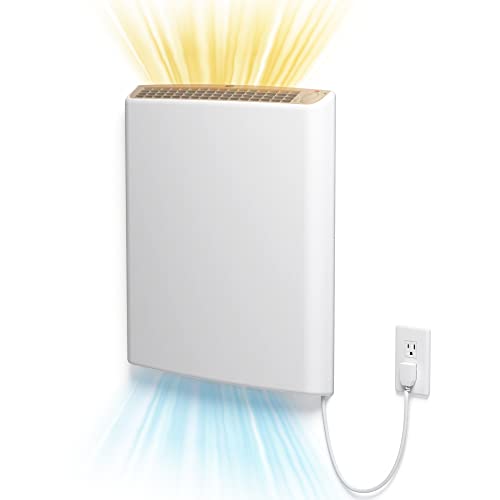
The ENVI panel heater offers low-wattage, fan-less operation intended for continuous, silent heating without blowing dust. It plugs in for easy installation and runs quietly at roughly 90°F surface temperature.
- Designed for 24/7 safe operation with a wall-sense safety sensor that cuts power if removed from the wall.
- Patented fan-less convection reduces noise and airborne particulates—suitable for allergy-sensitive occupants.
- Energy-efficient design aims to supplement central heating and maintain steady background warmth.
Panel heaters are best for maintaining baseline warmth rather than quickly raising a very cold basement. This model fits scenarios where silent, continuous heat and minimal dust circulation are priorities.
Broan-NuTone 9815WH High Capacity Wall Heater

The Broan-NuTone 9815WH is a traditional high-capacity wall heater featuring a front-mounted adjustable thermostat and a durable grille designed for practical installation and consistent heat output.
Call 888-896-7031 for Free Local HVAC Quotes – Compare and Save Today!
- Operates at 1500W and converts for 240V use if needed, providing flexible electrical compatibility.
- Permanent lubrication reduces maintenance; the design focuses on longevity and straightforward control.
- Contemporary grille styling integrates with finished basement walls and utility rooms.
This heater is a conventional choice when robust, straightforward electric heating and an adjustable thermostat are required. It suits basements where fast air heating is desirable and wiring supports the unit’s voltage options.
Cadet Com-Pak Electric Wall Heater CSC151TW 1500W

Cadet’s Com-Pak series provides a compact electric wall heater with a built-in thermostat and fast heating coil. This model is intended for up to medium-sized rooms and basement zones.
- 1500W coil quickly warms areas up to typical small-to-medium room sizes.
- Quiet fan spreads warmth evenly, and safety features shut the unit off if temperatures exceed safe limits.
- Designed for straightforward replacement or upgrade of many existing wall heater installations.
Cadet units are frequently used in basements for reliable, rapid heat. Check existing wall can compatibility if replacing an older unit to simplify retrofit installation.
Buying Guide: How To Choose A Basement Wall Heater
Selecting the right wall heater for a basement requires assessing heat load, installation constraints, and user needs. Below are the key considerations and comparison perspectives to weigh.
Heating Performance And Coverage
Determine the basement area to be heated and its insulation level. Look at heater wattage and heating method:
- Infrared/Radiant: Heats people and objects directly; good for targeted zones and quickly perceived warmth.
- Convection/Forced Air (PTC or fan): Circulates warm air to reduce cold spots; oscillating units improve vertical distribution in basements with high ceilings.
- Panel/Fan-less: Provides steady background heat; ideal for maintaining baseline temperatures quietly and with low dust circulation.
Installation Type And Electrical Requirements
Consider whether you can use a plug-in unit or need hardwired installation. Check circuit capacity:
- Plug-in heaters simplify installation but may be limited by outlet circuits and cord routing.
- Hardwired units often require electrician installation and dedicated circuits, but they provide a cleaner look and higher capacity options.
- Confirm voltage (120V vs 240V) and amperage requirements to avoid overloading existing wiring.
Control Features And Smart Integration
Controls affect convenience and energy use:
- Built-in thermostats maintain room temperature automatically and can reduce runtime.
- Smart and app controls allow scheduling, remote operation, and integration with home assistants—useful for occupied/unoccupied basements.
- Timers and ECO modes help lower energy consumption by tailoring heat to occupancy patterns.
Noise, Airflow, And Indoor Air Quality
Basements often require quiet operation and reduced dust circulation:
- Fan-less panel heaters are silent and minimize blowing dust—beneficial for allergy sufferers and sleeping areas.
- Fan-equipped PTC or coil units provide faster air circulation but can produce low-level noise and move particulates.
Safety Features And Reliability
Important safety considerations for basements include moisture and children/pet exposure:
- Overheat protection and automatic shutoff are essential for unattended operation.
- Wall-sense sensors or mounting interlocks prevent operation when removed from the mounting bracket.
- Check IP rating or suitability for damp locations; basements with higher humidity need appropriate protection.
Energy Efficiency And Operating Cost
Compare wattage to the expected runtime. For ongoing warmth, lower-wattage panel heaters may cost less overall when paired with good insulation. For intermittent, quick warm-ups, higher-wattage PTC or coil heaters can be efficient when used with thermostatic control.
Room Layout And Heat Distribution
Match heater type to the room layout:
- Use oscillating wall heaters where vertical and horizontal distribution is needed.
- Choose radiant units for seating areas or workbenches where targeted warmth is preferred.
- Consider multiple low-wattage panels to create evenly distributed background heat in large basements.
Maintenance And Longevity
Consider access for filter cleaning (if applicable) and expected lifespan:
- Fan-less designs reduce maintenance needs over time.
- Traditional coil or fan units may require occasional cleaning and periodic checks for reliable performance.
Comparison Perspectives
When comparing units, weigh these trade-offs:
- Speed vs. Comfort: Coil and PTC units heat faster; panels provide steadier, less intense warmth.
- Noise vs. Airflow: Fans boost circulation but add noise; fan-less designs are quieter but may warm more slowly.
- Smart Features vs. Simplicity: Smart heaters add convenience and scheduling but increase complexity; manual thermostats are failproof and simple to operate.
By matching the heater type, mounting method, and control features to your basement configuration and usage patterns, you can select a wall heater that balances comfort, safety, and operating efficiency.
Tips for Getting the Best HVAC Prices
- Prioritize Quality Over Cost
The most critical factor in any HVAC project is the quality of the installation. Don’t compromise on contractor expertise just to save money. - Check for Rebates
Always research current rebates and incentives — they can significantly reduce your overall cost. - Compare Multiple Quotes
Request at least three estimates before making your choice. You can click here to get three free quotes from local professionals. These quotes include available rebates and tax credits and automatically exclude unqualified contractors. - Negotiate Smartly
Once you've chosen a contractor, use the proven strategies from our guide — How Homeowners Can Negotiate with HVAC Dealers — to get the best possible final price.