
Finding a reliable heater for camping requires balancing portability, fuel source, and safety. True battery-powered space heaters are rare; many campers choose compact electric, propane, or low-watt PTC heaters that pair with power stations. Below is a quick comparison of five portable heaters that campers commonly consider, followed by focused reviews and a detailed buying guide.
| Product | Type / Power | Key Feature |
|---|---|---|
| Mr. Heater Portable Buddy Heater MH9BX | Propane Radiant (4,000–9,000 BTU) | Infrared radiant heat, tip-over safety |
| Amazon Basics Ceramic Space Heater, Mini (500W) | Electric Ceramic (500W) | Ultra-compact, lightweight |
| BLACK+DECKER Portable Space Heater | Electric (750W / 1500W) | Carry handle, thermostat control |
| VOCRS 1500W PTC Electric Heater | Electric PTC (700/1000/1500W) | Remote, timer, eco mode |
| Dreo Space Heater 1500W PTC | Electric PTC (1500W) | Advanced PTC system, precise thermostat |
Content Navigation
Mr. Heater Portable Buddy Heater MH9BX
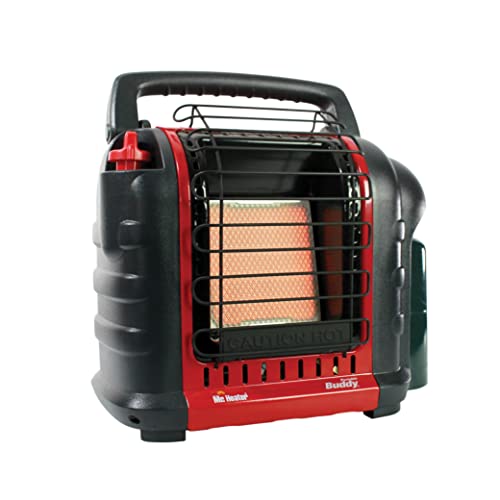
This unit is a propane radiant heater designed for portable heating in outdoor and well-ventilated spaces. It provides adjustable output from 4,000 to 9,000 BTU, suitable for heating immediate areas like campsite seating areas, covered patios, or larger tents specifically rated for propane use.
- Heat Type: Infrared radiant heat that warms objects and people directly rather than heating air.
- Coverage: Markets up to about 225 sq. ft. depending on conditions.
- Safety: Tip-over safety switch with improved engagement; audible indicator when tripped.
- Ignition: Piezo igniter—no batteries required.
For camping, the propane approach offers extended run times when paired with refillable cylinders and avoids heavy battery draw. Users must follow ventilation guidelines and manufacturer instructions when used near tents or enclosed spaces.
Amazon Basics Ceramic Space Heater, Mini (500W)

This ultra-compact ceramic heater is designed for small indoor spaces and is noted for its light weight and tiny footprint. At 500W, it provides focused warmth for a single person or a small enclosed area.
Call 888-896-7031 for Free Local HVAC Quotes – Compare and Save Today!
- Portability: Weighs ~1.4 lbs; easy to pack or stow in a daypack.
- Safety: Built-in tip-over protection suitable for transient setups.
- Power Draw: 500W makes it feasible to run from some portable power stations for limited durations.
- Use Case: Best for short-term personal warming in insulated tents or inside vehicles with electrical hookups.
Because it’s electric, plan for battery capacity or shore power. Weather and insulation dramatically affect how long a small power station will run this heater.
BLACK+DECKER Portable Space Heater

This model offers a balance of portability and output with selectable heat settings (Low 750W / High 1500W) and a carry handle for transport. It is intended for dorms, garages, and small rooms but can be used while camping if a reliable AC source is available.
- Controls: Adjustable thermostat and fan-only mode for ventilation.
- Design: Compact dimensions and 6 ft cord for flexible placement.
- Power Options: Dual power settings allow reduced draw on batteries or generators.
On battery setups, running at 750W significantly reduces run time versus 1500W. Consider pairing with an inverter-rated power station sized for sustained 700–1500W output and note inverter efficiency losses.
Small Portable Space Heater – VOCRS 1500W PTC Electric

This PTC ceramic heater provides multiple wattage modes (700W / 1000W / 1500W), a digital display, remote control, and a 1–12 hour timer for automated operation. It aims to combine convenience features useful in a campsite equipped with AC or a high-capacity power station.
Call 888-896-7031 for Free Local HVAC Quotes – Compare and Save Today!
- Modes: Adjustable outputs help manage battery consumption when using portable power.
- Timer & Remote: Useful for preheating an enclosed tent or turning off automatically overnight.
- Safety: PTC heating elements typically offer inherent overheat resistance and rapid warm-up.
When planning to use with batteries, run-time estimates must factor mode, ambient temperature, and heater efficiency. The lower modes are the most practical for energy-limited situations.
Dreo Space Heater, Portable Electric Heaters (1500W)

Dreo’s PTC heater emphasizes fast warm-up and precise thermostat control with refined temperature steps. Its safety sensors (tilt detection, overheat protection) and advanced fan design focus on efficient air distribution for improved coverage.
- Thermostat Precision: Finer temperature control reduces cycles and can improve energy efficiency.
- Safety Materials: Flame-retardant housing and certified safety components.
- Use Case: Suited to campers who have access to robust power sources and want controllable comfort.
The Dreo unit is an example of high-end PTC heaters that may extend useful heat while optimizing power usage with better thermostat control compared to basic models.
Buying Guide: How To Choose A Camping Space Heater
Selecting a heater for camping involves evaluating fuel type, power availability, safety features, and practical portability. Below are the key considerations across multiple perspectives.
Fuel Type And Heat Delivery
Propane (radiant) vs. electric (ceramic/PTC):
- Propane Heaters: Offer high output and long run times per fuel cylinder. Radiant models heat people and objects directly and perform well outdoors or in well-ventilated shelters. They do not require electrical power but do require safe ventilation and CO monitoring.
- Electric Heaters: Depend on AC or inverter-based battery power. PTC/ceramic heaters provide rapid warm-up and built-in safety but consume significant watts. Electric heating is cleaner and simpler in enclosed spaces (with proper ventilation for devices that require it).
Battery And Power Considerations
When you target “battery” for camping, compare heater draw to your power station capacity:
- Wattage Matters: 1500W heaters drain portable batteries quickly. Lower-power modes (500–1000W) extend runtime.
- Power Station Rating: Check continuous vs. surge output on inverters. Many small power stations handle 300–1000W continuous—insufficient for 1500W without a large unit.
- Efficiency: PTC heaters can be more efficient than older coil types because they self-regulate. Use lower modes and thermostats to minimize runtime.
Safety And Ventilation
Safety is paramount for camping applications:
- CO Risk: Propane heaters produce carbon monoxide; never use unvented gas heaters inside small sealed tents or vehicles without appropriate ventilation and a CO detector.
- Tip-Over And Overheat Protection: Look for automatic shutoff features, tilt sensors, and thermal cutoffs to reduce fire risk.
- Placement: Maintain clearance from fabrics and sleeping bags; use dedicated platforms or stands where available.
Portability And Packability
Consider weight, size, and ease of setup:
- Weight: If backpacking, every ounce counts—electric heaters and heavy propane cylinders are often impractical. For car camping, these trade-offs are acceptable.
- Form Factor: Compact units with handles and stable bases are easiest to move and deploy.
- Fuel Storage: Propane cylinders add bulk; plan storage and spare fuel if overnight warmth is necessary.
Use Cases And Deployment
Match heater choice to the camping style:
- Backpacking: Focus on insulation, layered clothing, and small chemical hand warmers rather than electric/heavy heaters.
- Car/Truck Camping: Propane radiant heaters or electric heaters paired with a vehicle inverter or large power station are viable.
- RV Camping: Built-in or shore-power capable electric heaters work well; propane heaters can also be used with RV ventilation considerations.
Run-Time Examples And Planning
Estimate realistic run times:
- Divide battery capacity (Wh) by heater wattage (W) and include inverter efficiency (typically 85–90%). Example: A 1000 Wh power station powering a 500W heater = ~1000 / (500 / 0.9) ≈ 1.8 hours.
- Using lower power settings or thermostats extends runtime through duty cycles (heater cycles on/off to maintain setpoint).
Noise, Comfort, And Distribution
Consider how heat is delivered:
- Radiant Heat: Warms objects and people directly—comfortable for sitting areas and outdoor use.
- Convection/PTC Fans: Move warm air around enclosed spaces; better for evenly warming shelters when safe to use.
- Noise: Fan-based units produce audible noise that may affect sleep; radiant propane is typically quieter but requires ventilation.
Regulatory And Certification Notes
Prefer devices with recognized safety certifications (ETL, UL) for electric heaters and ensure propane devices meet relevant standards. Read manufacturer guidance for indoor/outdoor use to avoid misuse.
Tips for Getting the Best HVAC Prices
- Prioritize Quality Over Cost
The most critical factor in any HVAC project is the quality of the installation. Don’t compromise on contractor expertise just to save money. - Check for Rebates
Always research current rebates and incentives — they can significantly reduce your overall cost. - Compare Multiple Quotes
Request at least three estimates before making your choice. You can click here to get three free quotes from local professionals. These quotes include available rebates and tax credits and automatically exclude unqualified contractors. - Negotiate Smartly
Once you've chosen a contractor, use the proven strategies from our guide — How Homeowners Can Negotiate with HVAC Dealers — to get the best possible final price.
Summary Checklist For Purchase
- Confirm fuel type fits your camping style (propane vs. electric).
- Match heater wattage to your power station continuous output.
- Verify safety features: tip-over shutoff, overheat protection, CO considerations for gas units.
- Check weight and dimensions against your packing constraints.
- Plan fuel or battery capacity to meet expected run times, including cold-weather efficiency losses.