
Blue flame heaters provide efficient convection heat for rooms, garages, cabins, and additions. Below is a concise comparison of five relevant ventless blue flame gas heaters to help you evaluate heat output, coverage, and safety features.
| Product | BTU | Fuel | Coverage | Notable Feature |
|---|---|---|---|---|
| Mr. Heater MHVFBF20LPT | 20,000 | Propane | Up To 700 Sq. Ft. | ODS Low Oxygen Shut-off |
| ProCom ML300TBA-B | 30,000 | Propane | Up To 1,400 Sq. Ft. | Thermostat Control, Wall Or Floor Mount |
| ProCom ML100HBA-B | 10,000 | Propane | Up To 500 Sq. Ft. | Manual Control, No Electricity Required |
| Dyna-Glo 30,000 BTU | 24,000–30,000 | Propane | Up To 1,000 Sq. Ft. | Variable Output, Wall Mount |
| Mr. Heater 30K With Blower | 30,000 | Propane | Up To 1,000 Sq. Ft. | Built-in Blower For Forced Convection |
Content Navigation
Mr. Heater 20,000 BTU Propane Heater
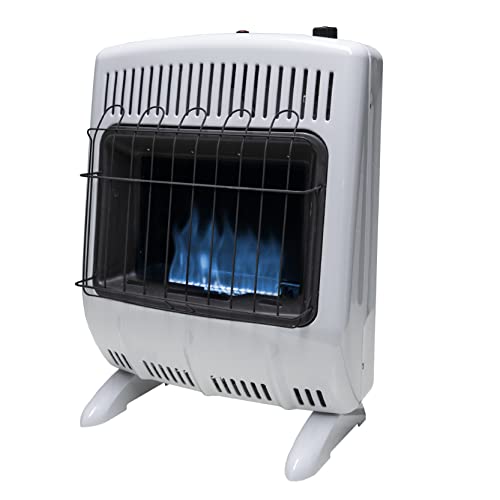
This vent-free blue flame propane wall heater delivers up to 20,000 BTU, suitable for spaces up to about 700 sq. ft. It includes a thermostat for temperature control and a battery-powered electronic ignition for easy startup.
Key features listed by the manufacturer include reliable operation up to 4,500 ft. altitude, a fuel consumption rate of approximately 0.926 lbs per hour, and an Oxygen Depletion Sensor (ODS) that automatically shuts off the unit if oxygen levels fall below safe thresholds.
Installation is wall-mounted; ventilation is vent-free by design so the heater relies on indoor air for combustion and convects heat into the room. The model is intended for supplemental heat in cold rooms, sun rooms, cabins, and garages.
ProCom 30,000 BTU Blue Flame Heater

Call 888-896-7031 for Free Local HVAC Quotes – Compare and Save Today!
The ProCom ML300TBA-B is a high-output ventless blue flame heater producing up to 30,000 BTU, designed for larger rooms up to approximately 1,400 sq. ft. It offers thermostat control with High/Medium/Low settings for adjustable comfort.
Manufacturer features highlight a slim modern profile with included wall mount hardware and optional base feet for floor placement. The heater uses liquid propane and aims to provide dependable convection warmth without a vent system.
This model emphasizes flexibility in installation and a thermostat for automated control. It is suited to larger living spaces or work areas where higher heat output and adjustable settings are priorities.
ProCom 10,000 BTU Portable Blue Flame Heater

The ProCom ML100HBA-B is a compact ventless blue flame heater offering up to 10,000 BTU, rated to heat areas near 500 sq. ft. It is propane-only and operates without electricity, using a push-button piezo ignition.
Design highlights include manual control with two heat settings (Low/High) and an integrated Oxygen Depletion Sensor (ODS) for safety. The simple operation and lack of electrical requirements make it useful for remote or off-grid installations.
Call 888-896-7031 for Free Local HVAC Quotes – Compare and Save Today!
This model is appropriate for smaller spaces where straightforward manual control and independence from electrical power are desirable attributes.
Dyna-Glo 24k–30k BTU Blue Flame Heater

Dyna-Glo’s vent-free unit provides a variable 24,000–30,000 BTU output and is wall-mount ready. The heater uses blue flame convection technology to warm room air similar to central heating systems.
Manufacturer notes indicate suitability for areas up to roughly 1,000 sq. ft. and that the unit is liquid propane ready. Variable heat output supports modulated warmth for changing conditions.
This option targets users needing higher output for medium to large spaces and who prefer a wall-mounted convection solution without forced air components.
Mr. Heater 30,000 BTU With Built-In Blower

This Mr. Heater model delivers 30,000 BTU and includes a factory-installed blower designed to assist distribution of warm air throughout spaces up to around 1,000 sq. ft. The blue flame burner provides even convection heat.
Key features include the automatic ODS safety shut-off and a blower already installed for easier setup. The factory-installed blower can improve heat circulation compared to convection-only wall heaters.
The unit is intended for users who want higher output with improved air movement for faster room warm-up and more even temperature distribution.
Buying Guide: How To Choose A Blue Flame Heater
Selecting the right blue flame heater requires assessing room size, fuel type, installation, and safety. This guide outlines core considerations and compares perspectives to help match product attributes to needs.
Tips for Getting the Best HVAC Prices
- Prioritize Quality Over Cost
The most critical factor in any HVAC project is the quality of the installation. Don’t compromise on contractor expertise just to save money. - Check for Rebates
Always research current rebates and incentives — they can significantly reduce your overall cost. - Compare Multiple Quotes
Request at least three estimates before making your choice. You can click here to get three free quotes from local professionals. These quotes include available rebates and tax credits and automatically exclude unqualified contractors. - Negotiate Smartly
Once you've chosen a contractor, use the proven strategies from our guide — How Homeowners Can Negotiate with HVAC Dealers — to get the best possible final price.
Heat Output And Room Coverage
- BTU Rating: Match BTU to room size. Smaller rooms often require 5,000–10,000 BTU; living areas and garages may need 20,000–30,000 BTU.
- Coverage Estimates: Manufacturer coverage is an estimate—insulation, ceiling height, windows, and outdoor exposure affect performance.
- Multiple Zones: Consider more than one low-output unit or a single high-output model depending on layout and zoned heating needs.
Fuel Type And Availability
- Propane vs Natural Gas: Propane units are common for garages, cabins, and locations without natural gas lines. Natural gas models are preferred where piped service exists.
- Fuel Conversion: Some models are dedicated to a fuel type; conversion may be prohibited. Confirm compatibility before purchasing.
Installation And Placement
- Wall Mount vs Floor: Wall-mounted heaters save floor space; some units include base feet for floor placement.
- Clearances: Verify required clearances to combustibles and mounting height. Proper installation affects performance and safety compliance.
- Altitude Considerations: Some models specify performance up to a given altitude; confirm if you live at higher elevations.
Control Options And Convenience
- Thermostat Control: Models with thermostats offer automated temperature regulation and improved comfort management.
- Manual Controls: Simpler models may be manual or piezo-ignition, useful where electrical power is unavailable.
- Ignition Type: Electronic ignition versus standing pilot: electronic ignition reduces pilot gas usage and may be more convenient.
Safety Features
- Oxygen Depletion Sensor (ODS): ODS is standard on ventless heaters to shut off the unit if room oxygen falls below safe levels.
- Automatic Shut-Offs: Look for models with automatic shut-off for tip-over, flame failure, or overheating if applicable.
- Indoor Air Quality: Vent-free combustion releases combustion products into the room. Ensure adequate ventilation and follow local codes.
Performance Comparison Perspectives
- Convection vs Forced Air: Convection (blue flame) warms air naturally; built-in blowers add forced-air distribution for quicker and more uniform heating.
- Efficiency vs Distribution: Ventless blue flame heaters are efficient at delivering heat to a room, but blower-equipped models can improve perceived comfort faster.
- Small vs Large Spaces: Low-BTU units suit small enclosed spaces and off-grid use; high-BTU units are designed for garages, large living areas, and open floor plans.
Compliance And Local Codes
- Local Regulations: Ventless heaters are restricted in some jurisdictions. Check local building codes and regulations before purchase and installation.
- Professional Installation: Consider professional installation for gas line connection, pressure testing, and to meet code requirements.
Durability And Maintenance
- Routine Checks: Inspect burners, pilot/ignition assemblies, and vents (if any) periodically. Clean dust or debris for reliable ignition and operation.
- Serviceability: Select models with accessible components and manufacturer support for replacement parts and troubleshooting.
Final Selection Tips
- Prioritize safety features (ODS, automatic shut-offs) and confirm fuel compatibility.
- Match BTU capacity to room size while accounting for insulation and exposure.
- Decide whether faster circulation (blower) or passive convection better fits your comfort preferences.
- Verify local code compliance and plan for professional installation if required.