
Choosing the right propane heater means matching BTU output to your space and use case. Below is a quick summary of five propane heaters that span low-output indoor units to high-BTU outdoor and forced-air models. Use the table to compare BTU ranges, intended use, and notable safety or control features at a glance.
| Model | BTU Range | Intended Use | Notable Feature |
|---|---|---|---|
| Mr. Heater Portable Buddy MH9BX | 4,000–9,000 | Small rooms, campers, workshops | Piezo igniter, tip-over safety |
| Mr. Heater MH60QFAV | 30,000–60,000 | Job sites, garages, large open areas | Forced-air, quieter QBT tech |
| Mr. Heater Convection 30–80K | 30,000–80,000 | Large indoor spaces, shops, barns | Convection heating, long runtime |
| EAST OAK 55,000 Patio Heater | 55,000 | Large patios, events, outdoor dining | Round table, tip-over & flame-out protection |
| Mr. Heater MHVFBF20LPT 20,000 | 20,000 | Rooms, additions, cabins | Blue flame vent-free, thermostat |
Content Navigation
- Mr. Heater Portable Buddy Heater MH9BX 4,000-9,000 BTU
- Mr. Heater MH60QFAV 60,000 BTU Portable Forced Air Heater
- Mr. Heater Convection Heater 30,000–80,000 BTU
- EAST OAK 55,000 BTU Propane Patio Heater With Table
- Mr. Heater MHVFBF20LPT 20,000 BTU Blue Flame Vent Free Heater
- Buying Guide: Choosing The Right BTU Propane Heater
Mr. Heater Portable Buddy Heater MH9BX 4,000-9,000 BTU
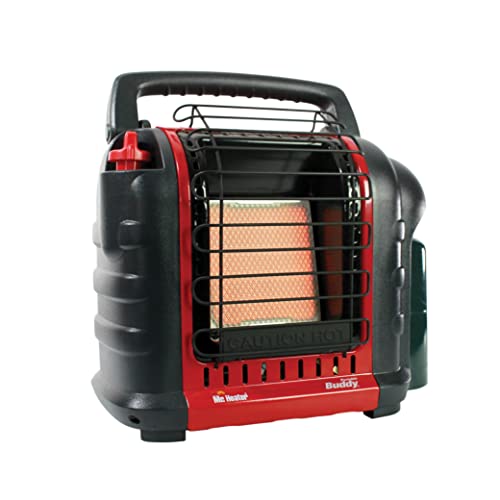
This compact heater offers an adjustable 4,000 to 9,000 BTU output designed for small spaces up to about 225 sq. ft. The unit employs infrared radiant heat to warm objects and people directly rather than only heating air, which can feel more efficient in drafty or intermittently used areas.
Safety features include an improved tip-over switch that audibly engages if the unit is bumped or tilted, and a reliable Piezo igniter for match-free starts. The design supports portable use in campers, workshops, and patios when conditions allow. Fuel source is standard propane cylinders.
Mr. Heater MH60QFAV 60,000 BTU Portable Forced Air Heater

The MH60QFAV delivers variable 30,000–60,000 BTUs via forced-air circulation, making it suitable for larger workshops, job sites, or garages. It features QBT technology that is marketed as 50% quieter than standard forced-air units, a factor when noise is a concern in occupied work areas.
Call 888-896-7031 for Free Local HVAC Quotes – Compare and Save Today!
Runtime is supported on common 20 lb propane cylinders, with longer operation on lower settings. The forced-air design moves warm air quickly across wide spaces, providing more even temperature rise compared to radiant-only units. The unit prioritizes portability for temporary heating needs.
Mr. Heater Convection Heater 30,000–80,000 BTU
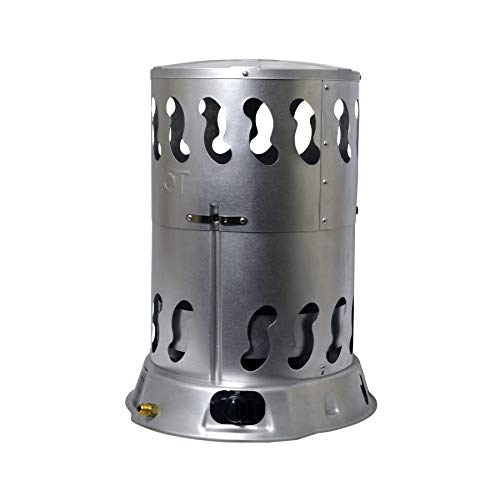
This convection-style propane heater offers a broad output range of 30,000 to 80,000 BTU per hour, designed to heat large indoor areas up to about 2,000 sq. ft. Convection heating warms air as it circulates through the unit, which can be more suitable for whole-space warming in well-insulated locations.
Built for extended use, the unit can operate for many hours on larger propane tanks and includes a standing pilot for continuous ignition. This model fits garages, large shops, or outbuildings where sustained, distributed heat is needed rather than spot heating.
EAST OAK 55,000 BTU Propane Patio Heater With Table

The EAST OAK patio heater provides a fixed 55,000 BTU output intended for outdoor use on large patios, event spaces, or commercial outdoor seating. It includes a built-in round table and is equipped with wheels for positioning and mobility.
Call 888-896-7031 for Free Local HVAC Quotes – Compare and Save Today!
Safety systems include tip-over protection that shuts off the flame if tilted beyond a threshold and flame-out protection that cuts gas supply if the flame extinguishes. One-touch ignition and an adjustable control knob provide straightforward operation for outdoor hospitality or large residential patios.
Mr. Heater MHVFBF20LPT 20,000 BTU Blue Flame Vent Free Heater
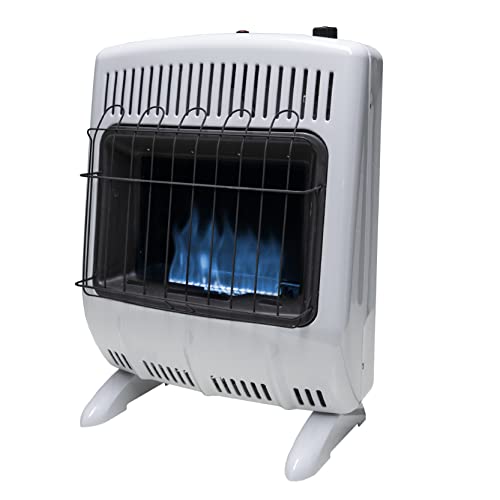
This 20,000 BTU blue flame, vent-free wall heater is designed to warm rooms, additions, sunrooms, cabins, or garages up to about 700 sq. ft. The unit includes a thermostat for precise temperature control and battery-powered electronic ignition for convenient starts.
Safety is addressed via an integrated Oxygen Depletion Sensor (ODS)
Buying Guide: Choosing The Right BTU Propane Heater
Selecting the best BTU propane heater requires balancing space size, use case, and installation or mobility needs. Below are practical considerations organized to help compare models and make an informed purchase.
Tips for Getting the Best HVAC Prices
- Prioritize Quality Over Cost
The most critical factor in any HVAC project is the quality of the installation. Don’t compromise on contractor expertise just to save money. - Check for Rebates
Always research current rebates and incentives — they can significantly reduce your overall cost. - Compare Multiple Quotes
Request at least three estimates before making your choice. You can click here to get three free quotes from local professionals. These quotes include available rebates and tax credits and automatically exclude unqualified contractors. - Negotiate Smartly
Once you've chosen a contractor, use the proven strategies from our guide — How Homeowners Can Negotiate with HVAC Dealers — to get the best possible final price.
Match BTU To Space Size
- Small Rooms (100–300 sq. ft.): Look at 4,000–10,000 BTU radiant or small vent-free models for efficient localized heat.
- Medium Rooms (300–800 sq. ft.): Consider 10,000–30,000 BTU blue flame or radiant wall heaters that offer room-level control.
- Large Spaces (800–2,000+ sq. ft.): Choose 30,000–80,000 BTU forced-air or convection units to move heat into the full volume.
- Outdoor Areas: Use high-BTU patio heaters (40,000–60,000 BTU) since heat disperses quickly outdoors.
Heat Type: Radiant, Convection, Forced-Air, Blue Flame
- Radiant/Infrared: Heats objects and people directly; effective for spot heating and semi-enclosed spaces.
- Convection: Warms air and circulates it for whole-room heating; better for enclosed, insulated spaces.
- Forced-Air: Uses a blower to distribute warm air quickly; useful for rapid warm-up of large areas.
- Blue Flame/Vent-Free: High efficiency for indoor spaces; requires attention to ventilation and local codes.
Safety Features To Prioritize
- Tip-Over Switch: Important for portable units used in garages, workshops, or around foot traffic.
- Oxygen Depletion Sensor (ODS): Required on many vent-free units to prevent unsafe oxygen levels.
- Flame-Out Protection: Shuts gas off if flame extinguishes unexpectedly—useful for outdoor patio heaters.
- Certified Components: Look for CSA or ANSI listings and robust ignition systems like Piezo or electronic ignition.
Fuel Supply And Runtime
- Cylinder Size: Portable models commonly use 20 lb tanks; patio and permanent units may connect to larger tanks or lines.
- Burn Rate: Higher BTU means faster fuel consumption. Evaluate run time on intended cylinder size and factor in usage patterns.
- Regulator And Hose Quality: For inline or external connections, a reliable regulator and steel-braided hose improve safety and performance.
Installation, Portability, And Code Compliance
- Permanent vs Portable: Wall-mounted or convection heaters may need professional installation; portable buddy and forced-air units allow flexible placement.
- Local Codes: Vent-free appliances may be restricted in some jurisdictions—verify building codes and manufacturer installation instructions.
- Outdoor Use Rating: Ensure patio heaters are rated for outdoor exposure and include protections like tip-over switches and flame-out sensors.
Performance Considerations And Comparisons
- Efficiency vs Coverage: Vent-free and radiant units are efficient at spot heating but may not warm an entire large, poorly insulated building.
- Noise: Forced-air heaters generate fan noise; models with quieter technology may be preferable for occupied workspaces.
- Heat Distribution: Convection and forced-air units distribute heat more evenly across space compared to directional infrared units.
Maintenance And Longevity
- Regular Inspections: Check hoses, regulators, and burners periodically for wear, leaks, or corrosion.
- Replacement Parts: Choose brands with accessible parts and service networks if long-term maintenance is expected.
- Storage: Store portable units and spare tanks in dry, ventilated areas and follow manufacturer winterization guidance.
Final Selection Checklist
- Confirm the BTU output aligns with your square footage and ceiling height.
- Decide between spot heating (infrared) and whole-space heating (convection/forced-air).
- Verify required safety features for the intended location, including ODS and tip-over protection.
- Check installation requirements and local regulations for vent-free appliances.
- Consider runtime and fuel logistics for the tank sizes you plan to use.