
Keeping a garage comfortable for working on a car or using as a workspace requires both a reliable heater and effective insulation. The products below include a dedicated electric garage heater and several insulation kits and door covers that improve heating efficiency. The summary table highlights quick specs to guide comparisons.
| Product | Type | Key Benefit |
|---|---|---|
| Heat Storm HS-6000-GC | Ceiling/Wall Electric Heater | Instant, high-output heat with WiFi control |
| US Energy NASATECH 16-Panel Kit | Reflective Garage Door Insulation | R8 reflective foam core for 2-car doors |
| NASA TECH White Reflective Foam Core | Precut Garage Door Insulation Kit | R8 foam core, heavy-duty tape included |
| MYFAMIREA 16P Double Bubble Panels | Aluminum Foil Bubble Insulation | Thin, reflective panels for heat reflection |
| Homealexa Thermal Garage Door Curtain | Magnetic Insulated Door Curtain | Weighted bottom and magnetic strips for seal |
Content Navigation
Heat Storm HS-6000-GC Garage Heater

The Heat Storm HS-6000-GC is a hardwired electric heater designed for ceiling or wall mounting in garages and workshops. It offers variable wattage between 3000 and 6000 watts with an adjustable BTU output, and is intended to provide rapid, quiet heat distribution. The unit supports WiFi control, allowing remote temperature adjustments and scheduling.
Key features listed include instant heat, multiple power settings for different space sizes, and mounting flexibility. Hardwiring is required, so professional electrical installation may be necessary. For garages seeking a primary heating source, this unit supplies high output and remote control convenience, while installation and power draw should be matched to the garage electrical capacity.
US Energy NASATECH 16-Panel Insulation Kit
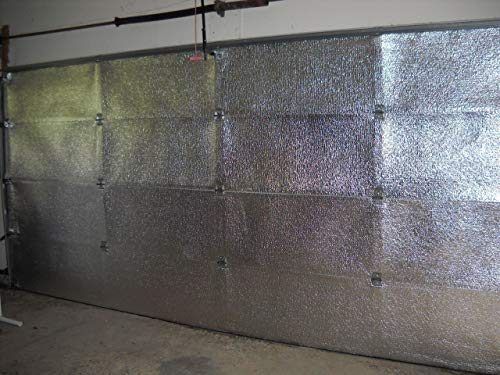
This 16-panel reflective insulation kit is targeted at 2-car garage doors and is described as an upgraded foam core that achieves an R8 value by creating an air pocket behind panels. The kit is lightweight, pre-cut for 16-panel doors, and uses heavy-duty double-sided foam tape for attachment.
Call 888-896-7031 for Free Local HVAC Quotes – Compare and Save Today!
Manufacturers state the kit helps retain heat in winter and block heat in summer, reducing the load on garage heaters. The panels are intended to be easy to install without affecting door operation. For garages with a standard 16×7 or similar door, this kit addresses the large heat-loss area represented by the door surface.
NASA TECH White Reflective Foam Core Kit

The NASA TECH White Reflective Foam Core kit is offered in widths suitable for 2-car doors (18ft wide by 8ft high in this listing) and claims an R8 value. The kit includes rolls of foam core insulation plus heavy-duty double-sided tape, razor, squeegee, and instructions. It is marketed as meeting fire code standards.
Because garage door openings are a primary source of heat loss, this kit focuses on sealing and insulating the door surface. The inclusion of installation tools aims to streamline application. For users prioritizing a high R-value panel solution that fits wider door dimensions, this product is positioned as a complete kit.
MYFAMIREA 16P Aluminum Foil Insulation Panels

The MYFAMIREA 16P kit uses double-bubble polyethylene core with an aluminized reflective film surface. At about 6mm thick, these panels aim to reflect radiant heat and reduce conduction through the door. The product notes odorless materials and long-term dimensional stability.
Call 888-896-7031 for Free Local HVAC Quotes – Compare and Save Today!
These panels are versatile for garages, attics, or walls, and are lighter and thinner than foam-core R8 panels. They emphasize reflectivity and sealing performance, which is effective for reflecting sun-driven heat in summer and limiting radiative loss in winter. For setups where weight or thickness is a constraint, these are an alternative to heavier foam core products.
Homealexa Thermal Insulated Garage Door Curtain

The Homealexa Thermal Insulated Garage Door Curtain is a magnetic blanket sized for a 16ft x 7ft door. Constructed from durable Oxford fabric with thick polyester filling, the curtain includes a weighted bottom and extra-large magnetic strips to create a tighter seal against drafts. A clear window section allows light while providing insulation.
This product aims to be a removable, reversible insulation solution that reduces heat loss and noise while being waterproof and scratch-resistant. It may be appealing where permanent panel installation is undesirable or when a flexible, temporary insulation layer is preferred for seasonal use.
Buying Guide: Choosing Garage Heating And Insulation
Selecting the right combination of heater and insulation depends on garage size, usage, electrical capacity, and desired comfort level. Below are the key considerations and comparison perspectives to guide a purchase.
1. Heating Capacity And Electrical Requirements
- Match Heater Output To Space: Determine cubic footage and insulation level. High-wattage electric heaters like the Heat Storm HS-6000-GC provide fast heat for larger uninsulated spaces but require appropriate circuit capacity.
- Power Supply: Check if the heater requires hardwiring or a dedicated circuit. Hardwired units often need professional installation and may need a 240V connection.
- Heat Distribution: Ceiling-mounted units can provide better whole-space distribution; wall units may be suited for targeted zones.
2. Insulation Strategy For Efficiency
- Garage Door Area: Doors are major heat loss points. Choose between reflective foam-core panels (R8 rated) for higher insulating value or thinner reflective bubble panels for weight-sensitive doors.
- Sealing vs R-Value: A magnetic curtain or sealing strips can block drafts effectively even if R-value is lower. For maximum energy savings, combine good sealing with higher R-value panels.
- Door Operation: Ensure installed panels or curtains do not impede door movement. Precut kits intended for specific panel doors maintain door balance and function.
3. Installation And Maintenance
- DIY vs Professional: Insulation panels and curtains are typically DIY-friendly. Electric heaters that require hardwiring should be installed by a qualified electrician.
- Durability: Consider materials: foil-faced foam resists moisture and is stable, while fabric curtains provide flexibility and removable cleaning.
- Attachment Methods: Heavy-duty double-sided foam tape and adhesive pads are common; follow manufacturer instructions for surface prep to ensure adhesion.
4. Climate And Usage Patterns
- Cold Climates: Prioritize higher R-value door insulation and a robust heater with adequate output to maintain comfortable workshop temperatures.
- Mild Climates: Reflective bubble panels and a lower-power heater or portable heating solution may offer sufficient comfort with lower energy use.
- Frequent Door Use: If the garage door opens often for vehicle access, focus on quick recovery heating and seals that re-engage easily (magnetic curtains or automatic seals).
5. Energy Efficiency And Operating Cost Considerations
- Reduce Load Before Adding Heat: Insulate and seal first to reduce the heater size needed and operating hours.
- Thermostats And Controls: WiFi-enabled heaters and programmable thermostats allow scheduling and remote control, improving energy efficiency.
- Reflective Surfaces: Reflective panels reduce radiant heat gain in summer and reflect interior heat back in winter, enhancing overall efficiency.
6. Safety And Code Compliance
- Fire Codes: Verify that insulation materials meet local fire code requirements, especially when mounted on or near garage door panels.
- Clearances: Maintain required clearances for heaters, especially combustibles and vehicle fuel sources. Follow manufacturer installation guidelines closely.
7. Comparison Perspectives
- Performance vs Cost: Foam-core R8 kits typically deliver higher R-value per thickness than bubble panels but may cost more and add weight.
- Flexibility vs Permanence: Curtains provide removable, seasonal insulation without altering door hardware; panels are more permanent and generally more efficient long-term.
- Upfront Installation vs Ongoing Energy Use: Investing in better insulation reduces heater runtime, lowering energy use over time. Balance initial installation effort with expected savings.
Combining an appropriately sized heater with targeted door and wall insulation yields the best outcomes for maintaining garage temperatures efficiently. Match product attributes—output, R-value, installation needs—to your garage layout and usage for an optimized system.
Tips for Getting the Best HVAC Prices
- Prioritize Quality Over Cost
The most critical factor in any HVAC project is the quality of the installation. Don’t compromise on contractor expertise just to save money. - Check for Rebates
Always research current rebates and incentives — they can significantly reduce your overall cost. - Compare Multiple Quotes
Request at least three estimates before making your choice. You can click here to get three free quotes from local professionals. These quotes include available rebates and tax credits and automatically exclude unqualified contractors. - Negotiate Smartly
Once you've chosen a contractor, use the proven strategies from our guide — How Homeowners Can Negotiate with HVAC Dealers — to get the best possible final price.