
Choosing a safe, reliable heater for tents requires balancing combustion safety, heat output, and portability. Below is a concise comparison of five tent-friendly heaters selected for camping and small-space use, including a true catalytic model and several close alternatives that offer indoor-safe features.
| Product | Type | Heat Range / Mode | Best For |
|---|---|---|---|
| Camco Olympian Wave-3 | Catalytic | 1,600–3,000 BTU | Small tents, RV cabins where catalytic operation is required |
| Mr. Heater F215100 Little Buddy | Radiant Propane With ODS | 3,800 BTU | Very small tents and enclosed spaces up to ~95 sq. ft. |
| Mr. Heater Portable Buddy MH9BX | Radiant Propane | 4,000–9,000 BTU | Larger tents or quick warm-up of small cabins |
| Mosoyolo Portable Propane Heater | Radiant Propane | 6,500 BTU | Outdoor shelters, hunting blinds, larger tents |
| VIVOSUN Portable Electric Heater | Electric Fan/Heater | 750 / 1,500 W | Grow tents and insulated tents with power access |
Content Navigation
- Camco Olympian Wave-3 Portable Catalytic Safety Heater
- Mr. Heater F215100 MH4B Little Buddy 3800-BTU Heater
- Mr. Heater Portable Buddy MH9BX 4,000–9,000 BTU Heater
- Mosoyolo Portable Propane Heater Camping 6500 BTU
- VIVOSUN Portable Greenhouse Electric Heater 1500W/750W
- Buying Guide: Choosing The Right Tent Heater
- 1. Heater Type And Heat Delivery
- 2. Safety Features To Prioritize
- 3. Heat Output Vs. Tent Size
- 4. Fuel Logistics And Runtime
- 5. Ventilation And Carbon Monoxide Risks
- 6. Portability, Weight, And Setup
- 7. Environmental Conditions And Materials
- 8. Comparison Perspectives
- 9. Practical Safety Checklist Before Use
Camco Olympian Wave-3 Portable Catalytic Safety Heater

The Camco Olympian Wave-3 Is A Purpose-Built catalytic heater designed for small enclosed spaces such as RVs and tents where an open flame is undesirable. It provides 1,600 to 3,000 BTUs and claims coverage up to about 100 sq. ft., using a flameless catalytic surface to produce heat.
- Catalytic Operation: Produces heat without an open flame, reducing direct combustion risk and flame-related sparks.
- Quiet And Versatile: No fan; can be mounted, used with legs, or deployed as a portable unit.
- Safety Features: Self-generating piezo starter, safety shut-off valve, and long-life starter rating.
- Use Case: Best for users prioritizing flameless catalytic heat and silent operation in small tents or RV interiors.
Mr. Heater F215100 MH4B Little Buddy 3800-BTU Heater
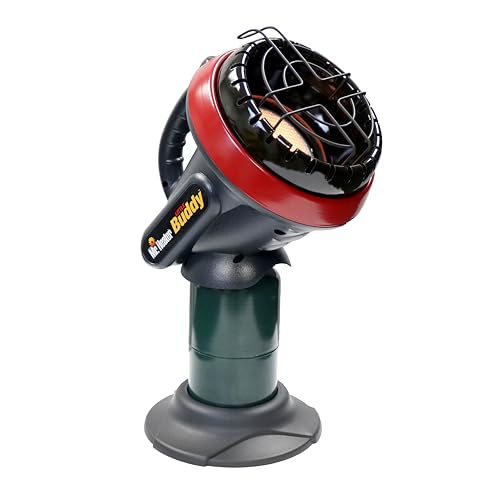
The Mr. Heater Little Buddy Is A Compact propane radiant heater with an Oxygen Depletion Sensor (ODS) and tip-over protection. It outputs 3,800 BTU and is specified for indoor-safe use in well-ventilated small spaces.
- Safety Systems: Automatic ODS shutoff and tip-over protection help reduce carbon monoxide and fire risk in enclosed spaces.
- Performance: 45° heating angle intended to concentrate radiant warmth on occupants; effective for tents up to about 95 sq. ft.
- Portable Operation: Simple on/off controls and runs on 1 lb propane cylinders for several hours depending on output level.
- Use Case: Good where catalytic options are unavailable but indoor-safe propane with ODS is accepted and ventilation is controlled.
Mr. Heater Portable Buddy MH9BX 4,000–9,000 BTU Heater
Call 888-896-7031 for Free Local HVAC Quotes – Compare and Save Today!
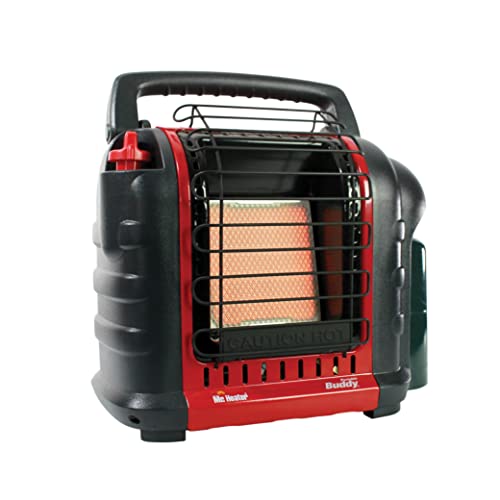
This Model Offers A Broader BTU Range (4,000–9,000) For Faster Heating And Larger Enclosed Spaces. It Uses infrared radiant heating and includes improved tip-over safety and a piezo igniter.
- Infrared Heat: Directly warms people and objects rather than heating air, which can feel quicker in drafty tents.
- Safety: Enhanced tip-over switch and no-battery piezo ignition make startup and use straightforward.
- Coverage: Rated for spaces up to ~225 sq. ft., making it suitable for larger tents or small cabins with ventilation.
- Use Case: When higher heat output is required and space permits a propane radiant heater with robust safety features.
Mosoyolo Portable Propane Heater Camping 6500 BTU

The Mosoyolo Portable Heater Provides Higher Output At 6,500 BTU, Featuring An Electric Igniter, Tip-Over Leak Protection, And Durable Reflector Panels. It’s aimed at outdoor shelters, hunting blinds, and larger tents.
- High Heat Output: Quicker warm-up for larger shelters or colder conditions.
- Safety Protections: Tip-over leak protection and corrosion-resistant brass fittings help minimize gas-related hazards.
- Ignition: Built-in electric igniter reduces the need for matches and simplifies startup.
- Use Case: Useful in larger tent setups where more radiant heat is needed and ventilation allows safe propane use.
VIVOSUN Portable Greenhouse Electric Heater 1500W/750W

The VIVOSUN Electric Heater Is A Non-Combustion Option That Offers 750W And 1500W Modes Plus A Fan-Only Setting. It Provides instant forced-air heating with overheat protection, making it viable for insulated tents with access to shore power or batteries/inverter systems.
- Electric Safety: No combustion emissions, no CO risk, and built-in overheat cutoff.
- Fast Response: Fan-assisted heating warms air rapidly in small, insulated spaces.
- Portability: Compact with a handle; requires an electrical source, making it unsuitable for off-grid gas setups.
- Use Case: Best for grow tents, insulated camper tents, or when electric power is reliably available and combustion is not allowed.
Buying Guide: Choosing The Right Tent Heater
Selecting a heater for a tent requires attention to safety, heat delivery type, ventilation, and logistics like fuel and weight. The sections below walk through the key considerations.
Call 888-896-7031 for Free Local HVAC Quotes – Compare and Save Today!
1. Heater Type And Heat Delivery
Understand the fundamental differences:
- Catalytic Heaters: Use a catalyst to oxidize fuel at lower temperatures, producing heat without an open flame. They lower flame-related risks and often emit fewer combustion byproducts. Ideal where flameless heating is prioritized.
- Radiant/Propane Heaters: Provide quick, directional warmth. Many models include ODS and tip-over shutdowns. They can be highly effective in uninsulated tents but require cautious ventilation.
- Electric Fan Heaters: Offer zero combustion emissions and precise control but need shore power or inverter capacity; useful in insulated or power-equipped tents.
2. Safety Features To Prioritize
- Oxygen Depletion Sensor (ODS): Cuts fuel if oxygen drops below safe levels — essential for enclosed environments with combustion heaters.
- Tip-Over Shutoff: Automatically cuts fuel or power if the unit is tipped, preventing accidental fires or leaks.
- Catalytic Operation: Flameless heat reduces fire risk and sparks compared with open flames.
- Overheat Protection: Common on electric units to prevent internal component failure and fire.
3. Heat Output Vs. Tent Size
Match BTU or wattage to tent volume, not just floor area. Consider insulation, expected outdoor temperature, and occupancy. As a rough guide:
- Small, Insulated Tent (up to ~100 sq. ft.): 1,500–3,800 BTU catalytic or small propane radiant often suffices.
- Medium Tents (100–225 sq. ft.): 3,800–6,500 BTU radiant units or higher-output catalytic alternatives may be required.
- Large Or Poorly Insulated Structures: Higher BTU radiant heaters or combined systems; ensure adequate ventilation and safety systems.
4. Fuel Logistics And Runtime
- Propane/Butane: Lightweight canisters are portable but require safe storage and handling. Runtime varies by BTU and canister size.
- Electric: Requires power access; plan battery/inverter capacity for off-grid use.
- Catalytic Units: Often designed for small propane canisters and provide efficient low-flame operation for longer steady heat.
5. Ventilation And Carbon Monoxide Risks
Any combustion heater produces CO. Even units marketed as “indoor-safe” need adequate ventilation. Always:
- Vent the shelter to allow air exchange.
- Use a battery-powered CO detector rated for sleeping areas.
- Avoid sleeping directly next to combustion heaters and follow manufacturer clearance distances.
6. Portability, Weight, And Setup
- Weight & Size: Critical for backpacking; many catalytic heaters are compact but still heavier than small butane stoves.
- Ignition Type: Piezo or electric igniters reduce the need for matches, simplifying startup in cold conditions.
- Mounting Options: Some catalytic units can be mounted permanently or used with stands for flexible placement.
7. Environmental Conditions And Materials
Consider wind, moisture, and altitude. High altitude can affect combustion efficiency, and damp conditions may affect starting reliability. Look for durable finishes and corrosion-resistant fittings when you expect wet or salty environments.
8. Comparison Perspectives
Use multiple lenses when comparing models:
Tips for Getting the Best HVAC Prices
- Prioritize Quality Over Cost
The most critical factor in any HVAC project is the quality of the installation. Don’t compromise on contractor expertise just to save money. - Check for Rebates
Always research current rebates and incentives — they can significantly reduce your overall cost. - Compare Multiple Quotes
Request at least three estimates before making your choice. You can click here to get three free quotes from local professionals. These quotes include available rebates and tax credits and automatically exclude unqualified contractors. - Negotiate Smartly
Once you've chosen a contractor, use the proven strategies from our guide — How Homeowners Can Negotiate with HVAC Dealers — to get the best possible final price.
- Safety Priority: Catalytic and electric units outperform open-flame radiant options for flame risk; look for ODS and CO testing for combustion units.
- Warmth Priority: Radiant propane produces intense, localized heat; better for very cold, short-term warming.
- Noise And Comfort: Catalytic units and some radiant models are near-silent, while fan heaters produce continuous noise.
- Fuel Availability: Propane is widely available; butane canisters may freeze or perform poorly at low temperatures. Electric requires power supplies.
9. Practical Safety Checklist Before Use
- Read the manufacturer manual thoroughly and follow clearance specs.
- Test ODS and tip-over functions before overnight use.
- Keep flammable materials, sleeping bags, and clothing at safe distances.
- Use a CO detector and provide ventilation even for “indoor-safe” heaters.
- Store spare fuel away from living/sleeping areas in approved containers.