
Finding the right baseboard or ceiling-style heater depends on room size, installation method, and safety features. Below is a quick comparison of selected heaters and covers featured in this guide to help narrow choices before reading full product details.
| Product | Type | Key Feature | Voltage / Wattage |
|---|---|---|---|
| Cadet F Series 36″ Electric Baseboard Heater | Wall Baseboard | All-metal construction, requires thermostat | 120V / 750W |
| Cadet F Series 48″ Electric Baseboard Heater | Wall Baseboard | Pre-punched casing holes for easier installation | 120V / 1000W |
| KING 4K1210BW K Series Baseboard Heater | Wall Baseboard | Aluminum ribbon fin element, full-length safety cutout | 120V / 1000W |
| EZ-HEAT 1,500 Watt Baseboard Space Heater | Freestanding / Baseboard Style | Adjustable thermostat, overheat & tip-over protection | 120V / 1500W |
| NeatHeat 6ft Baseboard Heat Front Cover | Cover / Trim | Slip-on cover, fits many brands, easy install | Accessory (fits up to 6ft) |
Content Navigation
- Cadet F Series 36″ Electric Baseboard Heater (3F750-1W)
- Cadet F Series 48″ Electric Baseboard Heater (4F1000-1W)
- KING 4K1210BW K Series Baseboard Heater, 4′ / 1000W
- EZ-HEAT 1,500 Watt Baseboard Space Heater With Thermostat
- NeatHeat 6ft Baseboard Heat Front Cover
- Buying Guide: How To Choose The Right Baseboard Or Ceiling Heat Solution
Cadet F Series 36″ Electric Baseboard Heater (3F750-1W)
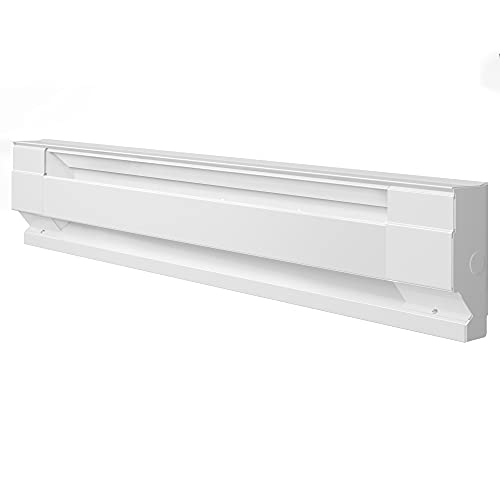
This Cadet 36″ baseboard unit is a compact wall-mounted heater designed for supplemental heating in small rooms. It lists a 750 watt output and operates on 120 volts, which is typical for bedroom or small living space applications. The unit requires a separate thermostat for control; it does not include a built-in thermostat.
- Construction: 25 gauge steel body with a 20 gauge junction box and powder-coated finish for durability.
- Installation: Hard-wired installation is required; not a plug-in model.
- Safety: All-metal design and grounded junction box support electrical safety and longevity.
- Use Case: Best suited to small spaces where a hard-wired baseboard heater with a separate thermostat is preferred.
Cadet F Series 48″ Electric Baseboard Heater (4F1000-1W)
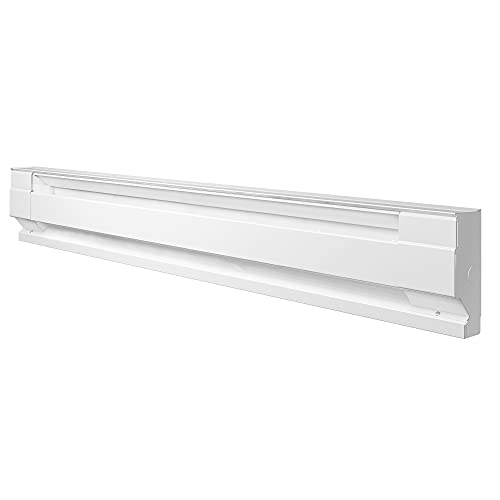
The Cadet 48″ model provides higher output at 1000 watts on a 120 volt circuit, producing more heat suitable for medium-sized rooms. This unit emphasizes ease of installation and durable protective steel construction.
- Performance: Rated at roughly 3412 BTU; marketed for quiet, steady heating in small to medium rooms.
- Installation Convenience: Pre-punched 1″ casing holes and universal wiring at either end to simplify wiring options.
- Durability: Steel-sheathed element for optimized heat transfer and long service life.
- Control: Thermostat not included; requires an external thermostat for temperature regulation.
- Application: Common choice where a longer baseboard is needed to distribute heat more evenly along a wall.
KING 4K1210BW K Series Baseboard Heater, 4′ / 1000W

Call 888-896-7031 for Free Local HVAC Quotes – Compare and Save Today!
The KING K Series 4′ baseboard heater is built for hard-wired installation and focuses on safety and efficient heat transfer. Its design uses an aluminum ribbon fin element to move heat into the room.
- Heat Element: Aluminum ribbon fin promotes efficient heat distribution across the length of the heater.
- Safety Features: Full-length safety cutout helps protect the unit in the event of an over-temperature condition.
- Installation: Not plug-in — intended for permanent, hard-wired mounting and connection.
- Use Case: Suitable for rooms that require a stable wall-mounted convection heater with passive safety measures.
EZ-HEAT 1,500 Watt Baseboard Space Heater With Thermostat

The EZ-HEAT 1500W model is offered as a convection baseboard-style heater with built-in adjustable thermostat and multiple safety systems. It is positioned as a versatile option for medium-sized rooms and locations where a plug-in or portable configuration is desired.
- Power & Control: 1500 watts with two heat settings plus adjustable thermostat for user control.
- Safety Systems: Tip-over switch, overheat protection, and a stay-cool body to reduce burn risk.
- Operation: Designed for whisper-quiet convection heating suitable for living rooms, offices, or bedrooms.
- Application: Appropriate where a portable or non-permanently-mounted heater with multiple protections is required.
NeatHeat 6ft Baseboard Heat Front Cover
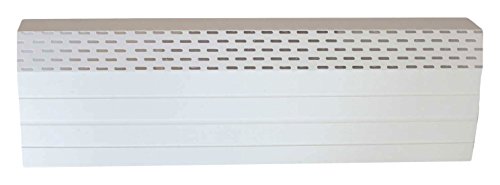
Baseboard covers are important for safety and aesthetics when replacing old, rusty trims or when covering hydronic and electric baseboards. The NeatHeat 6ft slip-on cover is offered as a universal-style front cover compatible with many common baseboard brands.
- Fit & Installation: Easy install that does not require special tools; can be cut with household tools for custom lengths.
- Compatibility: One size fits most — designed to slip over many common baseboard heater housings.
- Use Case: Ideal for improving room appearance, preventing direct contact with hot elements, and protecting children and pets from touching the heater.
- Material: Single-panel cover designed to allow airflow while reducing direct access to the heating element.
Buying Guide: How To Choose The Right Baseboard Or Ceiling Heat Solution
Selecting the appropriate heater involves assessing room characteristics, wiring, safety needs, and whether a fixed wall-mounted unit or a portable/cover setup is best. The following topics cover the primary decision factors and comparison perspectives.
Call 888-896-7031 for Free Local HVAC Quotes – Compare and Save Today!
Heating Capacity And Room Size
Wattage And BTU: Determine required wattage by room square footage. Typical recommendation: 10 watts per square foot as a starting point for supplemental heating. For higher insulation or colder climates, increase capacity accordingly. Convert watts to BTU (1 watt ≈ 3.412 BTU) for cross-reference with other heating specs.
Voltage And Wiring
120V vs 240V: Many smaller baseboard units operate on 120V; higher-output units or whole-room systems sometimes use 240V. Confirm home wiring and circuit capacity before choosing a hard-wired element.
Hard-Wired vs Plug-In: Hard-wired baseboards require permanent installation and often a thermostat. Plug-in or portable units like some 1500W models can be used without new wiring but may not be suitable for built-in replacement roles.
Control Options
Built-In Thermostat vs External Thermostat: Some units include adjustable thermostats; many hard-wired baseboards require an external wall thermostat. Choose an accurate, compatible thermostat for energy savings and comfort consistency.
Safety Features
Overheat Protection & Safety Cutouts: Full-length safety cutouts and overheat sensors prevent temperature runaway in enclosed or obstructed scenarios.
Tip-Over & Stay-Cool Body: Portable units should include tip-over switches; covers or trim reduce burn risk on fixed units.
Installation And Maintenance
Pre-Punched Holes & Wiring Access: Models with pre-punched holes and universal wiring options simplify installation and reduce labor costs.
Materials: Steel-sheathed elements and powder-coated finishes resist corrosion and improve longevity. Aluminum ribbon fins can enhance heat transfer efficiency.
Accessibility: Slip-on covers and removable fronts make coil cleaning and element inspection easier.
Room Aesthetics And Covers
Cover Fit: If replacing an old cover, measure length, height, and width. Covers like slip-on panels are available in multiple lengths and may be trimmed to size.
Function: Covers protect occupants from direct contact while preserving airflow; ensure covers do not block manufacturer-recommended clearance for safe operation.
Energy Efficiency And Operating Costs
Thermostat Use: Accurate thermostats and zoning reduce run time and energy consumption. Consider programmable or smart thermostats for better efficiency.
Insulation And Sealing: The overall efficiency of any heater depends on room insulation, window quality, and drafts. Improving envelope performance reduces required heater size and operating hours.
Compatibility And Replacement Scenarios
Replacing Existing Units: Match physical length and electrical specifications when replacing a factory unit. Verify that the cover dimensions match the installed heater profile.
New Installations: For new walls or rooms, plan circuits and thermostat placement to meet local electrical codes and ensure safe connections.
Tips for Getting the Best HVAC Prices
- Prioritize Quality Over Cost
The most critical factor in any HVAC project is the quality of the installation. Don’t compromise on contractor expertise just to save money. - Check for Rebates
Always research current rebates and incentives — they can significantly reduce your overall cost. - Compare Multiple Quotes
Request at least three estimates before making your choice. You can click here to get three free quotes from local professionals. These quotes include available rebates and tax credits and automatically exclude unqualified contractors. - Negotiate Smartly
Once you've chosen a contractor, use the proven strategies from our guide — How Homeowners Can Negotiate with HVAC Dealers — to get the best possible final price.
Comparison Perspectives
- Performance: Higher wattage units provide faster heating but require appropriate wiring; longer baseboards spread heat more evenly.
- Safety: Built-in overheat cutouts and coated steel housings offer passive safety for wall-mounted units; portable models should include tip-over and overheat protection.
- Installation Effort: Slip-on covers and pre-punched baseboards reduce DIY difficulty; hard-wired installation may require professional electricians.
- Aesthetics vs Function: Covers improve appearance but must not obstruct airflow. Choose covers designed for the model or confirmed as universal.
Final Practical Tips
- Measure the installation space and compare both physical and electrical specs before purchasing.
- Confirm whether a thermostat is required or included; plan for control placement accordingly.
- Prioritize safety features when selecting portable or permanent heaters, especially in homes with children or pets.
- When in doubt about wiring or load capacity, consult a licensed electrician to verify compatibility and code compliance.