
Finding the right ceramic element heater means balancing safety, efficiency, and fit for purpose. This guide reviews five relevant Amazon options—from plug‑and‑play space heaters to PTC heating elements used in appliances—so you can compare features and pick the best match for your needs.
| Product | Type | Key Feature |
|---|---|---|
| Dreo Space Heater | Portable PTC Space Heater | 1500W PTC, thermostat, remote |
| ZLXHDL PTC 500W Element | PTC Ceramic Heating Element | Aluminum PTC tube, auto constant temp |
| PTCYIDU 500W PTC Fan Heater | PTC Fan Heater Module | 500W constant temperature, insulation |
| PTCYIDU 200W PTC Fan Heater | Small PTC Fan Heater | 200W, portable for small enclosures |
| Simple Deluxe 25W Ceramic Heat Emitter | Ceramic Heat Emitter Bulb | No visible light, 10,000‑hour rating |
Content Navigation
- Dreo Space Heater — Portable 1500W PTC Heater
- ZLXHDL PTC 500W Heating Element — Aluminum PTC Tube
- PTCYIDU 500W PTC Fan Heater — Energy Saving Module
- PTCYIDU 200W PTC Fan Heater — Compact Ceramic Element
- Simple Deluxe 25W Ceramic Heat Emitter — No Light Emitter
- Buying Guide — How To Choose A Ceramic Element Heater
Dreo Space Heater — Portable 1500W PTC Heater

The Dreo Space Heater is a consumer-grade 1500W PTC ceramic heater designed for indoor use in living rooms, bedrooms, or offices. It combines an advanced PTC system with a heat funnel design to accelerate warm airflow and extend distribution range compared to conventional ceramic heaters.
Key features listed include a digital thermostat with 1°F increments, a remote control, a 12‑hour timer, multiple heating modes, and safety systems such as tilt detection, overheat protection, and V0 flame retardant materials. These features support precise temperature control and standard consumer safety requirements.
From an application standpoint, the Dreo unit targets whole‑room comfort with rapid warm‑up and programmable controls. The ETL safety certification and multiple protections are relevant when prioritizing safety and usability in occupied spaces.
ZLXHDL PTC 500W Heating Element — Aluminum PTC Tube

Call 888-896-7031 for Free Local HVAC Quotes – Compare and Save Today!
This ZLXHDL component is a 500W PTC ceramic heating element paired with an aluminum tube, intended for use in appliances such as pet dryers, clothes dryers, humidifiers, and air conditioners.
Listed features emphasize low thermal resistance, high heat transfer efficiency, automatic constant temperature control, and an automatic energy‑saving function that adjusts power output based on temperature. The design is oriented toward integration where steady surface temperature and energy optimization are required.
For technicians or hobbyists repurposing PTC elements, this unit provides a balance of higher power output and aluminum conduction to aid heat dispersion. The product’s described automatic control behavior is relevant when replacing or designing systems that require consistent thermostat performance.
PTCYIDU 500W PTC Fan Heater — Energy Saving Module

The PTCYIDU 500W fan heater module is marketed for small enclosure heating and instrument control where a 500W PTC element provides fast heating with insulation and mounting accommodations.
According to the product features, the module offers constant temperature performance with PTC thermistor characteristics, surface insulation, and included wiring for ease of installation. The manufacturer emphasizes stable working performance and suitability for compact spaces.
Call 888-896-7031 for Free Local HVAC Quotes – Compare and Save Today!
This module is relevant for retrofit projects, vehicle heating assemblies, or compact HVAC subsystems that demand a higher wattage PTC element combined with forced airflow to move heat. The described insulation and mounting features are central to safe, long‑term operation in confined areas.
PTCYIDU 200W PTC Fan Heater — Compact Ceramic Element

This 200W PTC fan heater module is presented as a portable and compact heating solution for very small volumes, such as instrument enclosures, small vehicle interiors, or localized drying tasks.
Features include automatic constant temperature control, surface insulation, high temperature resistance wiring, and mounting holes for installation. The product description specifies design intent for 0.5 cubic space and highlights portability and ease of installation.
Use cases for this item typically require targeted heat in a limited volume rather than whole‑room comfort. The lower wattage and compact form make it appropriate for electronics defogging, small cabinet heating, or custom projects where space and power are constrained.
Simple Deluxe 25W Ceramic Heat Emitter — No Light Emitter
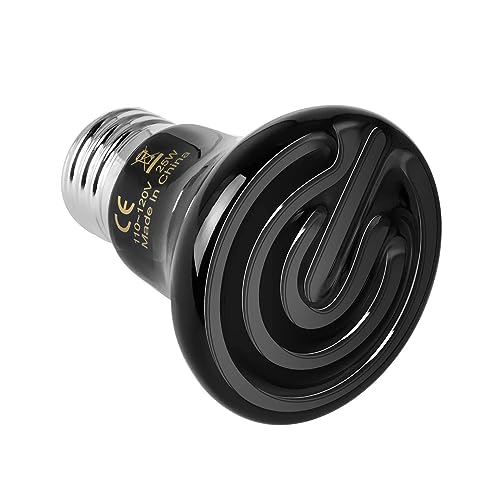
The Simple Deluxe 25W ceramic heat emitter is a low‑wattage, no‑light ceramic bulb designed for reptile brooding, amphibian habitats, and incubating poultry. It provides infrared heat without visible light to preserve animal day‑night cycles.
The manufacturer notes a high surface temperature caution, a 10,000‑hour lifespan rating, compatibility with standard E26 lamp bases, and a recommended cooling interval after shutoff to prevent burns. The design focuses on stable heat emission rather than radiant brightness.
This product is relevant where continuous heat without light is required and where safe mounting and distance from flammable materials must be observed. The emitter’s long rated life and standardized base make it a practical option for enclosures and brooding setups.
Buying Guide — How To Choose A Ceramic Element Heater
Selecting the right ceramic element heater depends on application, safety priorities, power capacity, control needs, and installation constraints. Below are key considerations and comparison perspectives to guide your decision.
Tips for Getting the Best HVAC Prices
- Prioritize Quality Over Cost
The most critical factor in any HVAC project is the quality of the installation. Don’t compromise on contractor expertise just to save money. - Check for Rebates
Always research current rebates and incentives — they can significantly reduce your overall cost. - Compare Multiple Quotes
Request at least three estimates before making your choice. You can click here to get three free quotes from local professionals. These quotes include available rebates and tax credits and automatically exclude unqualified contractors. - Negotiate Smartly
Once you've chosen a contractor, use the proven strategies from our guide — How Homeowners Can Negotiate with HVAC Dealers — to get the best possible final price.
Application And Intended Use
- Whole‑Room Heating: Choose a consumer PTC space heater with thermostat, safety certifications, and airflow design (e.g., 1500W units).
- Appliance Or OEM Integration: Select standalone PTC elements or fan heater modules with mounting features and wiring suited to the enclosure size.
- Animal Enclosures Or Incubation: Use ceramic emitters that produce heat without visible light and offer stable surface temperatures.
Power Rating And Coverage
- Higher wattage delivers faster and greater heat output; match wattage to the volume you need to warm. For rooms, 1500W is common. For enclosures and instruments, 200–500W modules are typical.
- Consider insulation and airflow. A fan or funnel design increases effective reach and uniformity compared to passive elements.
Temperature Control And Accuracy
- Thermostats and NTC/thermistor control: Look for fine temperature adjustment when occupant comfort or precise incubation temperatures are required.
- Automatic constant temperature and energy‑saving functions are useful for steady-state applications.
Safety Features And Certifications
- Consumer heaters should include overheat protection, tip‑over shutdown, flame‑retardant materials, and third‑party certification (ETL/UL/CE where applicable).
- For modules and elements, surface insulation, high‑temperature wiring, and proper mounting reduce risk during installation.
Installation And Integration
- Check mounting hole patterns, physical dimensions, and provided wiring. Modules often expect hardwiring or specific housings.
- Ceramic bulbs require compatible lamp holders and clearance to avoid contact with combustible materials.
Durability And Thermal Management
- Ceramic PTC elements typically offer stable resistance with temperature; aluminum shells aid heat transfer. Consider rated lifespan and duty cycle for continuous‑use applications.
- Forced‑air designs reduce local hot spots and help dissipate heat from the element, improving longevity.
Energy Efficiency And Operating Cost
- PTC elements often self‑regulate: as temperature rises, resistance increases, reducing current draw. This behavior can improve safety and lower steady‑state power consumption.
- Look for specified automatic energy‑saving functions or programmable timers to limit run time and reduce energy use.
Noise, Size, And Portability
- Fan‑equipped units introduce noise; low‑wattage modules or radiant emitters are quieter. Balance noise tolerance against heat distribution needs.
- Portability is important for personal heaters; fixed modules are better for embedded installations.
Replacement And Compatibility
- Confirm electrical ratings (voltage, AC/DC compatibility) and connection style before replacing elements in existing equipment.
- Standard fittings (E26 lamp base, common wiring terminals) simplify replacement and reduce adaptation work.
Comparison Perspectives
- Performance vs. Safety: Higher wattage yields more heat but requires stricter safety measures and certified housings.
- Efficiency vs. Control: Self‑regulating PTC elements are efficient but may offer less precise temperature control than dedicated thermostats without an NTC/NTC chipset.
- Cost vs. Lifespan: Industrial modules and ceramic emitters often trade higher upfront durability for longer continuous service life.