
Choosing the right commercial electric baseboard heater requires matching capacity, durability, and control options to the space. Below is a quick comparison of five relevant commercial-grade and heavy-duty models to help facility managers and contractors evaluate options.
| Product | Key Features | Primary Application |
|---|---|---|
| Dayton Hydronic Electric Baseboard Heater | Hydronic design, conventional housing, commercial use | Commercial hydronic zones |
| TPI 2900C Heavy Duty Convection Heater | Stainless element, aluminum fins, over-temp limit | Light commercial rooms, corridors |
| Cadet F Series 48″ 1000W Baseboard | Fast heating, pre-punched casing, sheathed steel | Small-to-medium commercial spaces |
| KING K Series 4′ 1000W Baseboard | Aluminum ribbon fin, full-length safety cutout, hard-wire | Commercial offices and service areas |
| Marley 2′ Convection Baseboard Heater | Convection heating, large wiring compartment, dual knockouts | Commercial rooms needing dust-free heating |
Content Navigation
Dayton Hydronic Electric Baseboard Heater

Overview: This unit is a hydronic-style electric baseboard heater intended for commercial applications. It operates on 120VAC and is specified for single-phase connections.
Key Features: The listing notes a conventional housing style and commercial primary application. Hydronic-type electric baseboards circulate a thermal fluid or use a sealed heating element to deliver steadier radiant/convection heat compared with bare-element convection units.
Use Cases: Suitable where steady, less-drafty heat and long run-times are desired — corridors, office suites, and zones that benefit from hydronic thermal mass. Installation may require hard-wiring and space for hydronic-compatible clearances.
TPI E2903024C Series 2900C Heavy Duty Convection Heater

Call 888-896-7031 for Free Local HVAC Quotes – Compare and Save Today!
Overview: The TPI 2900C is built for heavy-duty use with stainless steel heating elements and aluminum fins that resist corrosion and transfer heat efficiently.
Key Features: Stainless steel element, aluminum fins, over-temperature thermal limit for safety, and junction boxes with quick-connect cable clamps for streamlined wiring. The unit’s thickness and construction support commercial durability.
Use Cases: Designed for areas requiring rugged components and reliable safety cutouts: workshops, utility rooms, and light commercial interiors where frequent operation and robust elements are priorities.
Cadet F Series 48″ Electric Baseboard Heater
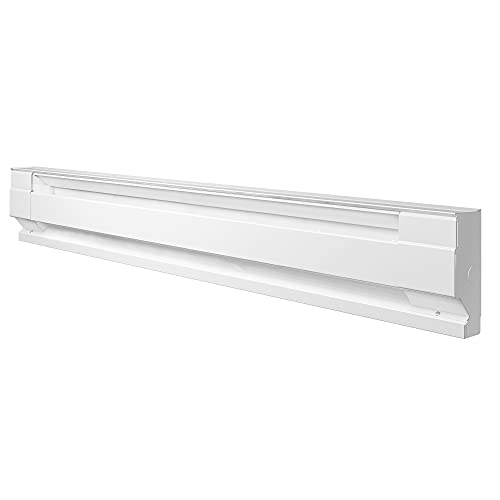
Overview: A 48-inch, 1000W, 120V Cadet F Series model specified for quick heating in small-to-medium rooms. It is sheathed in protective steel for durability.
Key Features: Fast heating at 1000W, pre-punched 1″ casing holes for easier mounting, universal wiring access at either end, and protective steel casing to optimize heat transfer. A thermostat is required but not included.
Call 888-896-7031 for Free Local HVAC Quotes – Compare and Save Today!
Use Cases: Ideal for offices, small retail spaces, or service rooms where rapid warm-up and straightforward installation are needed. The pre-punched casing reduces installation time for contractors.
KING 4K1210BW K Series Baseboard Heater

Overview: The KING K Series is a hard-wired, 1000W, 120V baseboard heater designed with an aluminum ribbon fin element and safety cutouts across the full length of the element.
Key Features: Not a plug-in model — intended for hard-wiring; aluminum ribbon fin element for efficient heat transfer; full-length safety cutout to interrupt power if an overheat condition develops. Construction supports long, continuous operation in commercial settings.
Use Cases: Appropriate for commercial office walls, hallways, or service areas needing a simple, reliable baseboard heater with integrated safety features. Requires a compatible thermostat and proper wiring by a qualified electrician.
Marley 2542NW 240V 2′ Baseboard Heater
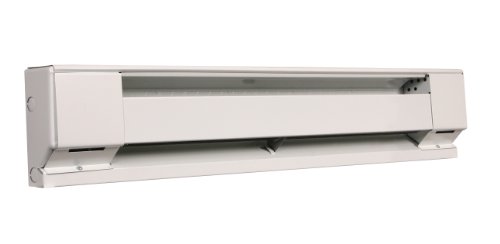
Overview: A convection-style baseboard heater designed for rapid, even room heating without a fan, which reduces airborne dust circulation.
Key Features: Natural convection for floor-to-ceiling warmth, reduced dust and allergen disturbance compared with fan heaters, large wiring compartment with dual knockouts and a built-in cable clamp for easier installation in commercial wiring environments.
Use Cases: Good for reception areas, medical office spaces, or other zones where quiet, dust-free heating is preferred and where a compact 2′ unit meets the BTU requirements for the space.
Buying Guide: How To Choose A Commercial Electric Baseboard Heater
Selecting the right commercial electric baseboard heater involves balancing capacity, durability, wiring, controls, and safety. The following considerations will help match product features to building needs.
Heating Capacity And Room Sizing
Estimate required BTUs or watts based on room volume, insulation quality, occupancy, and heat loss. Commercial spaces often need higher capacity than residential rooms. Choose a heater with an appropriate wattage or select multiple units distributed along the perimeter for even heat.
Voltage And Wiring
Confirm available circuits: some commercial heaters operate at 120V while others at 240V. Hard-wired models require a qualified electrician and correct circuit breakers. Ensure junction box access and knockout placement align with site wiring runs.
Mounting Lengths And Coverage
Longer heaters provide more even heat distribution along a wall. For larger rooms, plan multiple units spaced for consistent temperature. Consider models with universal wiring at either end or pre-punched mounting holes to simplify installation.
Element Type And Heat Transfer
Convection units use exposed or sheathed elements with fins for quick air movement; hydronic units use a sealed liquid or thermal mass for gentler, more even heat. Stainless steel elements and aluminum fins resist corrosion and improve longevity in humid or dusty commercial settings.
Safety Features
Look for over-temperature thermal limits, full-length safety cutouts, protective sheathing, and robust mounting. These features reduce fire risk and protect the element from debris or obstruction-related overheating.
Controls And Integration
Decide between line-voltage thermostats, low-voltage controls, or building automation integration. Mechanical single-pole thermostats are simple and reliable; electronic or programmable thermostats provide energy savings. Verify control compatibility with the heater’s voltage and switching type.
Durability And Finish
Commercial environments benefit from heavy-gauge steel casings, powder-coated finishes, and corrosion-resistant elements. Stainless or galvanized components extend service life in high-use areas.
Installation And Maintenance
Consider units with large wiring compartments, quick-connect cable clamps, and pre-punched holes to reduce labor time. Plan for regular clearance checks, dusting, and periodic thermostat calibration to maintain performance.
Noise, Air Quality, And Occupant Comfort
Convection baseboards without fans provide quiet, dust-minimizing operation. Hydronic units also reduce draft and temperature swings. Match the heating method to occupant sensitivity and room function (e.g., waiting rooms, clinics).
Comparison Perspectives
- Durability: Stainless elements and heavy-gauge casings (TPI, Cadet, KING) perform well under frequent use.
- Evenness Of Heat: Hydronic designs (Dayton) and longer length units (Cadet 48″) provide smoother temperature gradients.
- Installation Ease: Models with universal wiring access and large junction boxes (Cadet, Marley, TPI) reduce electrician labor.
- Safety: Over-temp cutoffs and full-length safety cutouts (TPI, KING) add protective redundancy.
Use the above checklist to narrow choices: size the heater to the space, confirm electrical compatibility, prioritize safety features in high-use commercial settings, and choose element and casing materials that match the environment’s demands.
Tips for Getting the Best HVAC Prices
- Prioritize Quality Over Cost
The most critical factor in any HVAC project is the quality of the installation. Don’t compromise on contractor expertise just to save money. - Check for Rebates
Always research current rebates and incentives — they can significantly reduce your overall cost. - Compare Multiple Quotes
Request at least three estimates before making your choice. You can click here to get three free quotes from local professionals. These quotes include available rebates and tax credits and automatically exclude unqualified contractors. - Negotiate Smartly
Once you've chosen a contractor, use the proven strategies from our guide — How Homeowners Can Negotiate with HVAC Dealers — to get the best possible final price.