
Finding the right commercial garage heater means balancing power, efficiency, installation type, and safety. Below is a concise comparison of five top-rated options chosen for commercial and heavy-duty garage applications.
| Product | Type / Power | Key Feature |
|---|---|---|
| Comfort Zone 10,000W Hard-Wired Garage Heater | Electric, 10,000W | Ceiling-mount fan-forced distribution, digital thermostat |
| Dr. Infrared DR-966 240V Hardwired Heater | Electric, 3,000 / 6,000W | Wall or ceiling mount, heavy-duty single phase |
| TEMPWARE 7,500W Electric Garage Heater | Electric, 6,250–7,500W | Digital controls, ECO mode, adjustable louvers |
| CTSC 10,000W Electric Garage Heater | Electric, 10,000W | Voltage display, ETL listed, 3 heat settings |
| Mr. Heater Big Maxx MHU80NG Natural Gas Unit Heater | Gas, 80,000 BTU | High-output gas heater, coverage up to 2,000 sq. ft. |
Content Navigation
- Comfort Zone 10,000W Hard-Wired Garage Heater
- Dr. Infrared Heater DR-966 240V
- TEMPWARE 7,500W Electric Garage Heater
- CTSC 10,000W Electric Garage Heater
- Mr. Heater Big Maxx MHU80NG Gas Unit Heater
- Buying Guide: How To Choose A Commercial Garage Heater
- 1. Fuel Type And Energy Source
- 2. Heating Capacity And Coverage
- 3. Installation Type And Electrical Requirements
- 4. Controls, Automation, And Efficiency
- 5. Safety Features And Certifications
- 6. Durability And Maintenance
- 7. Noise, Airflow, And Heat Distribution
- 8. Cost Of Operation And Local Considerations
- 9. Sizing Checklist
- 10. Installation And Professional Help
Comfort Zone 10,000W Hard-Wired Garage Heater

The Comfort Zone 10,000W is a ceiling-mounted, fan-forced electric heater built for industrial and commercial spaces. It delivers broad air distribution via adjustable directed airflow vents to reduce cold spots across large areas.
Key controls include a digital thermostat, remote control, and a 12-hour timer for scheduled operation. The unit offers two heat settings and overheat protection for safety in demanding environments.
Construction emphasizes durability with a heavy-gauge steel body, fully sheathed heating elements, and an enclosed motor to resist dust and debris. This design supports continuous use in workshops and dusty garages.
Dr. Infrared Heater DR-966 240V

Call 888-896-7031 for Free Local HVAC Quotes – Compare and Save Today!
The Dr. Infrared DR-966 is a heavy-duty 240V hardwired electric heater with selectable 3,000W or 6,000W output. It supports wall or ceiling mounting and includes a mounting bracket for flexible installation.
Designed for commercial use, the unit is UL/CUL listed and intended for applications that need robust, reliable heat. The unit ships without a power cord and requires appropriate electrical wiring and a qualified installer for hardwired connections.
Its specification highlights a durable build and a fan designed to distribute warmth evenly. The DR-966 targets shops that need controlled electric heating with simple high/low power options.
TEMPWARE 7,500W Electric Garage Heater
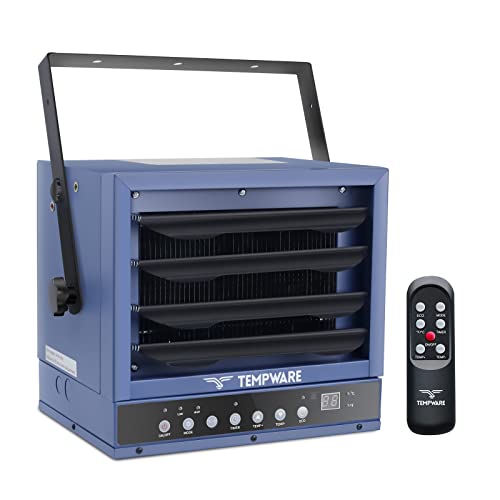
TEMPWARE’s 7,500W ceiling-mount heater is designed for workshops with features that aim to improve energy efficiency and directional control. Adjustable louvers and variable mounting angles help target heat where needed.
The unit includes a full-function remote, built-in thermostat with a range of 45°F to 95°F, ECO mode, and a 1–12 hour auto-off timer. Overheat protection is built in for added safety during heavy-duty operation.
Call 888-896-7031 for Free Local HVAC Quotes – Compare and Save Today!
Rated to heat large areas (manufacturer cites up to 1,250 sq. ft.), the heater offers two main power ranges and a temperature sensor that automates ECO mode to conserve energy when ambient temperatures meet setpoints.
CTSC 10,000W Electric Garage Heater

The CTSC 10,000W heater focuses on installation diagnostics and safety. A built-in voltage display helps identify low-voltage conditions that can affect fan performance and assists troubleshooting during setup.
Constructed from SPCC cold-rolled steel, the heater is ETL listed and includes overheating protection. Controls include a digital touch panel and remote with three heat modes: full power, reduced power, and fan-only.
This model suits operators who value clear installation feedback and multiple heat settings for flexible use across workshops and garage bays where voltage conditions and safety certifications matter.
Mr. Heater Big Maxx MHU80NG Gas Unit Heater
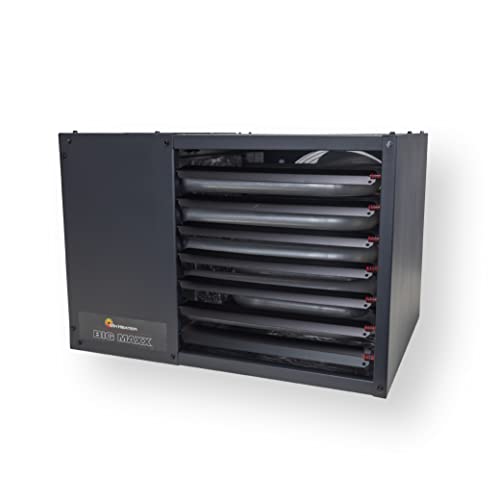
The Mr. Heater Big Maxx is an 80,000 BTU natural gas unit heater designed for very large garages and commercial spaces. It covers up to approximately 2,000 sq. ft. depending on climate and insulation.
Included mounting hardware and a propane conversion kit provide installation flexibility. The unit requires proper venting and adherence to clearances and local codes; a thermostat, gas supply components, and professional installation are necessary.
Gas unit heaters provide high output with lower electrical demand, making them suitable where fuel supply is available and high BTU delivery is required for large volume spaces.
Buying Guide: How To Choose A Commercial Garage Heater
Selecting the right commercial garage heater requires evaluating power, fuel type, installation, safety certifications, and operational controls. Below are key factors and comparison perspectives to guide selection.
1. Fuel Type And Energy Source
- Electric Heaters (hardwired ceiling or wall): Simpler venting and cleaner indoor operation. Choose when electrical capacity and circuit sizing are available. Good for enclosed shops and where combustion is not acceptable.
- Gas Heaters (natural gas or propane): Higher BTU output and lower operating cost in many regions. Require ventilation, gas supply lines, and adherence to safety clearances and codes.
2. Heating Capacity And Coverage
- Match heater wattage or BTU to the space volume, insulation level, and intended temperature rise. Electric units list wattage (e.g., 7,500–10,000W); gas units list BTU (e.g., 80,000 BTU).
- Consider whether the space is compartmentalized or open. Forced-air units work well in segmented spaces; infrared or high-BTU gas units excel in open-bay environments.
3. Installation Type And Electrical Requirements
- Hardwired Units need qualified electrical installation and correct circuit sizing. Verify voltage (208/240V) and wire gauge requirements.
- Check mounting options—ceiling vs wall—and necessary clearances. Some units display voltage or include brackets to simplify setup.
4. Controls, Automation, And Efficiency
- Look for digital thermostats, remote control, and timers for precision and energy savings.
- ECO or auto modes help reduce runtime and operating costs by adjusting output to ambient conditions.
5. Safety Features And Certifications
- Prioritize units with overheat protection, enclosed motors, and fully sheathed heating elements for dusty environments.
- Certifications such as ETL, UL/CUL indicate independent safety testing. Gas heaters require adherence to venting and clearance standards.
6. Durability And Maintenance
- Look for heavy-gauge steel construction and enclosed components where dust or debris are present.
- Consider ease of access for service, availability of replacement parts, and whether the motor and elements are protected.
7. Noise, Airflow, And Heat Distribution
- Fan-forced units provide faster, even distribution but can generate noise. Check for fan design that balances airflow with low turbulence.
- Adjustable louvers and directional vents improve targeted heating and reduce wasted energy in unwanted zones.
8. Cost Of Operation And Local Considerations
- Estimate operating cost by comparing electric wattage to local electricity rates or gas BTU output and fuel pricing.
- Consider climate: more extreme cold increases required run time and may favor higher-BTU gas units for rapid recovery.
9. Sizing Checklist
- Measure cubic footage: length x width x height.
- Factor insulation quality and door openings that cause heat loss.
- Select a heater with capacity and control that allow maintaining target temperatures with reasonable runtime.
10. Installation And Professional Help
- Hardwired electric and gas heaters often require licensed electricians or HVAC technicians for safe installation.
- Confirm local codes and permits for gas line work and combustion appliance venting before purchase.
Use the checklist above to compare the five models profiled: electric ceiling units (Comfort Zone, CTSC, TEMPWARE) balance installation simplicity and indoor air quality; Dr. Infrared options offer modular high/low electric outputs for moderate spaces; the Mr. Heater Big Maxx supplies very high BTU output for large open bays where gas venting is feasible.
Tips for Getting the Best HVAC Prices
- Prioritize Quality Over Cost
The most critical factor in any HVAC project is the quality of the installation. Don’t compromise on contractor expertise just to save money. - Check for Rebates
Always research current rebates and incentives — they can significantly reduce your overall cost. - Compare Multiple Quotes
Request at least three estimates before making your choice. You can click here to get three free quotes from local professionals. These quotes include available rebates and tax credits and automatically exclude unqualified contractors. - Negotiate Smartly
Once you've chosen a contractor, use the proven strategies from our guide — How Homeowners Can Negotiate with HVAC Dealers — to get the best possible final price.