
Overview: This guide compares durable commercial heater blowers and high-capacity air movers suited for garages, shops, commercial facilities, and restoration jobs. Below is a quick summary table of the five selected products reviewed in detail.
| Product | Type | Key Capacity | Primary Use |
|---|---|---|---|
| Dura Heat EUH1465 Electric Forced Air Heater | Forced Air Electric Heater | 1500W / 5,120 BTU | Small shop, garage spot heat |
| Comfort Zone 10,000W Hard-Wired Garage Heater | Ceiling-Mount Fan-Forced Heater | 10,000W | Large garage, industrial bay |
| Dr. Infrared DR-966 240-Volt Hardwired Heater | Hardwired Wall/Ceiling Electric Heater | 3,000/6,000W selectable | Commercial shop or garage |
| Dr. Infrared 10,260 BTU Infrared Heater | Infrared Patio/Shop Heater | 3,000W / 10,260 BTU | Indoor/outdoor targeted heat |
| VEVOR Air Mover 1/2 HP 2600 CFM Carpet Dryer | High-Flow Air Mover / Blower | Up To 2600 CFM | Drying, ventilation, circulation |
Content Navigation
- Dura Heat EUH1465 Electric Forced Air Heater
- Comfort Zone 10,000W Hard-Wired Garage Heater
- Dr. Infrared Heater DR-966 Hardwired Shop Heater
- Dr. Infrared 10,260 BTU Infrared Heater
- VEVOR Air Mover 1/2 HP 2600 CFM Carpet Dryer
- Buying Guide: Choosing The Right Commercial Heater Blower
- 1. Determine Application And Coverage
- 2. Match Output To Space Size
- 3. Consider Mounting And Placement
- 4. Air Movement And Distribution
- 5. Power Supply And Electrical Requirements
- 6. Safety Features And Durability
- 7. Efficiency And Heat Type
- 8. Noise And Operational Comfort
- 9. Mobility And Maintenance
- 10. Integration And Pairing
- Comparison Perspectives
Dura Heat EUH1465 Electric Forced Air Heater
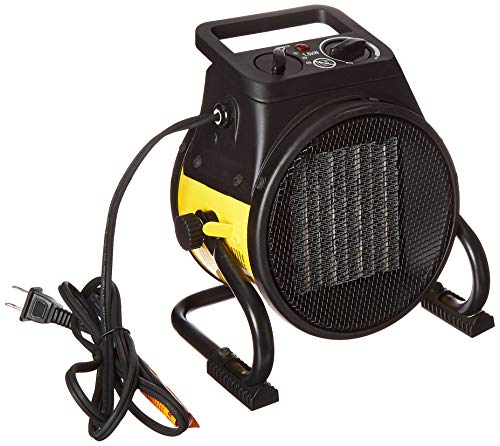
This forced air electric heater delivers 1500W of PTC ceramic heating for rapid spot warmth. The unit is built with a rugged steel body and a pivoting base that allows directional heat for targeted applications in workshops or service bays. It includes both heat and fan-only settings, offering use as a space heater or a hot air circulator.
Relevant features listed include a durable construction suitable for industrial environments, a pivoting stand for adjustable aim, and PTC ceramic elements for consistent output. For small commercial spaces needing portable spot heat and flexible operation modes, this model emphasizes durability and quick warm-up.
Comfort Zone 10,000W Hard-Wired Garage Heater

This ceiling-mounted fan-forced heater is designed for larger garages and commercial spaces, offering wide air distribution and adjustable directed vents to reduce cold spots. The unit provides precise temperature control via an integrated digital thermostat and includes a 12-hour timer and remote for convenient operation.
Call 888-896-7031 for Free Local HVAC Quotes – Compare and Save Today!
Features emphasize a heavy-gauge steel body, fully sheathed heating elements, an enclosed motor to resist dust, and multiple safety protections. The combination of high wattage output, wide distribution, and programmable controls makes it suitable for spaces requiring consistent ambient heat across larger floor plans.
Dr. Infrared Heater DR-966 Hardwired Shop Heater

The DR-966 is a heavy-duty 240V hardwired electric heater with selectable 3,000W or 6,000W output, intended for wall or ceiling mounting in commercial settings. It is UL/CUL listed and includes mounting hardware for flexible installation orientations.
Key listed attributes are high-duty power configurations, robust build for continuous operation, and suitability for commercial garages or shops. The model offers a scalable wattage option to match space and electrical capacity, making it adaptable for facilities with varying heating loads.
Dr. Infrared 10,260 BTU Infrared Heater
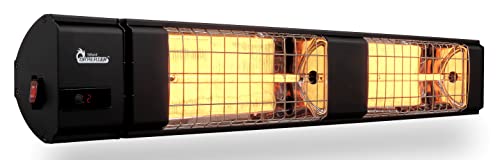
This infrared heater uses a 3000W carbon infrared element delivering about 10,260 BTU of instantaneous radiant heat. Designed for both indoor and outdoor applications, it has an IP55 rating for weather resistance and includes remote control and multiple power levels.
Call 888-896-7031 for Free Local HVAC Quotes – Compare and Save Today!
Infrared heating targets objects and people rather than heating all the air, which can be efficient for patios, workstations, or partially open commercial spaces. Features listed include easy installation, remote operation, and odorless operation suitable for indoor use where clean, direct heat is preferred.
VEVOR Air Mover 1/2 HP 2600 CFM Carpet Dryer

This high-velocity air mover produces up to 2600 CFM on its highest setting and offers three blow speeds to match drying, ventilating, or cooling tasks. Multiple angle positions (0°, 20°, 45°, 90°) allow precise airflow direction for floor drying or targeted ventilation.
Listed features include a 3-hour timer, 1/2 HP motor, and portability for janitorial, restoration, or commercial ventilation needs. As a blower rather than a heat source, it pairs well with heaters to distribute warm air or accelerate drying after water mitigation or cleaning operations.
Buying Guide: Choosing The Right Commercial Heater Blower
Commercial heating and blower selection depends on the space, application, electrical capacity, and operational priorities. Below are key considerations to compare options and arrive at a suitable choice.
1. Determine Application And Coverage
Assess whether you need spot heat (workstations, small bays), ambient heat for a full room, or radiant heat for people and equipment. Fan-forced ceiling or wall heaters serve broad areas; infrared units excel at targeted radiant warmth; portable forced-air heaters provide quick localized heat.
2. Match Output To Space Size
Calculate heat load roughly by space volume and insulation. Higher wattage or BTU is necessary for large or poorly insulated spaces. For example, 10,000W class units suit larger garages, while 1500W portable heaters serve small workshops.
3. Consider Mounting And Placement
Decide between portable units for mobility and hardwired ceiling/wall units for permanent, hands-free operation. Ceiling-mounted fan-forced heaters optimize floor space; portable units are preferred for temporary job sites.
4. Air Movement And Distribution
Proper airflow reduces cold spots. Fan-forced models and air movers help distribute heat or accelerate dry times. Look at CFM ratings for air movers; higher CFM improves circulation but may increase noise and power draw.
5. Power Supply And Electrical Requirements
Check voltage and amperage: many commercial heaters require 240V hardwiring and dedicated circuits. Verify facility electrical capacity and whether installation by a qualified electrician is needed.
6. Safety Features And Durability
For commercial use, prioritize units with overheat protection, fully sheathed elements, enclosed motors, and rugged housings. Certifications like UL/ETL indicate compliance with safety standards.
7. Efficiency And Heat Type
Infrared heaters provide efficient radiant heat with less air movement; fan-forced units heat air and distribute it. Consider whether the goal is to maintain ambient temperature or warm people and equipment quickly.
8. Noise And Operational Comfort
High-capacity blowers and air movers can generate significant noise. Evaluate motor sound levels relative to the work environment and consider acoustic impact on staff and customers.
9. Mobility And Maintenance
Portable forced-air units and air movers offer simple transport and storage. Inspect ease of maintenance: accessible filters, serviceable motors, and durable fan components reduce downtime in commercial settings.
10. Integration And Pairing
Pairing a heater with an air mover can improve distribution and drying speed. For example, use a fan-forced heater or infrared unit with an air mover to push warm air to remote corners or accelerate moisture removal after cleaning.
Comparison Perspectives
- Small Shop/Spot Heat: Portable 1500W forced-air heaters deliver quick, flexible heat for individual workstations.
- Large Garage/Workshop: Hardwired 10,000W ceiling heaters provide uniform ambient heat and hands-free operation.
- Targeted Human Comfort: Infrared heaters warm people and objects directly, effective in partially open areas.
- Drying & Ventilation: High-CFM air movers circulate air, expedite drying, and complement heat sources.
- Power-Constrained Sites: Select units with lower wattage or staged power options to match available circuits.
Use the above criteria to weigh trade-offs between coverage, energy use, installation complexity, and airflow needs. Matching the heater or blower to the intended commercial application ensures efficient performance, safety, and longer equipment life.
Tips for Getting the Best HVAC Prices
- Prioritize Quality Over Cost
The most critical factor in any HVAC project is the quality of the installation. Don’t compromise on contractor expertise just to save money. - Check for Rebates
Always research current rebates and incentives — they can significantly reduce your overall cost. - Compare Multiple Quotes
Request at least three estimates before making your choice. You can click here to get three free quotes from local professionals. These quotes include available rebates and tax credits and automatically exclude unqualified contractors. - Negotiate Smartly
Once you've chosen a contractor, use the proven strategies from our guide — How Homeowners Can Negotiate with HVAC Dealers — to get the best possible final price.