
Choosing the right heater for construction sites or cold garages requires balancing coverage, fuel type, portability, and safety. The table below summarizes five durable, job-site-focused heaters selected for reliability and performance. Each product review highlights listed features and real-world suitability for construction and related workspaces.
| Product | Type | Key Feature |
|---|---|---|
| Comfort Zone Hard-Wired Ceiling Mount CZ220BK | Hard-Wired Electric (Ceiling) | Ceiling-mounted, fan-forced, durable steel |
| Dura Heat EUH1465 Electric Forced Air Heater | Portable Electric Forced Air | 1500W PTC ceramic, pivoting base |
| Dreo Space Heater Portable Electric | Portable Indoor Electric | 1500W PTC, digital thermostat, safety sensors |
| Dura Heat EWH5510 Electric Forced Air Heater | Hard-Wired Electric (Wall/Ceiling) | 17,060 BTU coverage up to ~750 sq. ft., remote |
| Mr. Heater MH25CVX Propane Gas Convection Heater | Propane Convection | 25,000 BTU, runs on 20 lb tank, no electricity |
Content Navigation
- Comfort Zone Ceiling Mount Garage Heater
- Dura Heat EUH1465 Forced Air Heater
- Dreo Portable Electric Space Heater
- Dura Heat EWH5510 Electric Garage Heater
- Mr. Heater MH25CVX Propane Convection Heater
- Buying Guide: Choosing The Right Construction Space Heater
- Coverage And Heat Output
- Fuel Type And Site Constraints
- Installation And Electrical Requirements
- Portability And Mounting Options
- Safety Features
- Durability And Construction
- Controls, Thermostat, And Energy Management
- Ventilation And Indoor Air Quality
- Cost Of Operation And Fuel Availability
- Noise And Worker Comfort
- Maintenance And Serviceability
- Comparison Perspectives
Comfort Zone Ceiling Mount Garage Heater

This Comfort Zone model Is A hard-wired, ceiling-mounted electric heater designed for workshops and garages where floor space is scarce. The fan-forced design and adjustable louvers allow directed airflow to targeted work areas. Its heavy-gauge steel construction is intended for durability in poorly insulated or demanding environments.
Key listed features include overheat protection and a thermal cut-out switch for safety. The unit is ETL compliant, suited to commercial or residential installations when wired to a dedicated 240V circuit. Ideal when permanent, overhead heating is preferred over portable units.
Considerations: installation requires electrical expertise for hard-wiring. The ceiling mount maximizes floor space but reduces portability compared to standalone heaters.
Dura Heat EUH1465 Forced Air Heater
Call 888-896-7031 for Free Local HVAC Quotes – Compare and Save Today!
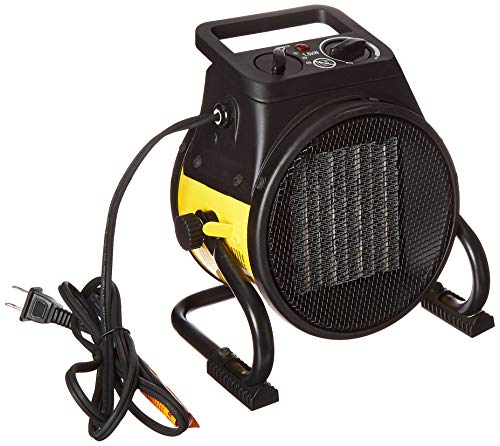
The Dura Heat EUH1465 Is A portable forced-air electric heater using a PTC ceramic element at 1500W. Its pivoting base helps direct hot air where needed on a job site or in a garage. Rugged steel construction supports durability for tougher environments.
Listed features highlight quick warmth and selectable heat vs. fan-only modes, making it useful both for heating and for air circulation. The compact design is practical for spot heating near work areas or powering up small rooms.
Considerations: 1500W units are limited in square footage coverage compared with high-BTU or hard-wired options, but they excel at portability and quick spot heating for workers and tools.
Dreo Portable Electric Space Heater

The Dreo Space Heater Is A portable 1500W PTC electric heater with an upgraded funnel design for improved air reach. It features a digital thermostat, remote, 12-hour timer, and multiple modes to control output in indoor environments like site trailers, offices, or enclosed workspaces.
Safety elements listed include tilt-detection sensor, overheat protection, and flame-retardant materials certified by ETL. Precise temperature control down to 1°F increments is noted, which helps manage comfort and energy use in enclosed spaces.
Call 888-896-7031 for Free Local HVAC Quotes – Compare and Save Today!
Considerations: While designed for indoor use and enhanced safety, this heater is not intended for open outdoor construction areas or wet conditions. Best suited for heated trailers, temporary offices, or break areas.
Dura Heat EWH5510 Electric Garage Heater

The Dura Heat EWH5510 Is A hard-wired 240V electric garage heater with a 5,000W design delivering the equivalent of 17,060 BTU. It is listed to cover up to approximately 750 sq. ft., making it a candidate for larger garages, workshops, or enclosed job site spaces.
Features include a remote control, adjustable thermostat (settable from 45–99°F on the LED display), and an installation requirement of a 30A dedicated circuit with professional wiring. The unit’s electric operation provides consistent heat without fuel storage.
Considerations: Professional installation is required. Electric hard-wired heaters are excellent for enclosed, ventilated spaces but require adequate electrical capacity and do not operate during power loss unless backed by a generator.
Mr. Heater MH25CVX Propane Convection Heater
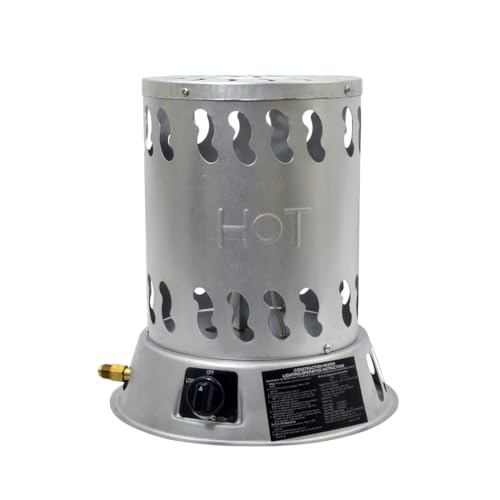
The Mr. Heater MH25CVX Is A portable propane convection heater delivering 25,000 BTU per hour and warming up to about 625 sq. ft. It runs without electricity and can operate up to 17 hours on a 20 lb propane tank, making it practical for remote job sites or areas without power.
Listed safety and convenience features include CSA certification, a standing pilot light, thermo-electric safety valve to shut off gas if flame extinguishes, a 10 ft propane hose and regulator, and Piezo ignition. Its design suits garages, outdoor job sites, and workshops where electric power is limited.
Considerations: Propane heaters require proper ventilation to avoid carbon monoxide buildup and must follow site safety rules. They provide high heat output and portability but need fuel handling and storage precautions.
Buying Guide: Choosing The Right Construction Space Heater
Selecting a heater for construction or garage work involves evaluating coverage, fuel type, installation, safety, portability, and operating costs. Below are key factors to compare and match to your site requirements.
Coverage And Heat Output
BTU vs Watts: Propane and gas heaters list BTU, while electric heaters list watts. Higher BTU or wattage generally means greater coverage, but insulation and airflow determine real-world performance. For large, poorly insulated garages or open shops, higher BTU (propane) or hard-wired high-wattage electric options provide broader heat distribution.
Fuel Type And Site Constraints
Propane: Offers high output without electricity—useful for remote sites. Requires fuel storage, regular monitoring, and ventilation. Propane excels when power is unavailable.
Electric (Hard-Wired): Provides steady, clean heat with professional installation. Best for permanent or semi-permanent enclosed spaces with sufficient electrical capacity. Not usable during power outages unless you have a generator.
Portable Electric: 1500W PTC ceramic heaters are convenient for spot heating, site trailers, and small rooms. They are safer indoors but limited in coverage compared with fueled or hard-wired units.
Installation And Electrical Requirements
Hard-wired units need a dedicated circuit and professional installation. Verify voltage, amperage, and wiring requirements before purchase. Portable units generally plug into standard outlets but check whether GFCI protection or heavy-duty cords are recommended for construction environments.
Portability And Mounting Options
Ceiling/Wall Mount: Saves floor space and distributes heat from above but is fixed in place. Ideal for permanent heated garages or workshops.
Floor/Portable: Offers flexibility to move heat where workers congregate. Useful for spot heating and temporary job sites. Consider weight, handle design, and stability for rough environments.
Safety Features
Look for overheat protection, tip-over/shutdown sensors, thermal cut-outs, and certified safety listings (ETL, CSA). Propane units need flame-failure devices and must be operated in well-ventilated areas. For indoor trailers or enclosed spaces, prioritize models with multiple safety redundancies.
Durability And Construction
Construction environments demand rugged housings—steel construction, reinforced grills, and impact-resistant components help withstand job-site conditions. Consider whether the unit’s finish and build suit dusty, damp, or high-traffic areas.
Controls, Thermostat, And Energy Management
Thermostats and remote controls improve comfort and can reduce energy waste. Hard-wired electric units with adjustable thermostats can maintain setpoints for longer-term occupancy. Portable PTC models offer rapid warm-up and efficient self-regulating elements that reduce power draw once temperature stabilizes.
Ventilation And Indoor Air Quality
Combustion heaters (propane) require adequate ventilation to avoid carbon monoxide accumulation. Electric heaters do not produce combustion byproducts but may dry air; maintain ventilation as needed. For enclosed workspaces, install a CO monitor when using fuel-burning heaters.
Cost Of Operation And Fuel Availability
Electric heaters cost depend on local electricity rates and required wattage. Propane offers high output per fuel tank but requires fuel logistics. Consider runtime, local fuel prices, and whether a generator will be used for electric systems at remote sites.
Noise And Worker Comfort
Forced-air heaters and convection fans produce varying noise levels. Portable forced-air and pivoting base units may produce noticeable sound, while large convection units or radiant heaters can be quieter. Match heater type to the tolerance and tasks performed on the site.
Maintenance And Serviceability
Choose heaters with accessible filters, fans, and serviceable elements. For hard-wired units, confirm local service options and warranty support. Propane unit maintenance includes checking hoses, regulators, and seals regularly.
Comparison Perspectives
- Best For Remote Job Sites: Propane convection heaters for high BTU without electricity, but require ventilation and fuel handling.
- Best For Large, Permanent Garages: Hard-wired electric garage heaters with high wattage and thermostats provide continuous heat and a tidy installation.
- Best For Temporary Spot Heating: Portable 1500W PTC forced-air heaters for quick, localized warmth in trailers or small work areas.
- Best For Floor-Space-Limited Workshops: Ceiling- or wall-mounted electric heaters to free up floor space while delivering distributed heat.
Match the heater type to site size, power availability, installation capability, and safety needs to get optimal performance and compliance with workplace safety standards.
Tips for Getting the Best HVAC Prices
- Prioritize Quality Over Cost
The most critical factor in any HVAC project is the quality of the installation. Don’t compromise on contractor expertise just to save money. - Check for Rebates
Always research current rebates and incentives — they can significantly reduce your overall cost. - Compare Multiple Quotes
Request at least three estimates before making your choice. You can click here to get three free quotes from local professionals. These quotes include available rebates and tax credits and automatically exclude unqualified contractors. - Negotiate Smartly
Once you've chosen a contractor, use the proven strategies from our guide — How Homeowners Can Negotiate with HVAC Dealers — to get the best possible final price.