
Choosing the right convection wall heater with thermostat helps balance comfort, energy use, and room size. The heaters below focus on thermostatic control, safe wall mounting, and efficient convection performance to warm bedrooms, offices, and living areas.
| Product | Type | Key Feature |
|---|---|---|
| EconoHome Wall Heater Panel | Low-watt convection panel | Energy-efficient 400W unit with thermostat |
| Dreo Smart Wall Heater WH719S | Smart oscillating wall heater | 120° vertical oscillation, app/Alexa control |
| Dreo IP24 Wall PTC Heater | PTC convection wall unit | Manual 30° oscillation, precise ECO mode |
| Ballu Convection Panel Heater | High-output convection panel | Rapid heat-up, app/Wi‑Fi and remote control |
| Envi Plug-in Electric Panel | Low-watt plug-in wall heater | Quiet fan-less design with safety sensor |
Content Navigation
- EconoHome Wall Heater Panel With Thermostat
- Dreo Smart Wall Heater WH719S With Thermostat
- Dreo IP24 Electric PTC Space Heater With Thermostat
- Ballu Convection Panel Space Heater With Program Thermostat
- Envi Plug-in Electric Panel Wall Heater With Thermostat
- Buying Guide: How To Choose A Convection Wall Heater With Thermostat
EconoHome Wall Heater Panel With Thermostat

This EconoHome panel heater is a low-watt convection unit designed for small rooms up to about 120 sq ft. The unit operates at 400 watts, 120 volts and lists a temperature range from 41–86 °F. It emphasizes energy efficiency, claiming reduced energy use versus conventional space heaters.
Key listed features include a heat reflector to direct convection currents, overheat protection, and the possibility to hard-wire the unit. The panel dimensions are compact and the exterior is intended to feel warm but safe for adult-only areas. The manufacturer offers a 3-year warranty.
Dreo Smart Wall Heater WH719S With Thermostat

The Dreo WH719S combines convection heating with 120° vertical oscillation to distribute warm air more evenly top-to-bottom. It uses a PTC ceramic element for fast warm-up and supports a precise thermostat with 1°F accuracy across a wide temperature range.
Call 888-896-7031 for Free Local HVAC Quotes – Compare and Save Today!
Smart features include an app for remote control, scheduling, and voice control via Alexa and Google Home. The unit lists a 24-hour timer and remote control for manual adjustments. The product is targeted for bedroom use and indoor mounting, emphasizing controlled, steady heat distribution.
Dreo IP24 Electric PTC Space Heater With Thermostat

This Dreo IP24 model uses a PTC heating system with optimized airflow for higher airflow velocity and a listed low noise level (~28 dB). The heater provides 30° manual oscillation and includes ECO mode and temperature calibration via the app for improved thermostat accuracy.
Controls include a remote, app, and voice commands. The product highlights targeted heating performance—focused airflow and the ability to set and maintain a chosen temperature using the built-in thermostat functions.
Ballu Convection Panel Space Heater With Program Thermostat

The Ballu convection panel markets a patented “Hedgehog Heating Element” with corrugated fins to increase surface area for faster heat transfer. The unit claims rapid heat-up (about 30 seconds) and suitability as a primary or supplementary heater for larger rooms.
Call 888-896-7031 for Free Local HVAC Quotes – Compare and Save Today!
Control options include a digital panel, remote, and Wi‑Fi app with scheduling and thermostat programming. The product lists app integration with voice systems and a two-year warranty. Ballu positions this model as a higher-output convection panel with programmable thermostat functionality.
Envi Plug-in Electric Panel Wall Heater With Thermostat
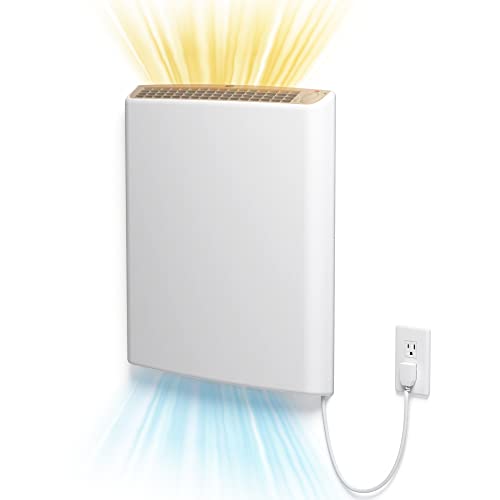
The Envi plug-in panel is a low-wattage, fan-less convection heater designed for continuous use. The manufacturer highlights a cool 90°F exterior operating point and an integrated wall-sense safety sensor that cuts power when the unit is removed from the mount.
Envi emphasizes quiet “stack convection” heating without blowing dust or allergens, suitability for 24/7 operation, and an auto-dimming power light for minimal bedroom disruption. The design aims to maintain humidity and reduce dry-air issues associated with some heaters.
Buying Guide: How To Choose A Convection Wall Heater With Thermostat
Selecting a convection wall heater with a thermostat requires matching unit capabilities to room size, installation type, and control preferences. Consider the following factors when comparing models.
Heating Capacity And Room Size
- Wattage vs. Room Area: Lower-watt units (e.g., 400W) suit small rooms (~100–150 sq ft). Higher output panels (1000–1500W) cover larger spaces or act as primary heat sources.
- Coverage Claims: Manufacturers often state recommended room sizes—use those as starting points and factor in insulation and ceiling height.
Thermostat Precision And Control Modes
- Adjustable Range: Check the temperature range and resolution (e.g., 1°F increments for finer control).
- Control Options: Built-in knobs or digital panels offer local control; remote, app, and voice integrations add convenience for scheduling and remote adjustments.
- Eco And Timer Modes: Energy-saving modes and programmable timers help reduce runtime and operating cost while holding setpoint temperature.
Heat Distribution And Convection Performance
- Convection Design: Panel vs. PTC ceramic elements differ in warm-up speed and airflow characteristics. PTC elements typically heat quickly and maintain steady output.
- Oscillation Or Louvers: Some units include vertical oscillation or adjustable louvers to spread heat more evenly; this benefits multi-level or taller rooms.
Noise, Air Quality, And Comfort
- Fan-Less vs. Faned: Fan-less convection heaters are silent and reduce dust circulation. Fan-assisted models can move heat faster but may be audible and stir particulates.
- Humidity Effects: Convection heating generally preserves indoor humidity better than forced-air systems; check manufacturer notes if dry-air reduction is important.
Safety Features And Installation
- Overheat Protection: Confirm the presence of thermal cutoffs or overheat sensors.
- Mounting And Wiring: Some models are plug-in and easy to install; others require hard-wiring or mounting brackets. Verify electrical requirements (voltage, amperage) and professional installation needs.
- Child/Pet Safety: Cool-touch fronts, wall-sense sensors, and low exterior temps help reduce burn risks and enable safe 24/7 operation in occupied homes.
Energy Efficiency And Operating Cost
- Low-Watt Options: Consider low-watt units for continuous localized heating or supplemental zones to avoid heating an entire house.
- Thermostat Use: Proper thermostat programming and zoning will reduce runtime and energy consumption—look for models with accurate sensors and ECO modes.
Durability, Warranty, And Support
- Build Quality: Metal housings and proven heating elements typically last longer than basic plastic cabinets.
- Warranty: Compare warranty length and what is covered. Longer warranties can indicate manufacturer confidence and offer replacement support.
Comparison Perspectives
- Small Room, Low Energy Use: Choose low-watt wall panels with a reliable thermostat for continuous background warmth.
- Faster Warm-Up And Zone Control: Select PTC or higher-watt convection units with programmable thermostats and app control for targeted, responsive heating.
- Large Rooms Or Primary Heating: Look for higher-output convection panels with rapid heat transfer and programmable scheduling to manage demand across longer periods.
- Allergy Or Sleep Sensitivity: Fan-less, silent designs reduce airborne particulates and noise for bedrooms or sensitive occupants.
When comparing models, align the heater’s stated features—wattage, thermostat precision, control options, safety mechanisms, and installation type—with your intended room, usage pattern, and safety needs. Use manufacturer specifications and installation instructions for electrical compatibility and proper placement.
Tips for Getting the Best HVAC Prices
- Prioritize Quality Over Cost
The most critical factor in any HVAC project is the quality of the installation. Don’t compromise on contractor expertise just to save money. - Check for Rebates
Always research current rebates and incentives — they can significantly reduce your overall cost. - Compare Multiple Quotes
Request at least three estimates before making your choice. You can click here to get three free quotes from local professionals. These quotes include available rebates and tax credits and automatically exclude unqualified contractors. - Negotiate Smartly
Once you've chosen a contractor, use the proven strategies from our guide — How Homeowners Can Negotiate with HVAC Dealers — to get the best possible final price.