
Diesel heaters offer efficient, compact heating for homes, garages, workshops, and off-grid spaces. This guide reviews five top-rated all-in-one diesel heaters suitable for residential and semi-permanent installations, comparing power, controls, altitude performance, and safety features to help you choose the right unit for your space.
| Product | Power | Key Features |
|---|---|---|
| VEVOR 8KW Diesel Heater All in One | 8 KW | Bluetooth App, Altitude Compensation, Portable, LCD |
| LF Bros 5KW Diesel Heater (B0CBTN3HC1) | 5 KW | 110V/12/24V Support, Remote, LCD, 5L Tank |
| HCALORY 8KW 6L Portable Diesel Heater | 8 KW | Toolbox Design, APP Control, Dual Power, High Altitude |
| OBAKL 8KW Diesel Air Heater | 8 KW | All-Aluminum Housing, Rapid Heating, Plateau Mode |
| LSZQJ 8KW Diesel Air And Water Heater | 8 KW | Air + Water Heating, Auto Temperature Control, Aviation Plug |
Content Navigation
- VEVOR 8KW Diesel Heater All In One
- LF Bros 5KW Diesel Heater All In One
- HCALORY 8KW Portable Diesel Heater Toolbox
- OBAKL 8KW Diesel Air Heater Aluminum
- LSZQJ 8KW Diesel Air And Water Heater
- Buying Guide: How To Choose A Diesel Heater For Home Use
- 1. Heating Capacity And Coverage
- 2. All-In-One Versus Split Systems
- 3. Power Options And Flexibility
- 4. Altitude And Cold Start Performance
- 5. Controls, Timers, And Remote Access
- 6. Safety Features
- 7. Fuel Consumption And Tank Size
- 8. Noise And Placement
- 9. Build Materials And Durability
- 10. Air vs. Water Heating Needs
- 11. Installation And Venting Requirements
- 12. Maintenance And Serviceability
- Comparison Perspectives
VEVOR 8KW Diesel Heater All In One

The VEVOR 8KW unit is an all-in-one diesel air heater designed for portability and fast warm-up. Rated for 12V operation and covering roughly 215–269 ft², it uses a sandblasting aluminum heat exchanger to deliver rapid heat within ten minutes.
Controls include a Bluetooth app for remote preheat (up to ~98 ft), a 32 ft remote, and an LCD controller. The heater supports automatic altitude compensation up to 18,045 ft, adjusting air-fuel parameters to maintain combustion at elevation.
Key practical points: the unit is presented as installation-free for temporary use, includes adjustable temperature range (46.4–96.8 °F), and emphasizes portability for vehicles, boats, and small indoor spaces where venting and exhaust management are feasible.
LF Bros 5KW Diesel Heater All In One

Call 888-896-7031 for Free Local HVAC Quotes – Compare and Save Today!
The LF Bros 5KW model is positioned for small spaces such as garages, shops, campers, and basements. It offers multi-voltage support (12V/24V plus a supplied 110V transformer) for both mobile and stationary use.
Heating output is specified between 4,700–17,000 BTU with fuel consumption from 0.18–0.53 L/h. The kit emphasizes easy setup with a detailed instruction booklet and installation tutorials via QR code. Controls include an LCD switch and a pre-paired remote with an approximate 100 ft range.
Operational range spans extreme temperatures (-40 °F to 104 °F), making the unit suited for cold starts and seasonal use. The included 5L tank and supportive accessories aim to reduce additional parts needed for home or garage applications.
HCALORY 8KW Portable Diesel Heater Toolbox

HCALORY presents an 8KW all-in-one heater with a toolbox-style casing and built-in 6L fuel tank for ease of transport and compact installation. The improved aluminum body and enlarged vents aim to optimize combustion and lower exhaust temperature.
Dual power capability supports 12V/24V DC and 110V/220V AC, enabling use in vehicles and fixed locations. The unit lists fuel consumption between 0.036–0.1 gallons per hour and claims automatic temperature control to prevent overheating.
Call 888-896-7031 for Free Local HVAC Quotes – Compare and Save Today!
Design highlights include reduced smoke/carbon buildup and a portable form factor intended for RVs, trucks, and household auxiliary heating where venting and exhaust routing are implemented safely.
OBAKL 8KW Diesel Air Heater Aluminum

The OBAKL 8KW heater uses an all-aluminum housing for corrosion and oxidation resistance, emphasizing durability in cold and humid environments. The unit is rated for 12V and rapid heating to cover about 20 square meters within ten minutes.
Key safety and altitude features include a built-in temperature sensor for overheat protection and a plateau (high-altitude) version with sensors that adjust air-fuel ratio up to 18,045 ft to prevent ignition and combustion issues.
Operational claims include starting reliably at temperatures as low as -40 °C and delivering consistent warm air through a built-in heat exchanger. The construction targets long-term resistance to environmental wear.
LSZQJ 8KW Diesel Air And Water Heater
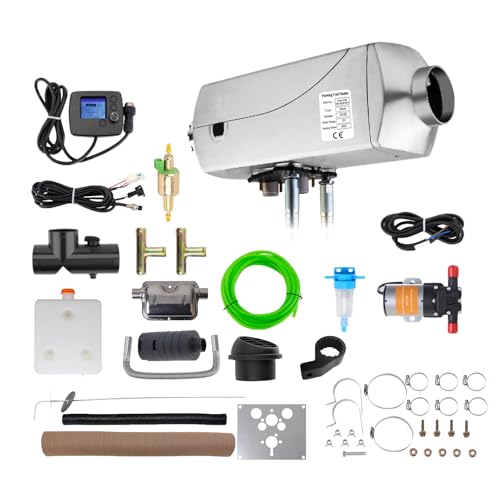
LSZQJ combines air and water heating in one 8KW system, suitable for applications where both space heating and domestic hot water are needed, such as cabins or RVs with plumbing. The unit claims auto temperature control and the ability to prevent dry burns via mode switching.
It includes features for engine preheating and continuous warm-air output, supporting multi-role functionality for vehicles, boats, and stationary installations. The unit references aviation-grade plugs and an emphasis on mode flexibility between air and water heating.
Integration considerations include additional plumbing for water heating and safely routing combustion exhaust, making this model most applicable where combined heating is desired and installation capacity is available.
Buying Guide: How To Choose A Diesel Heater For Home Use
Selecting a diesel heater for house or small-space use involves evaluating performance, safety, installation needs, and operational context. The following considerations cover practical decision points and comparison perspectives.
1. Heating Capacity And Coverage
Match heater power (kW or BTU) to the space. For small rooms and garages, 5–8 kW units commonly cover 200–300 ft² depending on insulation. Consider ceiling height and heat loss through windows or doors when estimating required capacity.
2. All-In-One Versus Split Systems
All-in-one units include fuel tank and blower in one housing, simplifying installation and portability. Split or integrated systems may require external fuel tanks or ducting but can offer quieter operation and flexible placement for the exhaust and intake.
3. Power Options And Flexibility
Check available power sources: some heaters support only 12V/24V DC for vehicles, while others include 110V/220V AC compatibility or a transformer for home sockets. Dual-power units enable both stationary and mobile use.
4. Altitude And Cold Start Performance
If you are above a few thousand feet in elevation, choose heaters with automatic altitude compensation or plateau modes. Cold start capability to very low temperatures is essential for reliability in extreme climates.
5. Controls, Timers, And Remote Access
Options range from basic LCD panels and remotes to Bluetooth app control. App-enabled heaters provide preheating and scheduling. Assess the value of remote or app control for your routine and whether a physical controller is also present.
6. Safety Features
Look for overheat protection, flame or combustion monitoring, and CO detection features or compatibility with external CO alarms. Verify exhaust routing requirements and ensure you can install a safe, ventilated flue or exhaust outlet to the outdoors.
7. Fuel Consumption And Tank Size
Compare stated fuel consumption rates to the included tank capacity to estimate runtime between refills. All-in-one portable designs often include smaller tanks suitable for intermittent use; stationary setups commonly connect to larger external tanks.
8. Noise And Placement
Blower and combustion noise vary between models. For indoor or living-space applications, consider placement options that allow the unit (or blower) to be located away from occupied rooms and use ducting to quiet the delivered air.
9. Build Materials And Durability
Aluminum housings and corrosion-resistant components are advantageous in humid or marine environments. Robust construction helps when units are moved or used frequently outdoors or in workshops.
10. Air vs. Water Heating Needs
If you require domestic hot water as well as space heating, combined air-and-water units provide dual functionality but need plumbing integration and additional installation steps. Assess whether combined utility simplifies your setup or adds complexity.
11. Installation And Venting Requirements
All diesel heaters generate combustion exhaust that must be vented outdoors. Verify exhaust routing options, clearances, and whether the unit is intended for temporary portable use or semi-permanent installation to meet local safety codes.
12. Maintenance And Serviceability
Check filter access, burner maintenance needs, and availability of spare parts or service instructions. Units that provide clear manuals, QR-code tutorials, or pre-paired controllers can lower the barrier to upkeep.
Comparison Perspectives
- Portability vs. Permanence: Toolbox-style and all-in-one heaters favor portability; split installations favor quieter, hidden setups.
- Single-Purpose vs. Multi-Function: Air-only heaters are straightforward; air+water systems add utility but require plumbing and more complex installation.
- Altitude Capability: If you operate at high elevation, prioritize units with automatic altitude compensation or plateau modes.
- Controls & Convenience: App and remote controls provide convenience for preheating; LCD and timer functions support scheduled warming.
Before installing any diesel heater in a residential environment, consult local building codes and consider professional installation for venting and fuel connections to ensure safe operation and compliance.
Tips for Getting the Best HVAC Prices
- Prioritize Quality Over Cost
The most critical factor in any HVAC project is the quality of the installation. Don’t compromise on contractor expertise just to save money. - Check for Rebates
Always research current rebates and incentives — they can significantly reduce your overall cost. - Compare Multiple Quotes
Request at least three estimates before making your choice. You can click here to get three free quotes from local professionals. These quotes include available rebates and tax credits and automatically exclude unqualified contractors. - Negotiate Smartly
Once you've chosen a contractor, use the proven strategies from our guide — How Homeowners Can Negotiate with HVAC Dealers — to get the best possible final price.