
Finding the best diesel heater for a van means balancing heat output, fuel efficiency, installation style, noise, and safety features. Below is a concise comparison of five popular all-in-one and portable diesel heaters that suit campervans, conversion vans, and utility vehicles.
| Product | Power / Tank | Control / Features |
|---|---|---|
| VEVOR 8KW (B0CFQNR4SP) | 8KW / integrated tank | Bluetooth app, remote, auto altitude compensation |
| VEVOR 8KW All-In-One (B0CFQMRZMS) | 8KW / 5L tank | Plug-and-play, remote & LCD, low-noise pump |
| VEVOR 5KW All-On-One (B0DG59XJTG) | 5KW / 5L tank | Lower output option, remote & LCD, rapid heat |
| HCALORY 8KW Toolbox (B0D45L4C48) | 8KW / 6L tank | Toolbox design, app control, dual power (12/24V & AC) |
| WIPPRO 8KW All-In-One (B0DDY1X8GP) | 8KW / 7L tank | 12/24V + 110V transformer, thermostatic protection |
Content Navigation
- VEVOR 8KW Diesel Heater With Bluetooth And Altitude Compensation
- VEVOR 8KW All-In-One Diesel Heater Portable Parking Bunk Heater
- VEVOR 5KW All-On-One Diesel Heater With Remote And LCD
- HCALORY 8KW Toolbox Diesel Heater With Dual Power And APP Control
- WIPPRO 8KW All-In-One Diesel Heater With 110V Transformer And Thermostatic Safety
- Buying Guide: How To Choose A Diesel Heater For Your Van
- Heat Output And Van Size
- All-In-One Portable vs. Installed Units
- Fuel Tank Capacity And Runtime
- Power Source And Voltage Options
- Control Options: App, Remote, And LCD
- Altitude And Combustion Performance
- Safety Features
- Noise And Vibration
- Emissions And Exhaust Management
- Installation Complexity And Space
- Fuel Consumption And Efficiency
- Maintenance And Serviceability
- Comparison Perspectives
VEVOR 8KW Diesel Heater With Bluetooth And Altitude Compensation

This VEVOR 8KW unit is designed for larger van interiors and small camper shells. The 8 KW output claims suitability for roughly 215–269 ft² and the sandblasted aluminum heat exchanger is specified for rapid heat transfer with a warm environment achieved in about 10 minutes.
Controls include a Bluetooth app, a 32 ft remote, and an LCD, enabling remote preheat and temperature control from approximately 98 ft. The heater also lists automatic altitude compensation up to 18,045 ft, adjusting operation for high-altitude combustion conditions. This model emphasizes remote control flexibility and altitude-adaptive performance.
VEVOR 8KW All-In-One Diesel Heater Portable Parking Bunk Heater
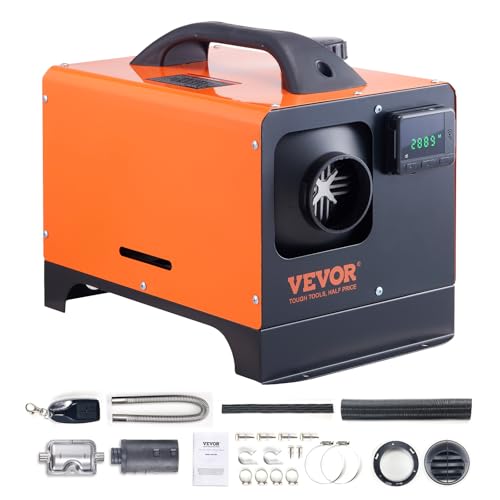
This all-in-one 8KW diesel heater is promoted as an easy, installation-free option for users who want portability. It lists coverage similar to other 8KW units and claims ignition and heat-up within 10 minutes using the sandblasting aluminum exchanger.
Call 888-896-7031 for Free Local HVAC Quotes – Compare and Save Today!
Fuel use is highlighted with a precision low-noise pump and a 5 L tank, with claimed consumption ranges around 0.16–0.62 L/h. The package includes a 32 ft remote and an LCD for thermostatic and timing control, supporting preheat and overnight operation in vans and trailers.
VEVOR 5KW All-On-One Diesel Heater With Remote And LCD

The VEVOR 5KW model provides a mid-range output suitable for smaller vans or more compact camper layouts, with an applicable area of about 161–215 ft². The all-in-one design lowers setup complexity while still offering portable convenience.
It also includes a 5 L fuel tank and remote/LCD control for temperature setting from 46–96.8°F. Fuel consumption claims are lower than larger units, and the manufacturer states runtime up to about 10 hours depending on settings and load, making it an option where space or power limits favor a smaller heater.
HCALORY 8KW Toolbox Diesel Heater With Dual Power And APP Control

The HCALORY model focuses on a compact toolbox-style housing and upgraded aluminum construction for heat efficiency. It lists a 6 L tank and claims improved exhaust control and reduced smoke/carbon buildup through enlarged vents and design enhancements.
Call 888-896-7031 for Free Local HVAC Quotes – Compare and Save Today!
Notable features include dual power options (12/24V DC and 110/220V AC), an app for remote control, automatic temperature adjustment to prevent overheating, and a low fuel consumption range. The toolbox format provides easier handling and storage in tight van layouts.
WIPPRO 8KW All-In-One Diesel Heater With 110V Transformer And Thermostatic Safety

The WIPPRO 8KW heater emphasizes compatibility and safety, supporting 12V, 24V, and including a 110V transformer for plug-in use. The sandblasted aluminum exchanger design aims for fast heat transfer and stable interior temperatures.
Safety features include thermostatic control, timing functions, preheating modes, and overheating protection. The model comes with a larger 7 L fuel tank stated to extend continuous heating duration and a precision fuel pump for reduced fuel use and noise during operation.
Buying Guide: How To Choose A Diesel Heater For Your Van
Selecting the right diesel heater depends on multiple factors. Below are the primary considerations to match a heater to your van needs, ranked by practical impact and usage scenarios.
Heat Output And Van Size
Match heater BTU or kW rating to interior volume and insulation. Larger vans or poorly insulated conversions require higher kW models (8KW class) to reach comfortable temperatures quickly. Smaller or well-insulated vans often perform well with 5KW units.
All-In-One Portable vs. Installed Units
All-in-one (portable) units contain the fuel tank, burner, and controls in one case—ideal for minimal installation or temporary setups. Installed heaters separate components and may require ducting and a dedicated fuel line but can offer quieter operation and better integrated airflow.
Fuel Tank Capacity And Runtime
Fuel tank size determines runtime between refills. Consider tank capacity against typical overnight heating schedules. Larger tanks (6–7L) extend continuous runtime but add weight and occupy space.
Power Source And Voltage Options
Confirm compatibility with your van’s electrical system. Some heaters support 12V and 24V vehicle systems and include transformers for 110–220V AC—useful if you plan camping with shore power or a generator.
Control Options: App, Remote, And LCD
Remote and LCD controls are common. Bluetooth or app control adds convenience for preheating before entry. Ensure the advertised control range meets your real-world usage needs for preheat or timed start features.
Altitude And Combustion Performance
If you travel to high elevations, choose models with altitude compensation or adjustable air/fuel settings. High-altitude capability helps maintain combustion efficiency and prevents flame-out or excessive smoke.
Safety Features
Look for overheat protection, dry-run prevention, CO alarms (when provided), and thermostatic cutoffs. Proper ventilation and safe exhaust routing are required regardless of built-in safety systems.
Noise And Vibration
Fuel pumps and fans produce noise. Look for low-noise pumps or customer-reported noise levels if quiet sleeping conditions matter. Installation placement, rubber mounts, and intake/exhaust silencers can mitigate installed-unit noise.
Emissions And Exhaust Management
Diesel combustion creates exhaust and particulates. Confirm the heater’s exhaust routing plan and use appropriate external exhaust outlets. Some models emphasize reduced emissions via improved combustion components.
Installation Complexity And Space
Assess available space for an all-in-one unit versus an installed unit that may require separate ductwork. Toolbox-style designs simplify placement; permanent installs may require cutting floor panels and mounting brackets.
Fuel Consumption And Efficiency
Compare claimed fuel consumption ranges (L/h) for typical heating loads. Lower consumption extends trip duration but depends on fan speed, ambient temperature, and insulation quality.
Maintenance And Serviceability
Check accessibility of spark plugs, fuel pump, filters, and wiring for routine maintenance. Models with modular design or available spare parts simplify long-term service.
Comparison Perspectives
- Performance-Focused: Higher kW ratings and larger tanks suit multi-season travel in cold climates.
- Install-Friendly: All-in-one and toolbox heaters reduce installation time and complexity.
- Travel Flexibility: Dual voltage or included transformers allow use with shore power at campsites or in garages.
- Safety-Conscious: Choose units with verified safety features and ensure proper exhaust routing and CO detection in the vehicle.
- Fuel Efficiency: For long trips or stealth camping, prioritize low fuel consumption and larger tanks to reduce refueling frequency.
Use this guide to compare the technical specs and real-world needs for your van setup. Match heater power to van volume, confirm electrical compatibility, and prioritize safety and exhaust planning before purchase or installation.
Tips for Getting the Best HVAC Prices
- Prioritize Quality Over Cost
The most critical factor in any HVAC project is the quality of the installation. Don’t compromise on contractor expertise just to save money. - Check for Rebates
Always research current rebates and incentives — they can significantly reduce your overall cost. - Compare Multiple Quotes
Request at least three estimates before making your choice. You can click here to get three free quotes from local professionals. These quotes include available rebates and tax credits and automatically exclude unqualified contractors. - Negotiate Smartly
Once you've chosen a contractor, use the proven strategies from our guide — How Homeowners Can Negotiate with HVAC Dealers — to get the best possible final price.