
Quick Overview: This guide compares five direct vent garage heaters suited for workshops, garages, and utility spaces. Each selected model offers sealed combustion or direct venting to exhaust combustion gases outdoors, improving indoor air quality and safety. Below is a summary table of the five models covered.
| Product | Brand | BTU / Coverage |
|---|---|---|
| Modine Hot Dawg 45K | Modine | 45,000 BTU |
| Modine Hot Dawg 60K | Modine | 60,000 BTU |
| Comfort Glow 25K Direct Vent | Comfort Glow | 25,000 BTU (up to ~825 sq ft) |
| Rinnai EX38DTP | Rinnai | 36,500 BTU (modulating) |
| Mr. Heater Big Maxx MHU80NG | Mr. Heater | 80,000 BTU (up to ~2000 sq ft) |
Content Navigation
Modine Hot Dawg 45K Direct Vent

Brand: Modine. Features: MODINE HOT DAWG 45K BTU LP GAS. This model is designed for durable, high-output heating in garages and commercial spaces that require a sealed combustion pathway.
This heater uses direct venting to supply combustion air from outdoors and expel exhaust outdoors, which reduces indoor contamination risks. The 45,000 BTU rating is suited for medium-sized garages and workshops. Typical install involves wall or ceiling mounting with appropriate vent termination. The unit’s construction emphasizes a compact footprint and robust burner assembly suitable for frequent start/stop cycles typical in garage use.
Key installation considerations include ensuring proper vent routing, meeting clearance requirements, and verifying LP gas compatibility and gas supply pressure. For users seeking a balance between output and compact size, this 45K model is positioned as a common choice for enclosed workshop spaces.
Modine Hot Dawg 60K Direct Vent

Call 888-896-7031 for Free Local HVAC Quotes – Compare and Save Today!
Brand: Modine. Features: Direct Vent Garage Heater, MODINE HOT DAWG 60K BTU LP GAS. This higher-output variant targets larger garages, shops, and light commercial spaces.
The 60,000 BTU capacity increases coverage and warm-up speed for larger volume spaces. As with other direct vent systems, it separates combustion air from indoor air, making it suitable for occupied workspaces where indoor air quality matters. Mounting flexibility allows use on walls or ceilings depending on layout and venting path.
Practical points include verifying the gas type and conversion options, ensuring a sufficiently sized vent run, and abiding by clearance and local code requirements. This model can be a practical step up when a 45K unit may not provide adequate recovery in cold climates or taller garage spaces.
Comfort Glow 25K Direct Vent Wall Heater

Brand: Comfort Glow. Features: 25,000 BTU vented natural gas heater, sealed burn system, matchless piezo ignition, safety pilot with built-in pressure regulator, wall-mount design, dimensions 26.5 H x 32.25 W x 8.75 D.
This wall-mounted direct vent heater emphasizes space-saving installation and safety. The sealed combustion system reduces backdraft concerns and the safety pilot with pressure regulation stops gas flow if the pilot is extinguished. Rated to heat up to approximately 825 sq. ft., it suits single-car garages, finished workshops, and utility rooms.
Call 888-896-7031 for Free Local HVAC Quotes – Compare and Save Today!
Considerations for selection include confirming natural gas supply, planning the vent penetration location through an exterior wall, and ensuring the heater’s output matches the garage’s insulation and ceiling height. The compact, wall-mounted format is useful when ceiling clearance or overhead obstructions prevent unit heaters.
Rinnai EX38DTP Direct Vent Wall Furnace

Brand: Rinnai. Features: 36,500 BTU, advanced modulating technology for even heat, cool-to-touch cabinet, self-diagnostics, energy-efficient operation with precise modulation of heat output.
The Rinnai EX38DTP is a modulating direct vent furnace-style wall heater designed to maintain consistent temperatures and reduce cycling losses. Modulation allows the burner to run at varied output to match demand, which can improve comfort and reduce fuel use compared to fixed-step heaters.
Key practical features include a cool-touch cabinet, which increases safety in occupied or family environments, and self-diagnostic electronics that simplify troubleshooting. For garages that double as hobby or family space, this model’s temperature control precision and safety features are notable. Confirm compatibility with your fuel type (propane or natural gas) and local venting codes before purchase.
Mr. Heater Big Maxx MHU80NG Unit Heater
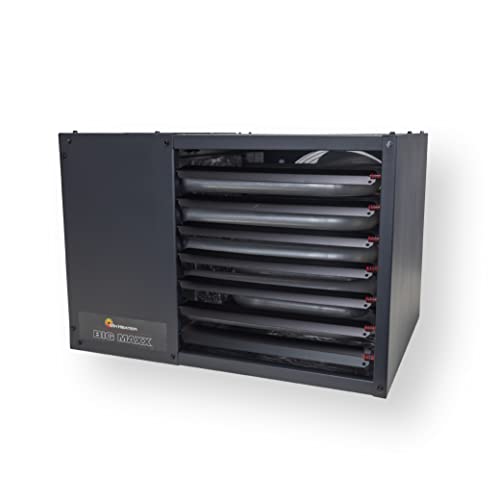
Brand: Mr. Heater. Features: 80,000 BTU natural gas unit heater, coverage up to ~2000 sq. ft., includes 2 angle brackets and LP conversion kit, dimensions 29.33” L x 15.50” W x 26.37” H, 120 V electrical, category 1 vertical & category 3 horizontal venting, min 8 ft clearance from floor.
This is a high-capacity unit-style heater built for large garages, workshops, or commercial bays. It supports multiple venting categories including horizontal direct vent runs, which can provide flexible installation paths. The included conversion kit helps adapt fuel type where applicable, but check local code and professional requirements for conversion and installation.
Because of the high BTU output, attention to proper gas supply sizing, combustion air, and safe venting are essential. The unit’s design suits high-ceiling spaces or detached garages where a robust central heat source is needed. Verify required clearances and electrical supply as part of your installation planning.
Buying Guide: Choosing A Direct Vent Garage Heater
Selecting the right direct vent garage heater requires evaluating heating load, venting, fuel type, safety, and installation constraints. The points below cover key considerations and comparisons to help match a heater to your garage.
Heat Output And Coverage
- BTU Capacity: Choose a BTU level that matches garage volume, insulation, and climate. Typical ranges: 25K for small single-car garages, 45–60K for medium shops, 80K+ for large or poorly insulated spaces.
- Recovery Rate: Higher BTU yields quicker warm-up and better recovery after door openings, important for frequently used garages.
Direct Vent Type And Installation
- Venting Orientation: Confirm whether the unit supports horizontal or vertical vent runs. Some models allow both; others are limited.
- Termination Location: Plan exhaust termination to meet local codes and avoid obstructions. Direct venting requires a clear path outdoors.
- Clearances And Mounting: Check minimum clearances for walls, ceilings, and combustible materials. Choose wall-mounted or unit/ceiling-mounted types based on space and layout.
Fuel Type And Conversion
- Natural Gas vs Propane (LP): Confirm the unit matches your available fuel. Some heaters ship configured for one fuel and include conversion kits; professional conversion may be required.
- Gas Supply Sizing: Ensure supply pressure and line size can handle the BTU load, especially for high-output units.
Safety Features
- Sealed Combustion/Direct Venting: This isolates combustion from indoor air, reducing CO and combustion byproduct risks.
- Safety Pilots & Pressure Regulators: Look for systems that cut gas flow if the pilot is extinguished.
- Cool Cabinets & Diagnostics: Cool-to-touch cabinets and self-diagnostic electronics improve safety and ease of service.
Control And Efficiency
- Modulating Burners vs Fixed Output: Modulating heaters can match output to demand and improve efficiency; fixed-output units may cycle more often.
- Thermostat Compatibility: Confirm whether the heater accepts standard thermostats or requires proprietary controls for remote or automated operation.
Installation And Local Codes
- Professional Installation: For fuel conversions, vent runs, and gas connections, professional installation is often required or strongly recommended.
- Local Codes: Verify vent termination height, combustion air requirements, and permits with local building authorities.
Comparison Perspectives
- Small Garage Use: Compact wall-mounted direct vent units (e.g., 25K Comfort Glow) excel for single-car garages with limited overhead space.
- Medium Workshop: 45–60K unit heaters (Modine Hot Dawg 45K/60K) balance output and footprint for typical two-car garages or insulated workshops.
- Large Or High-Ceiling Spaces: High-capacity unit heaters (e.g., Mr. Heater 80K) provide sufficient recovery for large bays but demand careful venting and supply planning.
- Energy Efficiency & Comfort: Modulating models such as the Rinnai EX38DTP can reduce fuel consumption and maintain steadier temperatures in finished or multi-use garage spaces.
Maintenance And Longevity
- Filter And Burn Area Access: Choose models that allow easier access for cleaning and routine inspection.
- Annual Service: Annual inspection of venting, burner, and gas connections supports safe operation and efficient performance.
Use these criteria to compare the models above based on your garage size, fuel availability, installation constraints, and preference for features like modulation, compact wall mounting, or high-BTU output. Properly matched, a direct vent heater provides safer combustion, reliable warmth, and reduced impact on indoor air quality.
Tips for Getting the Best HVAC Prices
- Prioritize Quality Over Cost
The most critical factor in any HVAC project is the quality of the installation. Don’t compromise on contractor expertise just to save money. - Check for Rebates
Always research current rebates and incentives — they can significantly reduce your overall cost. - Compare Multiple Quotes
Request at least three estimates before making your choice. You can click here to get three free quotes from local professionals. These quotes include available rebates and tax credits and automatically exclude unqualified contractors. - Negotiate Smartly
Once you've chosen a contractor, use the proven strategies from our guide — How Homeowners Can Negotiate with HVAC Dealers — to get the best possible final price.