
Choosing the right drain pan helps prevent costly water damage from water heater leaks or condensate. Below is a concise comparison of top pans selected for electric, gas, and tankless heaters, highlighting core specs users typically consider.
| Product | Type/Material | Key Feature |
|---|---|---|
| Camco Water Heater Drain Pan (11420) | Plastic — For Electric Heaters | 2.5″ depth, pre-cut drain opening, PVC fitting included |
| Eastman 24″ Drain Pan (60082) | High-Impact Plastic — For Gas Heaters | 24″ ID x 26″ OD, 1″ PVC fitting, rust/corrosion resistant |
| Eastman 20″ Drain Pan (60080) | Aluminum — For Gas Heaters | Heavy-duty aluminum, 20″ ID x 22″ OD, 1″ PVC fitting |
| Oatey 24″ Plastic Pan (34063) | Semi-flexible Plastic | 24″ diameter, 1–1.5″ PVC adapter, corrosion-proof |
| Tankless Drain Pan (AMERICAN BUILT PRO) | Undrilled Plastic — Tankless | 20″ x 14″ x 6″ deep, built for tankless units, deeper catchment |
Content Navigation
Camco Water Heater Drain Pan | 11420

The Camco 11420 drain pan is designed for electric water heaters with a recommended maximum tank diameter of 26 inches. It provides a 2.5-inch deep reservoir that helps contain slow leaks and drips before they reach flooring.
Included is a 1-inch/1.5-inch PVC drain fitting with gasket and a pre-cut side opening for simple plumbing connection. The pan measures about 32 inches outer diameter and 30 inches inner diameter, providing a broad footprint under typical residential electric tanks.
This model emphasizes floor protection and compatibility with standard electric heaters. Installation typically requires positioning the pan, aligning the pre-cut opening, and connecting the supplied PVC fitting to a drain line or condensate route.
Eastman Water Heater Pan 24 Inch ID x 26 OD

Call 888-896-7031 for Free Local HVAC Quotes – Compare and Save Today!
The Eastman 60082 pan is molded from high-impact plastic suited for gas water heaters. It ships with a 1-inch PVC fitting for direct drain connection and is sized to fit larger tank bases with a 24-inch inner diameter and 26-inch outer diameter.
The material is designed to resist rust, corrosion, and cracking, which can be important in mechanical rooms and basements where exposure to moisture, temperature swings, and chemicals may occur.
Because it is made for gas heaters, installers often select this pan where a lightweight, non-metallic tray is preferred and where a pre-fitted PVC outlet eases plumbing to a floor drain or condensate pump.
Eastman Aluminum Drain Pan 20 Inch ID x 22 OD
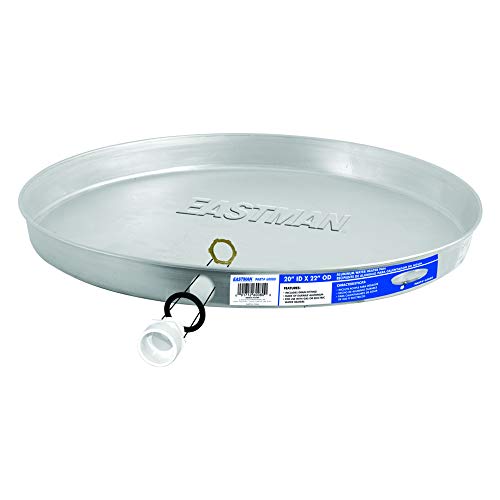
The Eastman 60080 aluminum drain pan provides a metal option for gas water heaters requiring a rigid tray. The pan comes with a 1-inch PVC fitting and is constructed for extra strength and durability.
Aluminum resists rust and remains dimensionally stable at higher ambient temperatures. The compression-style fitting size measures approximately 20-inch inner diameter by 22-inch outer diameter, matching smaller gas tank footprints.
Call 888-896-7031 for Free Local HVAC Quotes – Compare and Save Today!
This pan is typically chosen where a metal surface is preferred for durability or when local building codes or installer preference dictate non-plastic pans for certain installations.
Oatey 24 In. Plastic Hot Water Heater Pan 34063

The Oatey 34063 is a semi-flexible, durable plastic pan made from a 0.0625-inch polymer that resists rust and corrosion. It supports a range of tank sizes with a 24-inch diameter footprint and includes a 1 to 1.5-inch PVC adapter.
Semi-flexible material allows slight conformity on uneven floors, which can be useful in older basements. The pan’s polymer construction avoids issues with metal corrosion and simplifies handling during installation.
The adapter range helps match common drain plumbing sizes. This pan is often used where resistance to corrosion and a non-metallic option are priorities, and where a standard round footprint fits the tank base.
Tankless Water Heater Drain Pan – American Built Pro

This tankless-specific drain pan measures 20″ x 14″ x 6″ deep and is intended for wall-mounted tankless units or compact electric models. The design focuses on deeper catchment for condensate or small leaks common with tankless appliances.
The pan is supplied undrilled, allowing installers to position drain outlets to meet job-specific plumbing or condensate pump locations. Manufacturers highlight compatibility with a range of wall-mounted units and the potential for dual use as a washing machine or utility drain tray.
Deeper sides make this model useful where condensate or intermittent drips are likely, and when a deeper sump is desired to reduce overflow risk before corrective action.
Buying Guide: Choosing The Right Drain Pan
Pan Type And Material
Select plastic or polymer pans if corrosion resistance and lightweight handling are priorities. Choose aluminum or galvanized metal when a rigid, impact-resistant tray is needed or when local codes favor metal pans for gas installations.
Size And Fit
Measure the water heater base diameter and surrounding clearance. Pans list inner diameter (ID) and outer diameter (OD); ensure the pan ID comfortably accommodates the tank footprint. For square or odd-shaped placement, consider a larger square pan for full coverage.
Depth And Catchment Capacity
Depth determines how much leakage the pan will hold before overflowing. Tankless units often benefit from deeper pans to handle condensate. For storage or basement floors without immediate drainage, a deeper pan can delay overflow long enough for detection and repair.
Drain Connection And Included Fittings
Verify the pan includes a PVC fitting or adapter matching your drain pipe size—common sizes are 1″, 1.5″, and 1–1.5″ adapters. Pre-cut openings and included gaskets simplify installation, but undrilled pans permit custom placement for condensate lines or pumps.
Compatibility With Heater Type
Manufacturers specify whether a pan is intended for electric, gas, or tankless heaters. Gas appliances may generate higher localized heat, which can influence material choice. Tankless units often require shallow or deep form factors based on mounting and condensate behavior.
Code Requirements And Permits
Check local building codes for mandatory drain pan materials, sizes, and required drain routing to a floor drain or exterior. Some jurisdictions require pans for appliances located above living areas or in mechanical rooms.
Installation Considerations
Consider whether you will DIY or hire a pro. Pans with pre-cut openings and included fittings reduce labor. Undrilled pans allow flexibility but may require cutting tools and precise sealing to prevent leaks at the drain fitting.
Drain Routing Options
Decide between direct gravity drains to a floor sink, connection to a condensate pump, or routing to a nearby plumbing drain. Gravity drains need proper slope and an accessible floor drain. Pumps add complexity but allow placement where no floor drain exists.
Durability And Maintenance
Plastic pans resist rust and are low maintenance. Metal pans can dent or corrode over time depending on environment. Periodic inspection of the drain fitting and pan junction reduces long-term risk of bypassed leaks.
Comparison Perspectives
- Cost vs. Durability: Plastic pans are often the most economical and corrosion-proof, while metal pans provide impact resistance and rigidity.
- Size vs. Space Constraints: Larger pans give broader protection but require more floor area and may complicate plumbing access.
- Tankless vs. Tank Heaters: Tankless units typically need deeper, smaller-footprint pans designed for wall mount condensate, while tanks need larger diameter trays.
- Included Fittings vs. Custom Install: Pans with fittings speed installation. Undrilled pans offer custom routing but increase installer time.
Use these criteria to compare product features against your installation setting—tank diameter, heater type, local codes, available floor drains, and whether you prefer pre-fitted convenience or custom placement flexibility.
Tips for Getting the Best HVAC Prices
- Prioritize Quality Over Cost
The most critical factor in any HVAC project is the quality of the installation. Don’t compromise on contractor expertise just to save money. - Check for Rebates
Always research current rebates and incentives — they can significantly reduce your overall cost. - Compare Multiple Quotes
Request at least three estimates before making your choice. You can click here to get three free quotes from local professionals. These quotes include available rebates and tax credits and automatically exclude unqualified contractors. - Negotiate Smartly
Once you've chosen a contractor, use the proven strategies from our guide — How Homeowners Can Negotiate with HVAC Dealers — to get the best possible final price.