
Driveway heater systems remove snow and ice automatically to reduce shoveling and slipping hazards. Below is a quick comparison of five selected systems to help you identify options for coverage, voltage, and installation type.
| Product | Brand | Coverage / Voltage |
|---|---|---|
| Large Area Heated Driveway System – Heated Snow Melting Mats | SNOWMELTZ | 300 Sqft / 240V |
| Heated Driveway System 40 Sqft – Snow Melting Mat | SNOWMELTZ | 40 Sqft / 240V |
| WarmlyYours Electric Ice And Snow Melting Mat PowerMat | WarmlyYours | 2×10 ft (approx) / 240V |
| Electric Snow And Ice Melting Underground Cable | WarmlyYours | Covers ~28 Sqft / 120V |
| LuxHeat 25sqft Floor Heating Mat Kit | LuxHeat | 25 Sqft / 120V |
Content Navigation
- Large Area Heated Driveway System – 300 Sqft
- Heated Driveway System 40 Sqft – Snow Melting Mat
- WarmlyYours Electric Ice And Snow Melting Mat PowerMat
- Electric Snow And Ice Melting Underground Cable – 85.5 Feet
- LuxHeat 25sqft Floor Heating Mat Kit – 120V
- Buying Guide: How To Choose A Driveway Heater System
Large Area Heated Driveway System – 300 Sqft
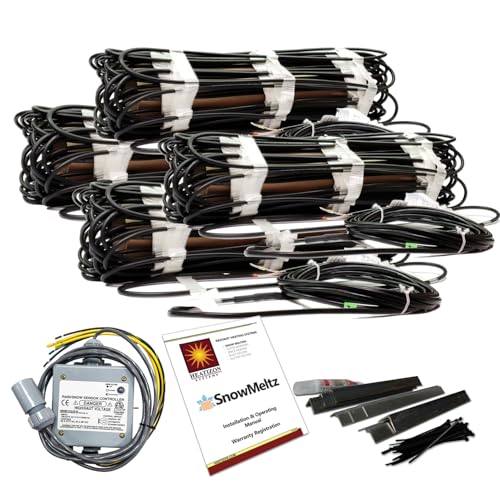
This SNOWMELTZ system includes four mats covering 300 sq ft and operates at 240V delivering 37 W/sqft. It features an integrated activator with temperature and moisture sensing to automatically enable melting when conditions require it.
Key attributes listed by the manufacturer include high-efficiency snow melting, sensor-based automatic activation, and compatibility with concrete, asphalt, or pavers. The product description highlights suitability for residential and light commercial installations and retrofit scenarios.
Use cases: full driveway coverage, long walkways, or combined residential/commercial entries. Considerations include required electrical service (240V and 2×30 Amps noted) and planning for mat placement under the finished surface type.
Heated Driveway System 40 Sqft – Snow Melting Mat
Call 888-896-7031 for Free Local HVAC Quotes – Compare and Save Today!
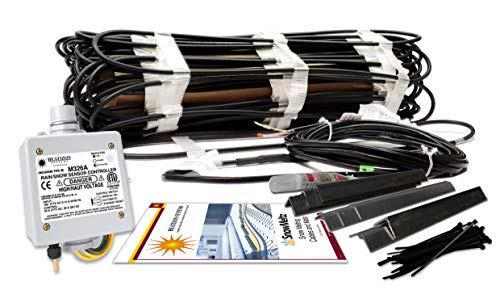
This SNOWMELTZ mat is a 2′ x ~20′ heated mat (approx 40 sq ft) running at 240V and 37 W/sqft. It includes an auto moisture and temperature activator for hands-free operation.
Manufacturer features emphasize efficient snow melting for sidewalks, steps, and targeted driveway tracks. The mat is described as adaptable for embedment under concrete, asphalt, or pavers and suitable for retrofit use.
Use cases: targeted deicing such as main walkway tracks, porch steps, or a short driveway lane. Electrical and placement planning matter: verify breaker capacity and conduit access for a 240V connection.
WarmlyYours Electric Ice And Snow Melting Mat PowerMat
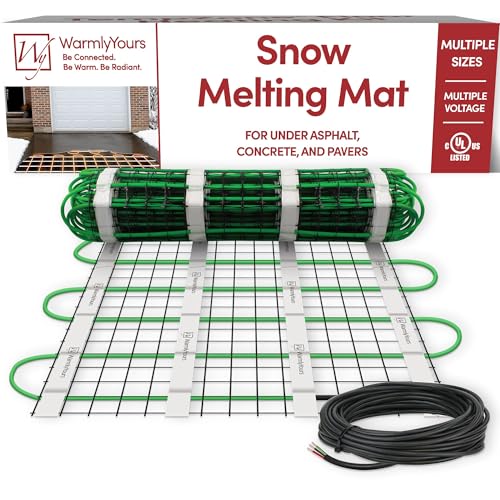
The WarmlyYours PowerMat is a 2×10 ft electric snow-melting mat rated at 240V and 1000W. It’s designed to be embedded under concrete, asphalt, or pavers for invisible radiant warming of a targeted area.
Listed features include CSA certification, twin-conductor heating cable construction, and suitability for heavy driveway or walkway traffic. The mat can be combined with additional mats for greater coverage or used as a tire-track deicing solution.
Call 888-896-7031 for Free Local HVAC Quotes – Compare and Save Today!
Use cases: homeowners seeking an embedded mat solution with recognized safety certification. Installation planning should address mat layout, junction boxes, and connection to a 240V control with appropriate ground-fault protection.
Electric Snow And Ice Melting Underground Cable – 85.5 Feet

This WarmlyYours system is a flexible 85.5 ft twin-conductor heating cable intended for embedding beneath concrete, asphalt, or pavers. It covers about 28 sq ft at up to 38.5 W/sqft when installed at 4-inch spacing.
Manufacturer points include rapid snow and ice removal suitability, flexibility for irregularly shaped areas, and usefulness where mats may not conform. The cable lets installers create custom layouts for ramps, stairs, or narrow drive lanes.
Use cases: irregular surfaces, custom-shaped areas, or where continuous cable routing is preferable to prefabricated mats. Consider installation labor, spacing to achieve target W/sqft, and electrical supply for the load chosen.
LuxHeat 25sqft Floor Heating Mat Kit – 120V

The LuxHeat kit is a 25 sq ft self-adhesive heating matUDG4 programmable thermostat with GFCI. It runs at 120V and includes a cable monitor/alarm according to the product listing.
Although marketed for interior floor heating, the mat’s technology can be relevant for small outdoor uses under pavers if proper embedment and outdoor-rated components are used. The product emphasizes easy installation, a pre-spaced 3″ layout, and a long warranty.
Use cases: heated entryway porches or small paved areas integrated with appropriate waterproofing and flooring underlayment. Verify outdoor suitability and code compliance if considering this mat for exterior use.
Buying Guide: How To Choose A Driveway Heater System
Selecting a driveway heater system requires assessing coverage needs, power availability, installation complexity, durability, and control strategy. Below are key factors and comparison perspectives to guide decision-making.
Coverage And Watt Density
- Square Footage Required: Measure the area to be kept snow-free. Full driveway coverage demands higher material and electrical capacity than targeted tire-track systems.
- Watts Per Square Foot: Typical ranges for driveway systems are 30–38 W/sqft for effective melting. Higher W/sqft speeds melting but increases electrical demand.
Voltage And Electrical Requirements
- 120V vs 240V: Many heavy-coverage systems use 240V to reduce current draw and panel loading. Smaller mats or cable runs may operate at 120V.
- Breaker And Circuit Sizing: Confirm available service and plan for breakers and conduit. Large systems can require double-pole breakers and substantial ampacity.
- GFCI And Control: Use ground-fault protection for outdoor electrical heating. Consider integrated controllers or activators for automated operation.
Installation Method: Mats vs. Cable
- Heated Mats: Prefabricated mats speed installation and ensure uniform spacing. Best for regular-shaped areas and retrofit projects where mat widths fit the layout.
- Heating Cable: Cable offers flexibility for irregular shapes, custom layouts, and targeted zones. Installation requires careful spacing and professional embedment for effective watt density.
- Embedment Surface: Both options can be embedded under concrete, asphalt, or pavers; each surface type has different prep and compaction requirements.
Automation And Sensors
- Temperature & Moisture Sensors: Systems with combined sensors activate only when melting is needed, saving energy and reducing wear.
- Manual Control: Some installs use thermostats or timers. Choose automation for low-maintenance operation if budget and control integration allow.
Durability And Safety
- Certifications: Look for CSA or equivalent approvals for outdoor heating products. Certification supports safe usage and reliability standards.
- Traffic Load: Confirm the system rating for vehicle traffic if embedding in a driveway lane.
- Warranty And Support: Compare manufacturer warranties and available technical support, especially for embedded systems where repair can be invasive.
Installation Complexity And Cost Considerations
- DIY vs Professional: Small mats and simple cable runs may be DIY-friendly, but embedded driveway systems often require a licensed electrician and experienced pavement contractor.
- Retrofit vs New Construction: New construction allows optimal placement before paving. Retrofits may need trenching, overlay, or concrete milling depending on the surface.
Operational Perspectives
- Energy Use: Automated sensor systems minimize run hours. Compare wattage and expected run cycles to estimate ongoing electrical use.
- Maintainability: Prefabricated mats simplify replacement in localized failures. Embedded cable repairs can be more invasive and costly.
- Performance In Extreme Conditions: Higher watt densities and proper sensor placement are important in cold, wet climates with heavy snowfall.
Comparison Checklist
- Area Size And Shape — full-coverage vs targeted tracks
- Voltage And Breaker Capacity — match product load to panel
- Installation Type — mat for uniform areas, cable for irregular areas
- Sensor Automation — save energy and improve responsiveness
- Certification And Traffic Rating — ensure safe public or driveway use
- Warranty And Service Access — consider long-term support
Using the checklist above will help match product capabilities to practical constraints such as electrical service, surface type, and desired level of automation. For embedded systems, plan layout, permit requirements, and contractor scope before purchase and installation.
Tips for Getting the Best HVAC Prices
- Prioritize Quality Over Cost
The most critical factor in any HVAC project is the quality of the installation. Don’t compromise on contractor expertise just to save money. - Check for Rebates
Always research current rebates and incentives — they can significantly reduce your overall cost. - Compare Multiple Quotes
Request at least three estimates before making your choice. You can click here to get three free quotes from local professionals. These quotes include available rebates and tax credits and automatically exclude unqualified contractors. - Negotiate Smartly
Once you've chosen a contractor, use the proven strategies from our guide — How Homeowners Can Negotiate with HVAC Dealers — to get the best possible final price.