
Drop ceilings present unique installation and clearance challenges for heating. Below is a concise comparison of five products that work with ceiling installations, low-profile bathroom mounts, and hardwired shop heaters. Use the table to match capacity, mounting style, and indoor/outdoor suitability before reading detailed product sections.
| Product | Best For | Mounting Type | Power/Output |
|---|---|---|---|
| Broan-NuTone 157 Low-Profile Ceiling Heater | Bathrooms, kitchens, low-clearance ceilings | Ceiling-mounted, low-profile | 1250W / 120VAC |
| 157 Bathroom Heater Ceiling (Compatible) | Replacement for Broan 157, bathroom retrofit | Ceiling-mounted, thin shell | 1250W / 120VAC |
| Dr. Infrared Heater 10,260 BTU (3000W) | Patio, garage, commercial ceiling mount | Ceiling or wall mount, hardware included | 3000W / 10,260 BTU |
| Dr. Infrared DR-966 240V Hardwired Heater | Heavy-duty shop and commercial spaces | Hardwired wall or ceiling mount | 3000W / 6000W selectable (240V) |
| Dr Infrared DR-238 Carbon Infrared Heater | Indoor/outdoor zone heating for patios, decks | Portable mount / hanging options | 900W / 1200W / 1500W (120V) |
Content Navigation
- Broan-NuTone 157 Low-Profile Fan-Forced Ceiling Heater
- 157 Bathroom Heater Ceiling, Compatible With Broan-NuTone 157
- Dr. Infrared Heater 10,260 BTU Infrared Heater, 3000W
- Dr. Infrared Heater DR-966 240-Volt Hardwired Shop Garage Heater
- Dr Infrared Heater DR-238 Carbon Infrared Outdoor Heater
- Buying Guide: How To Choose A Drop Ceiling Heater
- Room Size And Heating Capacity
- Mounting Type And Plenum Clearance
- Power Source And Electrical Requirements
- Safety And Code Compliance
- Heating Technology: Fan-Forced vs Infrared vs Ceramic
- Installation Considerations
- Noise, Ventilation, And Airflow
- Durability And Environment
- Maintenance And Replacement Parts
- Budget And Long-Term Efficiency
- Comparison Perspectives
Broan-NuTone 157 Low-Profile Fan-Forced Ceiling Heater

Overview: The Broan-NuTone 157 is a low-profile ceiling-mounted fan-forced heater designed primarily for bathrooms and other small rooms where space above the ceiling is limited. It uses an enclosed metal sheath element to produce heat efficiently at normal household voltage.
- Power & Performance: Operates at 1250W and 120VAC, providing fast supplemental heat in small to medium rooms.
- Design: Low-profile housing with a satin aluminum grille designed to blend with decor and fit limited plenum space typical of drop ceilings.
- Safety & Durability: Uses an enclosed sheath element for reliable operation and a durable grille finish.
- Applications: Standard choice for bathrooms, kitchens, and laundry rooms where a ceiling-mounted heat source is preferred.
Installation Notes: Intended for ceiling mounting; verify available plenum depth in a drop ceiling and that the fixture spacing meets local electrical and building codes. Fan-forced heating requires proper wiring and a dedicated circuit per manufacturer directions.
157 Bathroom Heater Ceiling, Compatible With Broan-NuTone 157

Overview: This product is a compatible replacement for the Broan 157 style heater offering similar form factor and performance for retrofit projects in bathrooms and smaller rooms with drop ceilings.
Call 888-896-7031 for Free Local HVAC Quotes – Compare and Save Today!
- Power & Safety: Rated at 1250W, 120VAC and includes overheat protection and PTC ceramic heating in some models for safety.
- Design: Thin shell design and aluminum grille to match existing decor while fitting into constrained ceiling cavities.
- Noise & Comfort: Advertised low-noise operation designed to provide quick warm-up without excessive fan sound during use.
- Compatibility: Useful when replacing an older Broan 157 unit or when a low-clearance ceiling heater is needed during a remodel.
Installation Notes: Check mounting rough-in dimensions and wiring compatibility with your existing ceiling cutout. Replacement units often reuse the original mounting hardware but confirm screw patterns and electrical connections.
Dr. Infrared Heater 10,260 BTU Infrared Heater, 3000W
Overview: This Dr. Infrared model delivers 10,260 BTU (3000W) via a carbon infrared element and is rated IP55 for indoor/outdoor use. It includes mounting hardware for ceiling or wall installation and a remote for convenient control.
- Heating Technology: Carbon infrared element provides instant, clean, and odorless heat, suitable for enclosed and semi-enclosed spaces.
- Mounting: Designed for ceiling or wall mount with included hardware—relevant for commercial drop ceiling in open bays or garages with adequate clearance.
- Controls: Remote control enables switching between power levels and standby mode for simple operation.
- Weather Resistance: IP55 rating allows use in covered outdoor areas such as patios and enclosed garage spaces when mounted per instructions.
Installation Notes: Ensure structural support above the drop ceiling can carry the unit and that mounting location meets clearance requirements. Hardwired electrical supply and proper circuit protection may be required—refer to local codes and an electrician for hardwiring.
Dr. Infrared Heater DR-966 240-Volt Hardwired Shop Garage Heater

Overview: The DR-966 is a heavy-duty 240V hardwired electric heater built for workshops, garages, and commercial spaces. It can be mounted on a wall or ceiling and offers selectable output for larger areas.
Call 888-896-7031 for Free Local HVAC Quotes – Compare and Save Today!
- Power Options: Available in 3000W or 6000W configurations on a 240V supply, designed for higher heat loads than typical 120V ceiling fixtures.
- Mounting Flexibility: Bracket included for wall or ceiling installation—suitable for warehouses, garages, or areas with drop ceiling sections if structural support exists above.
- Commercial Use: UL/CUL listed for commercial environments; intended for heavy-duty heating applications where sustained output is required.
- Electrical: Hardwired unit—requires professional installation and adequate circuit capacity.
Installation Notes: Not designed as a simple drop-in tile heater. Confirm building wiring, appropriate breaker sizing, and clearances. Use a licensed electrician for installation to comply with code and ensure safe operation.
Dr Infrared Heater DR-238 Carbon Infrared Outdoor Heater
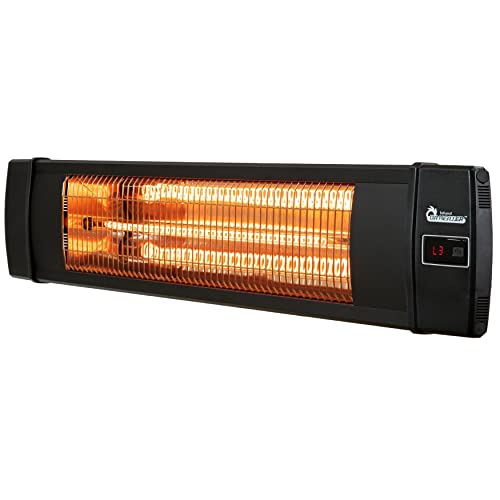
Overview: The DR-238 is a portable carbon infrared heater rated for indoor and outdoor use (IP55) with three power settings. While primarily marketed for patios and decks, its low-profile elongated design can be adapted for overhead or hanging installs in some drop-ceiling-like spaces with adequate support.
- Power Levels: Offers 900W, 1200W, and 1500W selectable settings on 120V power for flexible zone heating.
- Portability & Control: Plug-and-go design with remote control for easy adjustment of heat output.
- Indoor/Outdoor Use: IP55 weatherproofing allows use in covered outdoor spaces and areas that might experience moisture, when mounted according to instructions.
- Applications: Ideal for patios, open-air restaurants, decks, and temporary garage heating, but verify clearance and mounting approach for drop ceilings.
Installation Notes: Not a direct replacement for recessed or compartmentalized heaters in drop ceilings. If used overhead, ensure safe mounting hardware, proper clearance from combustible materials, and adherence to the manufacturer’s outdoor/indoor mounting guidelines.
Buying Guide: How To Choose A Drop Ceiling Heater
Choosing the right heater for a drop ceiling depends on several factors including room size, ceiling plenum depth, wiring, safety, and the intended application. Use the sections below to compare perspectives and make an informed decision.
Room Size And Heating Capacity
Match heater capacity to the volume you need to heat. Small bathrooms often require ~1250W fan-forced units, while garages and larger workshop areas require higher output such as 3000W–6000W or infrared units rated in BTUs. Calculate cubic footage and aim for a heater rated to deliver the necessary BTU/Watt performance for the space.
Mounting Type And Plenum Clearance
Drop ceilings have limited plenum depth. Low-profile heaters (Broan-style) are designed for shallow cavities, whereas larger infrared and hardwired commercial heaters require more space and structural support above the tiles. Verify available depth and whether the ceiling grid can support the heater weight or if additional bracing is needed.
Power Source And Electrical Requirements
Confirm voltage and circuit availability. Standard bathroom ceiling heaters use 120V/1250W. Heavy-duty workshop heaters often need 240V hardwiring and larger breakers. Infrared plug-in units may work on standard outlets but check local codes for permanent installations.
Safety And Code Compliance
Look for UL/ETL/CSA listings and built-in safety features like thermal cutoff/overheat protection. For bathrooms and shower areas, ensure IP ratings and moisture safety are appropriate. Any hardwired installation should comply with local electrical codes and typically requires a licensed electrician.
Heating Technology: Fan-Forced vs Infrared vs Ceramic
- Fan-Forced Heaters: Provide quick, distributed warm air good for enclosed small rooms. Require clearance and produce air movement.
- Infrared Heaters: Heat objects and people directly, often efficient for spot heating in open or semi-open spaces like garages and patios.
- Ceramic/PTC Heaters: Often include safer overheat characteristics and steady heat output, common in replacement bathroom units.
Installation Considerations
Determine if the heater is a direct drop-in replacement for an existing fixture, or if additional framing, bracing, or hardwiring is required. For drop ceilings, confirm the tile dimensions, cutout pattern, and whether the unit will sit within a grid cell or require a mounting bracket above the grid.
Noise, Ventilation, And Airflow
Fan-forced heaters create airflow and can be audible; PTC and infrared units are typically quieter. Ensure adequate ventilation and that the heater does not blow air directly on occupants in uncomfortable ways. For drop ceilings, check that the grille orientation promotes even distribution and does not interfere with ceiling tiles.
Durability And Environment
For humid or semi-outdoor locations choose IP-rated or weather-resistant units. Metal grilles and enclosed heating elements resist corrosion and are advisable in bathrooms and garages. Commercial spaces may require heavy-duty, UL-listed models for continuous operation.
Maintenance And Replacement Parts
Consider availability of replacement grilles, heating elements, and fan motors. Compatible aftermarket units (like 157 replacements) make refurbishing existing ceiling fixtures easier than replacing the entire ceiling assembly.
Budget And Long-Term Efficiency
Balance upfront cost with running cost and installation expense. Higher wattage hardwired units cost more to install but can be more effective in larger spaces. Infrared spot heating can be more economical for localized warmth if you don’t need to heat the entire room.
Comparison Perspectives
- Residential Bathrooms: Low-profile 1250W fan-forced units (Broan/compatible) are typical and designed for minimal plenum depth.
- Garages/Workshops: Hardwired 240V or ceiling-mounted 3000W infrared units provide higher output and sustained warmth.
- Patios/Semi-Outdoor: IP55-rated infrared fixtures offer weather resistance and instant radiant warmth for localized areas.
- Retrofits: Replacement 157-style heaters ease swaps for existing ceiling cutouts without major ceiling work.
Use the comparison table and the buying guide considerations to determine which heater type and model best match your drop ceiling configuration, electrical setup, and heating needs. Always follow manufacturer instructions and local codes for safe installation.
Tips for Getting the Best HVAC Prices
- Prioritize Quality Over Cost
The most critical factor in any HVAC project is the quality of the installation. Don’t compromise on contractor expertise just to save money. - Check for Rebates
Always research current rebates and incentives — they can significantly reduce your overall cost. - Compare Multiple Quotes
Request at least three estimates before making your choice. You can click here to get three free quotes from local professionals. These quotes include available rebates and tax credits and automatically exclude unqualified contractors. - Negotiate Smartly
Once you've chosen a contractor, use the proven strategies from our guide — How Homeowners Can Negotiate with HVAC Dealers — to get the best possible final price.