
Choosing the right dry sauna heater or infrared sauna for a home or small commercial space depends on room size, power supply, and user preferences for traditional steam or infrared therapy. The table below summarizes key specs for five selected products to help you compare at a glance.
| Product | Type | Power / Coverage | Notable Feature |
|---|---|---|---|
| Dynamic Saunas Barcelona 1-2 Person | Far Infrared Sauna | Personal / Cabin | Low EMF PureTech Panels, Red Light Therapy |
| Mangoct 3KW 110V Sauna Heater | Electric Plug-In Heater | 3KW / ~100-140 cu ft | Plug-In 110V With Cord, Fast Heating |
| VEVOR 6KW 220V Sauna Heater | Electric Stove | 6KW / 176-318 cu ft | Mechanical Knobs, Aluminized Shell |
| Mxmoonant 6KW 220V Digital Heater | Electric Heater With Digital Control | 6KW / 170-300 cu ft | Built-In Digital Display, Hygrothermograph |
| Vanbolt 9KW 220V Sauna Heater | High-Power Electric Heater | 9KW / 240-420 cu ft | Multiple Heating Elements, High Output |
Content Navigation
- Dynamic Saunas Barcelona 1- to 2-Person Low EMF FAR Infrared Sauna
- Mangoct 3KW 110V Sauna Heater With Plug In
- VEVOR Sauna Heater, 220V Electric Sauna Stove (6KW)
- Mxmoonant 6KW 220V Electric Sauna Heater Digital Control
- Vanbolt 9KW 220V Electric Sauna Heater With Built-In Controller
- Buying Guide: How To Choose The Right Dry Sauna Heater
Dynamic Saunas Barcelona 1- to 2-Person Low EMF FAR Infrared Sauna

This unit is a compact far infrared sauna built from Canadian hemlock and designed for one to two users. It uses six low-EMF carbon PureTech infrared panels offering faster heat-up and claimed energy savings. The cabin integrates red light therapy and chromotherapy lighting, plus Bluetooth and MP3 aux inputs with built-in speakers for entertainment during sessions.
Key features include efficient 360° heating coverage from the PureTech panels, roomy interior dimensions for a small cabin, and LED controls that combine therapy lighting and audio control. As an infrared system, it operates differently from traditional stone-and-stove dry saunas: heat is delivered directly to the body rather than primarily warming the air.
Consider this model when you need a ready-made personal infrared sauna that requires minimal installation and offers extra features like chromotherapy and Bluetooth. It is suited to users prioritizing low EMF emission and targeted infrared heating over traditional steam or rock-based heat.
Mangoct 3KW 110V Sauna Heater With Plug In

Call 888-896-7031 for Free Local HVAC Quotes – Compare and Save Today!
This 3KW plug-in electric heater targets small sauna rooms of roughly 100–140 cubic feet and claims rapid heating to target temperatures. It is designed for 110V circuits and ships with a 6 ft 12AWG cord. The unit emphasizes fast, spa-grade warmth without dedicated hardwiring.
Construction highlights include a 304 stainless steel heating tube for corrosion resistance in humid environments. The manufacturer recommends verifying household outlet type and circuit capacity and consulting a qualified electrician if unsure. Despite being plug-in, the product notes a minimum circuit breaker recommendation that users should confirm before operation.
Choose this heater if you have a small home sauna and need a no-wiring-required option with a portable-style power connection. It provides a convenient electric solution for retrofit spaces where adding dedicated 220V circuitry is impractical.
VEVOR Sauna Heater, 220V Electric Sauna Stove (6KW)

The VEVOR 6KW unit is a traditional electric sauna stove intended for larger home or small commercial saunas sized approximately 176–318 cubic feet. It uses an aluminized zinc shell and 304 stainless steel heating elements for durability in humid conditions.
Operational features are mechanical knobs for temperature and time control, a maximum reported temperature near 230°F, and a three-hour timer. The unit accommodates about 33 lbs of sauna stones (not included) to improve thermal mass and heat retention. The design prioritizes simple mechanical control and robust materials for extended service life.
Call 888-896-7031 for Free Local HVAC Quotes – Compare and Save Today!
This heater is appropriate for users planning a wired 220–240V installation and who prefer stone-based heat retention and mechanical control interfaces rather than digital panels. Consider room volume and required stone capacity when planning installation.
Mxmoonant 6KW 220V Electric Sauna Heater Digital Control

Mxmoonant’s 6KW heater pairs traditional stone-based heating with a digital display control and a built-in hygrothermograph for real-time temperature and humidity monitoring. It is rated to heat sauna rooms from roughly 170 to 300 cubic feet.
The heater’s advertised benefits include even heat distribution from stainless steel heating elements and the convenience of precise digital temperature and time adjustments. The integrated monitoring helps users maintain consistent conditions and track the session environment for safety and comfort.
This model fits buyers who value precise digital control and built-in monitoring for a managed sauna environment. It requires a 220V installation and is suited to medium-sized home saunas where control granularity is preferred over purely mechanical interfaces.
Vanbolt 9KW 220V Electric Sauna Heater With Built-In Controller
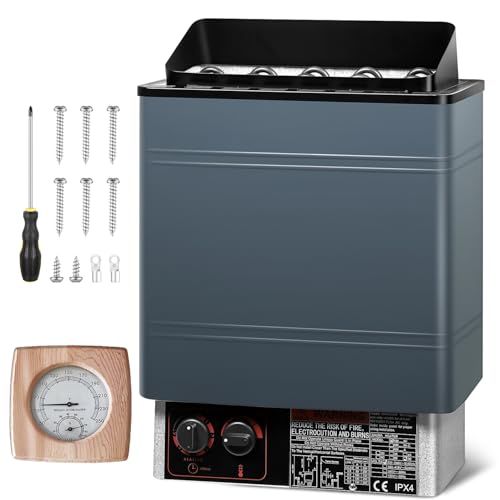
The Vanbolt 9KW heater is a high-output electric unit intended for larger sauna rooms between 240 and 420 cubic feet. It incorporates multiple heating elements for faster heat distribution and emphasizes energy efficiency through even heat output.
Important installation notes: the heater does not include stones or a plug and requires additional wiring; an electrician is recommended to complete circuit connections. The unit aims to provide higher maximum output for larger rooms and commercial-use scenarios, with attention to durable element design and efficient thermal transfer.
Consider this heater for larger custom saunas or facilities that require higher kilowatt capacity and professional installation. Ensure room volume, ventilation, and electrical infrastructure support the heater’s rated capacity before purchase.
Buying Guide: How To Choose The Right Dry Sauna Heater
This guide covers key considerations for selecting a dry sauna heater or infrared sauna, comparing installation types, power ratings, controls, materials, and safety aspects.
1. Heater Type And User Experience
- Traditional Electric Stove With Stones: Heats air and stones to deliver radiant and convective heat; suitable for users who want the classic dry sauna feeling and the option to add steam by sprinkling water on stones.
- Infrared Sauna (Far Infrared): Heats the body directly with infrared panels; typically lower ambient air temperatures and faster warm-up times. Offers options like low-EMF panels and light therapy features.
- Portable Infrared Tents/Cabins: Compact, collapsible, and good for temporary or small-space use. Pay attention to insulation fabric quality and panel placement.
2. Power Rating And Room Size
- Match kilowatt (KW) rating to sauna room volume. Typical guidance: small cabins and portable tents need lower kW, while medium and large rooms require 6–9KW or higher.
- For plug-in 110V heaters, confirm circuit capability and recommended breaker size. For 220–240V hardwired units, plan for professional wiring and dedicated circuits.
3. Installation And Electrical Requirements
- Plug-In Heaters: Offer convenience but still require confirmation that household outlets and circuits are compatible.
- Hardwired 220–240V Units: Usually require an electrician. Ensure proper circuit breakers and wiring gauge for safe, reliable operation.
- Check whether the heater ships with a power cord, plug, or requires separate wiring and whether sauna stones are included.
4. Controls And Monitoring
- Mechanical Knobs: Simpler, durable, and easier to repair. Good for users who prefer manual adjustments.
- Digital Displays: Provide precise temperature and timer control and often include built-in sensors for temperature and humidity monitoring.
- Consider whether remote control, timers, and safety cutoffs are important for your use case.
5. Materials And Durability
- Look for stainless steel heating elements and corrosion-resistant shells for longevity in damp, high-heat environments.
- For infrared units, check panel type (carbon vs. ceramic) and claims about EMF levels if concerned about emissions.
- Sauna stones should be specified by weight capacity; higher stone mass improves heat stability.
6. Safety And Certifications
- Verify applicable electrical certifications and compliance statements. Products with clear guidance on circuit requirements and safety features reduce installation risk.
- Use proper ventilation, ground-fault protection where required, and follow local electrical codes.
7. Energy Efficiency And Operating Cost
- Infrared saunas generally heat faster and may use less energy for short sessions, while traditional heaters maintain higher ambient temperatures and rely on thermal mass.
- Consider expected usage patterns—frequent long sessions may favor larger, more efficient units designed for sustained operation.
8. Comparison Perspectives
- Small Home Cabin: A 3KW plug-in heater or compact infrared cabin provides quick setup without major electrical upgrades.
- Medium Home Sauna: A 6KW hardwired unit with digital controls strikes a balance between capacity and control for families.
- Large Sauna Or Commercial Use: Higher output (9KW+) heaters with professional installation and sufficient stone capacity are appropriate for larger volumes and many users.
- Feature Priority: If light therapy, Bluetooth audio, or low-EMF is a priority, consider infrared cabins with integrated features; if traditional heat and steam are desired, select a stone-compatible electric stove.
9. Maintenance And Longevity
- Regularly inspect heating elements, clean and replace stones as advised, and ensure ventilation and wiring remain in good condition.
- For portable fabric cabins, verify the ease of cleaning and replacement of thermal fabric panels for long-term use.
Using these criteria, match product specifications to your sauna room volume, electrical infrastructure, and preferences for control and therapy features to select the most appropriate dry sauna heater or infrared sauna for your needs.
Tips for Getting the Best HVAC Prices
- Prioritize Quality Over Cost
The most critical factor in any HVAC project is the quality of the installation. Don’t compromise on contractor expertise just to save money. - Check for Rebates
Always research current rebates and incentives — they can significantly reduce your overall cost. - Compare Multiple Quotes
Request at least three estimates before making your choice. You can click here to get three free quotes from local professionals. These quotes include available rebates and tax credits and automatically exclude unqualified contractors. - Negotiate Smartly
Once you've chosen a contractor, use the proven strategies from our guide — How Homeowners Can Negotiate with HVAC Dealers — to get the best possible final price.