
Looking For A Reliable ductless gas heater? This guide compares popular ventless and unit-style gas heaters suited to garages, workshops, sunrooms, and additions. Below Is A Quick Comparison Table Of The Selected Products To Help You Choose Based On Output, Coverage, And Key Features.
| Product | Type | Max BTU | Estimated Coverage |
|---|---|---|---|
| Mr. Heater F260550 Big Maxx MHU50NG | Unit Heater (Powered Exhaust Venting) | 50,000 | Up To 1,250 Sq. Ft. |
| Mr. Heater F260560 Big Maxx MHU80NG | Unit Heater (Category 1/3 Venting) | 80,000 | Up To 2,000 Sq. Ft. |
| ProCom MN300HBA Ventless Blue Flame | Ventless Blue Flame | 30,000 | Up To 1,400 Sq. Ft. |
| Mr. Heater MHVFBF30NGT Vent Free Blue Flame Wall Heater | Vent Free Wall-Mount | 30,000 | Up To 1,000 Sq. Ft. |
| ProCom MN300HPA Ventless Infrared Plaque Heater | Ventless Infrared | 30,000 | Up To 1,200 Sq. Ft. |
Content Navigation
- Mr. Heater F260550 Big Maxx MHU50NG Natural Gas Unit Heater
- Mr. Heater F260560 Big Maxx MHU80NG Natural Gas Unit Heater
- ProCom MN300HBA Natural Gas Ventless Blue Flame Heater
- Mr. Heater MHVFBF30NGT 30,000 BTU Vent Free Blue Flame Wall Heater
- ProCom MN300HPA Natural Gas Ventless Infrared Plaque Heater
- Buying Guide: How To Choose A Ductless Gas Heater
- 1. Heater Type: Ventless vs. Vented Unit Heaters
- 2. Output And Coverage
- 3. Installation And Venting Requirements
- 4. Safety Features
- 5. Fuel Type And Conversion
- 6. Controls And Convenience
- 7. Indoor Air Quality And Ventilation
- 8. Efficiency And Operating Considerations
- 9. Maintenance And Serviceability
- 10. Code Compliance And Professional Installation
Mr. Heater F260550 Big Maxx MHU50NG Natural Gas Unit Heater
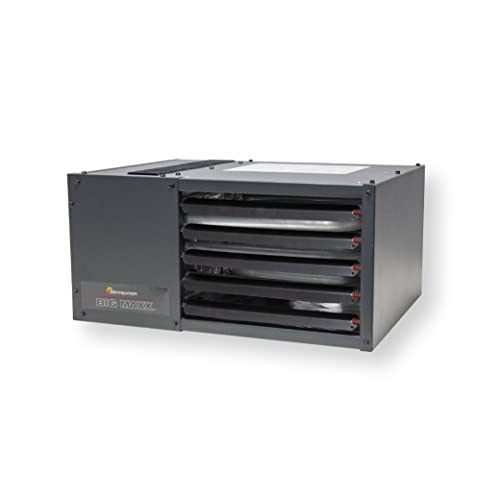
This unit heater Delivers 50,000 BTU And Is Designed To Heat Large Spaces Such As Garages Or Workshops. It Features A Powered Exhaust Allowing Vertical Or Horizontal Venting Options, Which Makes It More Flexible For Install Locations Compared To Traditional Direct-Vent Models. The Unit Offers Outside Access To Thermostat, A/C Terminals, And Gas Connection For Easier Service And Setup.
Installation Notes: Requires Proper Venting And A Natural Gas Supply. Clearance Requirements And Electrical Connection For The Exhaust Fan Should Be Considered. Recommended For Users Who Want Higher Output With Venting Flexibility.
Mr. Heater F260560 Big Maxx MHU80NG Natural Gas Unit Heater
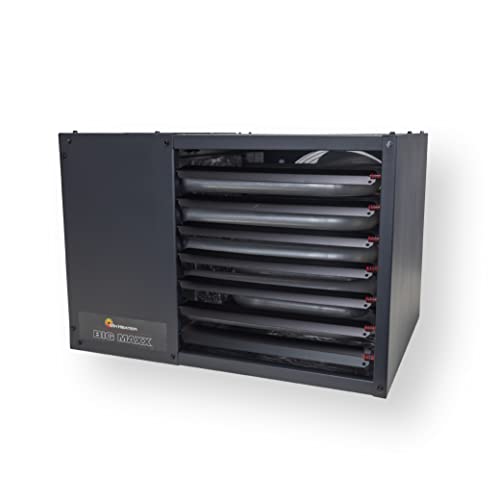
This Model Provides 80,000 BTU Performance And Is Rated For Coverage Up To 2,000 Sq. Ft. It’s Supplied With Angle Brackets And A Liquid Propane Conversion Kit, While Thermostat, Hose, And Regulator Are Not Included. The Heater Supports Category 1 Vertical And Category 3 Horizontal Venting, Offering Versatile Install Options For Variable Building Layouts.
Call 888-896-7031 for Free Local HVAC Quotes – Compare and Save Today!
Considerations: The Unit Requires Adequate Clearance And Proper Gas And Electrical Connections. Its Higher Output Suits Larger Garages And Commercial-Like Spaces Where Venting Is Acceptable Or Preferred.
ProCom MN300HBA Natural Gas Ventless Blue Flame Heater

This ventless blue flame heater Operates Without Electricity And Uses A Push-Button Piezo Ignition. Rated At 30,000 BTU, It’s Claimed To Heat Up To 1,400 Sq. Ft. The Heater Offers Three Manual Heat Settings (Low/Medium/High) And Includes An Oxygen Depletion Sensor (ODS) For Automatic Shut-Off If Air Quality Drops.
Installation Notes: As A Ventless Unit, It Emits Combustion Products Into The Room And Requires Adequate Ventilation Per Local Codes. Its No-Electric Design Is Useful Where Power Is Limited, But Operational Safety And Indoor Air Considerations Should Be Accounted For.
Mr. Heater MHVFBF30NGT 30,000 BTU Vent Free Blue Flame Wall Heater
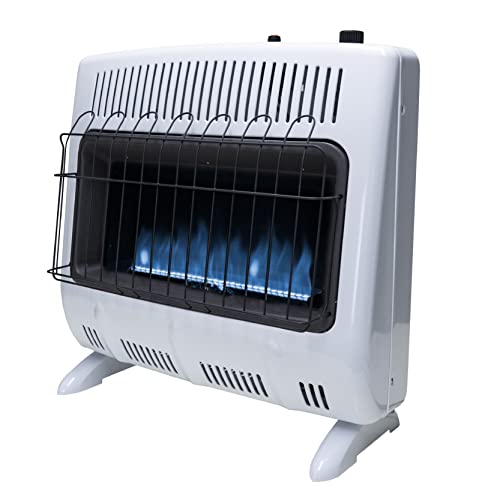
This Wall-Mount vent-free blue flame Unit Delivers Up To 30,000 BTU And Is Intended For Spaces Up To 1,000 Sq. Ft. It Includes A Thermostat For Precise Temperature Control And A Battery-Powered Ignition For Reliable Start-Up. The Blue Flame Burner Offers Convection Heat For Even Warmth Distribution.
Call 888-896-7031 for Free Local HVAC Quotes – Compare and Save Today!
Safety & Placement: Vent-Free Wall Heaters Offer Simple Installation And Efficient Indoor Heat But Require Compliance With Local Codes, Clearance Requirements, And Air Quality Monitoring. Suitable For Additions, Sunrooms, Or Rooms With Sufficient Fresh Air Supply.
ProCom MN300HPA Natural Gas Ventless Infrared Plaque Heater

This ventless infrared plaque heater Produces 30,000 BTU And Is Designed To Heat Up To 1,200 Sq. Ft. Infrared Panels Heat Objects And People Directly Rather Than Relying Solely On Room Convection, Which Can Be Beneficial In Spaces With High Ceilings Or Intermittent Use. The Unit Uses Manual Controls With Three Heat Settings And Includes An Oxygen Depletion Sensor.
Use Cases: Infrared Ventless Heaters Can Be More Efficient At Delivering Perceived Warmth Quickly. As With Any Ventless Appliance, Ensure Proper Ventilation And Follow Local Building Codes For Indoor Combustion Appliances.
Buying Guide: How To Choose A Ductless Gas Heater
Selecting The Right ductless gas heater Requires Weighing Several Factors Related To Safety, Performance, And Installation Constraints. Below Are Key Considerations And Comparison Perspectives To Help Make An Informed Choice.
1. Heater Type: Ventless vs. Vented Unit Heaters
- Ventless (Vent-Free): No flue or exhaust pipe required; combustion products enter the living space. Offers simple installation and high efficiency but needs adequate room ventilation and adherence to local codes.
- Vented/Unit Heaters: Require exhaust venting (horizontal/vertical). Better for spaces where combustion products must be vented outside; often higher BTU outputs for larger spaces.
2. Output And Coverage
- Match BTU output To Room Size. Small Rooms: ~10,000–30,000 BTU. Garages/Workshops: 50,000 BTU+ May Be Required.
- Consider ceiling height, insulation, and cold-climate factors, which affect real-world coverage.
3. Installation And Venting Requirements
- Ventless units: Minimal framing or wall cutouts, but confirm local code allowances.
- Vented unit heaters: Plan for vent runs, clearances, and possibly powered exhaust or category-rated venting parts.
4. Safety Features
- Look For Oxygen Depletion Sensors (ODS), overheat protection, and automatic shut-off features.
- Ventless units require reliable ODS and periodic maintenance; verify compliance with safety standards.
5. Fuel Type And Conversion
- Confirm natural gas vs. propane compatibility. Some models include conversion kits; others are fixed-fuel.
- Gas line sizing and pressure should be checked by a qualified technician.
6. Controls And Convenience
- Thermostat Controls Provide Better Temperature Regulation Versus Manual Settings.
- Ignition Type: Battery or Piezo Ignition Offers Off-Grid Operation; Models With Electric Ignition Require Power.
7. Indoor Air Quality And Ventilation
- Ventless Heaters Increase Moisture And Combustion Byproducts Indoors; Plan For Fresh Air Intake Or Intermittent Use.
- For Tight, Well-Insulated Homes, Vented Solutions May Be Preferable To Maintain Indoor Air Quality.
8. Efficiency And Operating Considerations
- Ventless Units Often Approach High Room Efficiency Since Heat Stays Inside; Vented Units Lose Some Heat Through Exhaust But Improve Safety And Air Quality.
- Consider Long-Term Ventilation Needs, Maintenance, And Local Fuel Costs When Comparing Operating Efficiency.
9. Maintenance And Serviceability
- Check For Easy Access To Thermostats, Gas Connections, And Service Panels.
- Periodic Inspection Of Burners, Pilots/Oxygen Sensors, And Vent Paths (If Vented) Is Recommended.
10. Code Compliance And Professional Installation
- Always Verify Local Building Codes Regarding Ventless Appliances. Some Jurisdictions Restrict Ventless Heaters In Bedrooms Or Tight-Fit Homes.
- Professional Installation Is Recommended For Gas Appliances To Ensure Proper Gas Pressure, Venting, And Clearances.
Comparative Perspective: If Indoor Air Quality And Continuous Long-Term Use Are Priorities, Consider A Vented Unit Heater With Proper Exhausting. If Simplicity, Portability, Or No-Electric Operation Is A Priority, A Ventless Blue Flame Or Infrared Unit Can Be Suitable—Provided You Meet Ventilation And Safety Requirements.
Tips for Getting the Best HVAC Prices
- Prioritize Quality Over Cost
The most critical factor in any HVAC project is the quality of the installation. Don’t compromise on contractor expertise just to save money. - Check for Rebates
Always research current rebates and incentives — they can significantly reduce your overall cost. - Compare Multiple Quotes
Request at least three estimates before making your choice. You can click here to get three free quotes from local professionals. These quotes include available rebates and tax credits and automatically exclude unqualified contractors. - Negotiate Smartly
Once you've chosen a contractor, use the proven strategies from our guide — How Homeowners Can Negotiate with HVAC Dealers — to get the best possible final price.