
Industrial and heavy-duty electric air heaters provide reliable, duct-free warmth for workshops, garages, and commercial spaces. This guide compares five top electric air heaters suited for industrial use, summarizing the core features to help you match capacity, mounting, and safety needs.
| Product | Type | Power / Coverage | Key Feature |
|---|---|---|---|
| Global Industrial Fan Forced Wall Heater | Wall-mounted | 4000/3000W | Built-in thermostat, recessed design |
| TEMPWARE Electric Garage Heater | Ceiling-mounted shop heater | 6250–7500W (240V), up to ~1,250 sq ft | Digital controls, ECO mode, timer |
| Dura Heat EWH5510 Electric Forced Air Heater | Large hard-wired garage heater | 5000W / 17,060 BTU, up to ~750 sq ft | Remote control, LED thermostat |
| Dr Infrared Heater DR-988A Garage Shop | Hard-wired 240V heater | 4800/5600W (240V) | NEMA 6-30R power requirement |
| Dura Heat EUH1465 Electric Forced Air Heater | Portable forced air (PTC) | 1500W / 5,120 BTU | Pivoting base, rugged steel body |
Content Navigation
- Global Industrial Fan Forced Wall Heater, Enclosed Motor
- TEMPWARE Electric Garage Heater, 7500-Watt Digital Fan-Forced
- Dura Heat EWH5510 Electric Forced Air Heater With Remote
- Dr Infrared Heater DR-988A Garage Shop 240V, 5600-Watt
- Dura Heat EUH1465 Electric Forced Air Heater With Pivoting Base
- Buying Guide For Industrial Electric Air Heaters
Global Industrial Fan Forced Wall Heater, Enclosed Motor

The Global Industrial Fan Forced Wall Heater Is Designed For Mounted, Space-Saving Installation In Commercial Or Industrial Interiors. It Offers 4000/3000W Options At 240/208V And Uses A Fan-Forced System To Deliver Faster Warm-Up Compared To Convection Units.
Features Include A Built-In Thermostat For Temperature Control, An Enclosed Motor For Durability In Dusty Environments, And A Recessed Profile Allowing Optional Integration Into Wall Spaces. These traits Make It Suitable For Break Rooms, Small Workshops, Or Areas Where Wall-Mounting Preserves Floor Space.
For installation, confirm electrical supply matches the unit rating and follow local codes for fixed heating equipment. The fan-forced design gives directional airflow and more immediate heat delivery than baseboard or convection models.
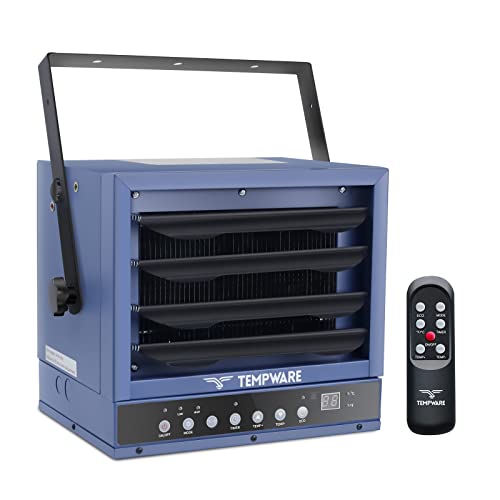
TEMPWARE Electric Garage Heater, 7500-Watt Digital Fan-Forced
Call 888-896-7031 for Free Local HVAC Quotes – Compare and Save Today!
The TEMPWARE Garage Heater Is A Ceiling-Mount, High-Output Electric Unit Intended For Large Workshop And Garage Spaces. It Offers High Capacity With Power From 6,250 To 7,500 Watts And A Claimed Coverage Up To Approximately 1,250 Square Feet.
Key Product Features Include Adjustable Louvers And Mounting Angle For Directed Airflow, A Digital Thermostat, Full-Function Remote, ECO Mode That Adapts To Ambient Temperature, And A 12-Hour Timer. Integrated Overheat Protection Is Reported To Shut Off The Unit If Internal Temperatures Exceed Safe Limits.
This product Is Hardwired At 240V And Offers Multiple Heat Settings To Balance Output And Energy Use. It Suits Larger bays or shops where ceiling mounting preserves floor/workspace and directs warm air downward for task areas.
Dura Heat EWH5510 Electric Forced Air Heater With Remote

The Dura Heat EWH5510 Is A Large Electric Garage Heater Designed For Permanent Installation In Commercial Or Residential Garage Spaces. It Features A Hard-Wired 240V / 5,000W Design And States Coverage Up To 750 Sq. Ft.
Notable Features Include An Adjustable Thermostat With LED Display (Settings From 45–99°F), Remote Control For Convenient Adjustments, And A Power Indicator Light To Confirm Proper Installation. The Unit Is Marketed As Requiring Professional Installation Due To Its 30A Circuit Requirements.
Call 888-896-7031 for Free Local HVAC Quotes – Compare and Save Today!
This heater Emphasizes Centralized Control And High Output For Larger Single-Zone Areas. Ensure circuit compatibility, confirm mounting clearances, and consider airflow routing if heating workshop benches or specific zones.
Dr Infrared Heater DR-988A Garage Shop 240V, 5600-Watt

The Dr Infrared DR-988A Is A High-Power Electric Unit Requiring 240-Volt Supply And A 6-30R Outlet/Receptacle For The Included Power Cord. Rated At Up To 5600 Watts, It Targets Garage Or Shop Spaces Needing Substantial Forced Air Output.
The Listing Notes The Requirement For A Special Outlet (NEMA 6-30R) And Provides Power Cord Specification Details. This Unit Is Suited To Owners Prepared To Provide The Necessary Dedicated Circuit And Receptacle Hardware.
Because It Uses High-Voltage Inputs, Planning For Electrical Capacity, Proper breaker sizing, and installation location is necessary. High-output forced air heaters like this are appropriate for larger single-zone heating or when rapid warm-up is desired.
Dura Heat EUH1465 Electric Forced Air Heater With Pivoting Base
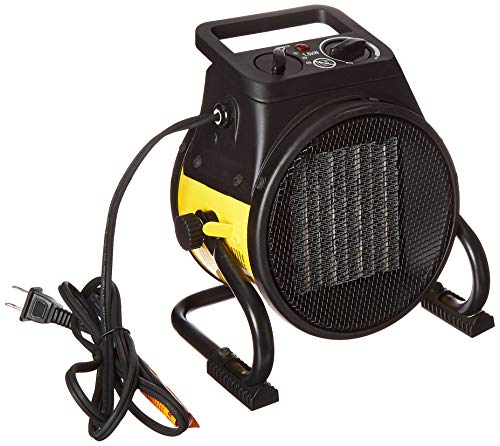
The Dura Heat EUH1465 Is A Compact Forced-Air Heater Featuring 1500W PTC Ceramic Heating And A Pivoting Base For Directional Warmth. Its Steel Construction Targets Rugged Use In Small Workshops, Garages, Or Construction-Adjacent Tasks.
Key Attributes Include Heat And Fan-Only Modes, A Durable Steel Body For Industrial Environments, And A Design Optimized For Spot Heating And Portable Use. The Unit Delivers Quick Warm-Up For Localized Workstations.
This model Is Suitable When a portable, lower-wattage option Is Needed For Spot Heating Without Hardwiring. It Can Complement Larger Units Or Serve As a primary heater in small enclosures and service bays.
Buying Guide For Industrial Electric Air Heaters
Choosing An Electric Air Heater For Industrial Spaces Involves Matching Power, Mounting Style, Safety, And Electrical Infrastructure. Below Are Key Considerations When Selecting A Unit.
Heating Capacity And Coverage
- Wattage And BTU: Higher wattage translates to more heat output. For larger workshops and garages, look for hard-wired 240V units in the 4,000–7,500W range. Small-area spot heaters typically use 1,000–1,500W.
- Square Foot Estimates: Use manufacturer coverage guidance but verify by calculating heat loss for cold climates or poorly insulated spaces. High ceilings reduce effective coverage.
Mounting Type And Airflow
- Wall-Mounted: Saves floor space and provides consistent elevation for circulated air. Suitable for narrow bays or where floor space is crowded.
- Ceiling-Mounted: Ideal for larger bays to distribute air downward. Often used in garages and shops to direct heat across work areas.
- Portable / Floor Units: Useful for spot heating and temporary tasks. Look for pivoting bases or handles for directional warmth.
Electrical Requirements And Installation
- Voltage And Circuit: Confirm building wiring supports the unit rating (120V vs 240V) and that a dedicated circuit and proper receptacle (e.g., NEMA 6-30R) are available for high-power units.
- Professional Installation: Hard-wired 240V units typically require licensed electricians and adherence to local codes. Verify breaker sizing, wiring gauge, and outlet compatibility.
Controls, Safety Features, And Durability
- Thermostats & Controls: Built-in thermostats, remote control, timers, and ECO modes provide better temperature regulation and energy savings.
- Overheat Protection: Automatic shutoff sensors are essential for industrial safety to prevent failure under heavy use or restricted airflow.
- Enclosure & Motor Type: Look for enclosed motors and steel housings to resist dust and impacts common in workshops.
Air Distribution And Directionality
- Adjustable Louvers: Allow you to direct warm air to workbenches or equipment zones.
- Fan-Forced vs Convection: Fan-forced units heat spaces faster and offer directional flow; convection units are quieter and better for steady, whole-room warmth.
Maintenance And Operational Considerations
- Filter And Dust Management: In dusty environments, select enclosed motors and plan for periodic cleaning to maintain airflow and avoid premature wear.
- Duty Cycle: Check manufacturer guidance on continuous operation and recommended rest periods if units aren’t designed for 24/7 heavy duty.
- Replacement Parts: Confirm availability of replacement elements, thermostats, and mounting hardware for long-term serviceability.
Comparison Perspectives
- Performance vs Installation Complexity: High-output hard-wired units (TEMPWARE, Dura Heat EWH5510, Dr Infrared) deliver more heat but require electrical upgrades; portable units (Dura Heat EUH1465) are simpler to deploy but have limited coverage.
- Fixed vs Flexible Placement: Wall/ceiling heaters suit permanent, centralized heating. Portable forced-air heaters work for spot heat needs or temporary workspace changes.
- Energy Efficiency: Digital thermostats, ECO modes, and timers can reduce runtime and overall consumption. Match features to usage patterns to optimize operating cost.
Use these factors to prioritize the features that matter most for your industrial or workshop environment: whether immediate high-output heat, permanent ceiling/wall mounting, or portable spot heating is the primary requirement.
Tips for Getting the Best HVAC Prices
- Prioritize Quality Over Cost
The most critical factor in any HVAC project is the quality of the installation. Don’t compromise on contractor expertise just to save money. - Check for Rebates
Always research current rebates and incentives — they can significantly reduce your overall cost. - Compare Multiple Quotes
Request at least three estimates before making your choice. You can click here to get three free quotes from local professionals. These quotes include available rebates and tax credits and automatically exclude unqualified contractors. - Negotiate Smartly
Once you've chosen a contractor, use the proven strategies from our guide — How Homeowners Can Negotiate with HVAC Dealers — to get the best possible final price.