
Overview: This guide compares five electric construction heaters suitable for garages, workshops, and job sites. Each unit is selected for power, installation type, safety features, and durability. Below is a quick reference table to help you compare core specs at a glance.
| Model | Type | Power / Output | Installation | Key Feature |
|---|---|---|---|---|
| TEMPWARE Electric Garage Heater | Ceiling-Mount Fan-Forced | 6,250–7,500 W (up to ~25,590 BTU) | Hardwired 240V | Digital remote, ECO mode, timer |
| Comfort Zone CZ220 Ceiling Mount | Ceiling-Mount Fan-Forced | 5,000 W | Hardwired | Space-saving overhead installation |
| Dr Infrared Heater DR-988A | Hard-Wired Shop Heater | 4,800 / 5,600 W | Hardwired 208/240V (NEMA 6-30R) | High wattage with commercial plug requirement |
| Dura Heat EWH5510 | Forced Air Hard-Wired | 5,000 W / 17,060 BTU | Hardwired 240V | Remote control and adjustable thermostat |
| Dura Heat EUH1465 | Portable Forced Air | 1,500 W (5,120 BTU) | Plug-in portable | Pivoting base and rugged steel body |
Content Navigation
TEMPWARE Electric Garage Heater
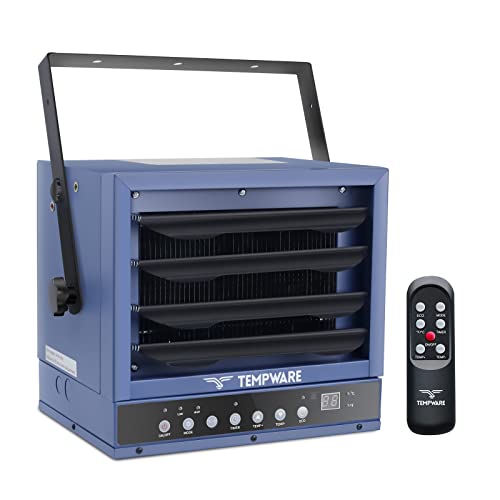
The TEMPWARE Electric Garage Heater is a hard-wired, ceiling-mounted fan-forced unit designed for large spaces. It offers variable power from 6,250 to 7,500 watts and claims a high BTU capacity suitable for large workshops. The heater includes an adjustable mounting angle and louvers for targeted airflow.
Key features listed include a full-function remote, built-in thermostat, ECO mode that adjusts output based on ambient temperature, and a 12-hour timer. Overheat protection and an auto-shutoff sensor are noted for safety. The unit is intended for permanent installation and requires proper electrical wiring.
Use case: Best for shop or garage spaces where a ceiling-mounted, high-wattage heater is preferred to save floor space and provide widespread distribution.
Comfort Zone Hard-Wired Ceiling Mount Heater

Call 888-896-7031 for Free Local HVAC Quotes – Compare and Save Today!
The Comfort Zone CZ220 is a 5,000-watt fan-forced, ceiling-mounted heater built from heavy-gauge steel for durability in poorly insulated or rugged spaces. Its hard-wired configuration is designed to maximize floor space in garages and warehouses.
Features include adjustable louvers and mounting angle for precise heat distribution, an integrated thermal cut-out for overheat protection, and ETL compliance for electrical safety standards. The overhead installation allows for directed airflow and even room coverage.
Use case: Ideal where permanent, space-saving installation is needed and where robust steel construction is preferred for long-term, heavy-duty use.
Dr Infrared Heater DR-988A Garage Shop

The Dr Infrared DR-988A is a heavy-duty shop heater requiring 240-volt supply and a NEMA 6-30R receptacle. It lists power consumption up to 5,600 watts and is designed for commercial-grade heating where higher amperage and dedicated outlets are available.
This model specifies a particular plug type (NEMA# 6-30P) and emphasizes proper electrical provisioning for safe operation. The robust power profile makes it appropriate for larger garages, workshops, and jobsite stalls where permanent installation or dedicated circuits are feasible.
Call 888-896-7031 for Free Local HVAC Quotes – Compare and Save Today!
Use case: Suitable for commercial or serious DIY environments with access to a 240V circuit and the required receptacle type to deliver sustained, high-output heat.
Dura Heat EWH5510 Electric Forced Air Heater

The Dura Heat EWH5510 is a hard-wired 240V forced air heater rated at 5,000 watts and advertised to cover up to 750 sq. ft. It is intended for permanent installation and notes that professional installation is required.
Features called out include an LED display with an adjustable thermostat (45–99°F), a remote control for convenience, and a power indicator light to confirm correct installation. Overheat protection and durable construction are part of the unit design for garage and shop environments.
Use case: Recommended where remote temperature control and thermostat precision are desired in a hard-wired garage heater with strong coverage area claims.
Dura Heat EUH1465 Electric Forced Air Heater
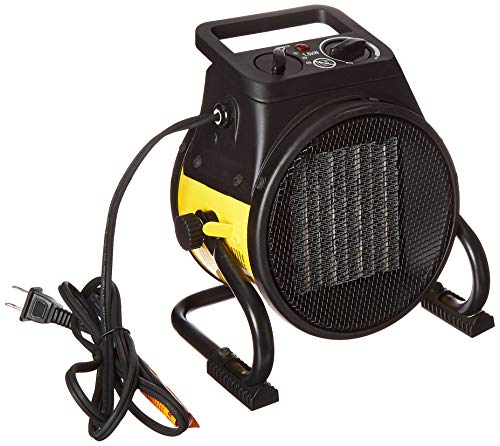
The Dura Heat EUH1465 is a portable forced air heater delivering 1,500W via PTC ceramic heating for quick warmth in smaller spaces. It features a pivoting base and a rugged steel body geared toward jobsite durability.
Listed features include selectable heat and fan-only modes for use as a heater or circulator, and a compact, portable design with a steel exterior to withstand shop conditions. Its portability allows flexible placement where a permanent heater is not practical.
Use case: Best for spot heating, small garages, or temporary jobsite needs where portability and quick warm-up are priorities.
Buying Guide: Choosing The Right Electric Construction Heater
Selecting an electric construction heater depends on power needs, installation type, safety, and jobsite constraints. Below are the key considerations to evaluate.
1. Wattage And Coverage
Higher wattage (3,000W–7,500W) provides greater heating capacity and faster warm-up for large or poorly insulated spaces. For portable or spot heating, 1,500W
2. Installation Type
- Ceiling-mounted / Hardwired: Saves floor space and distributes heat widely; requires electrical work and professional installation in many cases.
- Plug-in Portable: Offers mobility and no permanent wiring; best for spot heating or temporary setups.
- Dedicated Circuit Needs: Some units require specific outlets (e.g., NEMA 6-30R) or 240V circuits—plan wiring accordingly.
3. Safety Features
Look for overheat protection, thermal cut-out switches, tip-over sensors (for portable units), and ETL or other safety certifications. These features reduce risk in construction settings where dust and debris can be present.
4. Heat Distribution
Fan-forced heaters spread warm air quickly and work well in larger workshops. Adjustable louvers and mounting angles help direct heat to work areas. Radiant or infrared styles (not covered here) can provide different comfort profiles for open sites.
5. Durability And Build
Jobsite heaters should offer rugged steel construction and protected controls. Consider units built for commercial use if they will be exposed to impacts, dust, or heavy daily operation.
6. Controls And Convenience
Remote controls, digital thermostats, timers, and ECO modes can improve energy efficiency and make operation easier on larger projects. Decide how important remote management is for your workflow.
7. Energy Efficiency And Operating Costs
Electric heaters convert nearly all input to heat, but higher wattage equals higher amperage draw. Use thermostats and timers to avoid unnecessary runtime. Verify that your electrical infrastructure can handle continuous loads.
8. Portability Versus Permanence
Portable units are flexible but may not provide even coverage across large areas. Permanently mounted, hard-wired heaters give consistent results but limit flexibility and require professional installation.
9. Professional Installation And Electrical Requirements
Hard-wired units often require a licensed electrician to install appropriate breakers, wiring, and receptacles. Confirm local code compliance and ensure circuits are sized for continuous heater loads.
10. Use-Case Comparison
- Large Workshop / Permanent Heating: High-wattage, ceiling-mounted hard-wired units (TEMPWARE, Comfort Zone, Dura Heat EWH5510).
- Commercial Garage With Dedicated Outlet: Dr Infrared DR-988A when a 240V supply and NEMA receptacle are available.
- Temporary Spot Heating / Mobility: Portable forced air heaters like the Dura Heat EUH1465.
Before purchasing, verify the heater’s electrical requirements, safety certifications, and installation needs relative to your workspace. Consider whether you need portable spot heating or a permanent solution to maintain consistent temperatures across the job site.
Tips for Getting the Best HVAC Prices
- Prioritize Quality Over Cost
The most critical factor in any HVAC project is the quality of the installation. Don’t compromise on contractor expertise just to save money. - Check for Rebates
Always research current rebates and incentives — they can significantly reduce your overall cost. - Compare Multiple Quotes
Request at least three estimates before making your choice. You can click here to get three free quotes from local professionals. These quotes include available rebates and tax credits and automatically exclude unqualified contractors. - Negotiate Smartly
Once you've chosen a contractor, use the proven strategies from our guide — How Homeowners Can Negotiate with HVAC Dealers — to get the best possible final price.