
Forced air electric heaters provide rapid, targeted warmth for garages, workshops, job sites, and small rooms. Below is a quick comparison of five well-matched models selected for varied needs—from portable ceramic units to hardwired garage and ceiling-mounted shop heaters.
| Model | Type | Power / Output | Best For |
|---|---|---|---|
| Dura Heat EUH1465 | Portable Forced Air | 1500W / ~5,120 BTU | Small spaces, garages, workshops |
| Dura Heat EWH5510 | Hardwired Garage Heater | 5,000W / 17,060 BTU | Large garages up to ~750 sq ft |
| DEWALT DXH1000TS | High-Output Forced Air | Selectable 7kW / 10kW | Heavy-duty job sites, flexible power circuits |
| Mr. Heater 1500W Portable | Portable Ceramic Forced Air | 1500W / 5,118 BTU | Small rooms, portable spot heating |
| TEMPWARE 7500W Garage Heater | Ceiling-Mount Shop Heater | 6,250–7,500W / up to 25,590 BTU | Workshops, large garages, ceiling installation |
Content Navigation
Dura Heat EUH1465 Electric Forced Air Heater
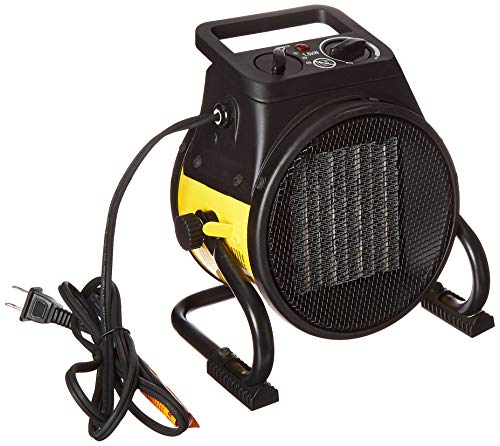
This model is a compact, portable forced air heater delivering 1500W PTC ceramic heating for quick spot warmth. Rugged steel construction suits garages and workshops where a durable housing is important. Operational modes include heat and fan-only, providing flexibility to operate as a heater or air circulator when temperatures rise.
- Key Features: 1500W PTC ceramic element, pivoting base for directional airflow, steel body for jobsite durability.
- Performance Notes: Effective for small-to-medium spaces or targeted heating zones; rapid warm-up thanks to forced-air delivery.
- Installation: Plug-and-play portable unit—no wiring required.
Dura Heat EWH5510 Electric Forced Air Heater

The EWH5510 is a hardwired 240V / 5,000W garage heater designed for larger spaces. With a reported coverage up to 750 sq. ft., it targets whole-garage warmth rather than spot heating. The unit includes a remote control and an adjustable LED thermostat display with temperature range control.
- Key Features: Hard-wired 240V / 5,000W, remote control, LED thermostat (45–99°F), power indicator.
- Performance Notes: Forced-air delivery distributes heat faster than convection-only units; designed for sustained heating of a garage or workshop.
- Installation: Requires professional installation and appropriate 30A circuit wiring; not a plug-in unit.
DEWALT DXH1000TS Forced Air Electric Heater

Call 888-896-7031 for Free Local HVAC Quotes – Compare and Save Today!
The DEWALT DXH1000TS is a higher-capacity forced air heater notable for dual output selection. It can operate at either 7kW (30A) or 10kW (50A), giving flexibility for different power availability and heating needs. The unit incorporates thermal protection and a proprietary dual coil support system for longevity under heavy use.
- Key Features: Dual power modes (7kW / 10kW), thermal protection, robust build for jobsite use.
- Performance Notes: Suitable for larger, high-demand jobsite applications where adjustable power draw is useful to match breaker capacity.
- Installation: Hardwired connections required; professional installation recommended to match the chosen power mode.
Mr. Heater 1500W Portable Ceramic Forced Air

This portable ceramic forced air unit produces 1500W and about 5,118 BTU, advertised to heat up to ~170 sq ft. The compact design focuses on portable spot heating for small rooms, offices, or localized garage tasks. Ceramic elements tend to provide stable surface temperatures and rapid heat recovery.
- Key Features: 1500W / 120V operation, ceramic heating element, lightweight for portability.
- Performance Notes: Best for single-room or spot heating; energy draw matches standard household outlets.
- Installation: Plug-in convenience—no hardwiring required.
TEMPWARE 7500W Digital Fan-Forced Ceiling Heater
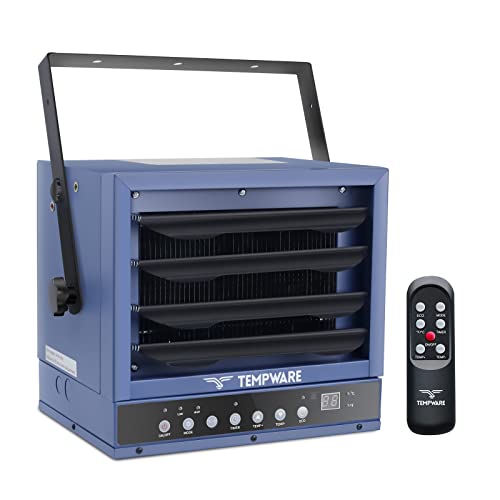
The TEMPWARE ceiling-mount heater is engineered for larger garages and workshops, with adjustable louvers and angle to direct air. It supports variable power from 6,250W to 7,500W (240V), features ECO and timer modes, and an onboard thermostat and overheat protection for safety.
- Key Features: Ceiling mount, adjustable louvers, full-function remote, ECO mode, 12-hour timer, built-in thermostat.
- Performance Notes: High output suitable for large spaces—ceiling mounting can free floor/bench space and deliver broad coverage when ducted or angled correctly.
- Installation: Hardwired 240V installation required; mounting hardware and professional electrical hookup recommended.
Buying Guide: Choosing The Right Electric Forced Air Heater
Selecting the correct forced air electric heater depends on space size, installation constraints, power availability, portability needs, and safety features. Below are key considerations to guide purchase decisions.
Call 888-896-7031 for Free Local HVAC Quotes – Compare and Save Today!
Heating Capacity And Coverage
Match the heater’s wattage or BTU rating to the area you want to heat. Small portable units (around 1500W) are suitable for rooms or spot heating up to ~150–200 sq ft. Hardwired or ceiling models with multiple kilowatts (5,000W to 7,500W+) are better for garages and workshops covering several hundred to over a thousand square feet.
Power Supply And Installation
Confirm available circuits and whether hardwiring is required. Portable plug-in heaters run on standard 120V circuits; larger forced air units typically require 240V dedicated circuits and professional installation. Units with selectable power modes (7kW/10kW) can adapt to different breaker capacities but still need appropriate wiring.
Mounting Type And Air Distribution
Decide between portable floor units, wall-mounted, or ceiling-mounted systems. Ceiling or wall-mounted forced-air heaters often offer broader distribution and keep floor space clear. Portable models provide flexibility and immediate spot heating but may not cover large areas evenly.
Control Features And Convenience
Look for thermostats, remote controls, timers, and ECO modes for better temperature management and energy savings. LED displays and remote operation improve convenience for garage or workshop use where access can be limited.
Safety And Durability
Essential safety features include overheat protection, thermal cutoffs, and tip-over switches for portable units. For harsh jobsite environments, steel housings and robust construction increase durability. Verify certifications and manufacturer safety notes before installation.
Noise And Fan Characteristics
Forced air heaters use fans to move heat; noise levels vary by model. For indoor workspaces where noise matters, check user feedback or spec sheets for fan noise. Some ceiling or ducted installations can lower perceived noise at occupant level.
Energy Efficiency And Operating Cost
Electric forced air heaters convert most input power to heat, but operating cost is tied to wattage and run time. Consider units with ECO or automatic shutoff functions to reduce runtime and energy consumption. Evaluate whether a lower-wattage portable unit for spot heating or a higher-wattage central unit for whole-space heating yields better cost-effectiveness for your use case.
Maintenance And Serviceability
Inspect accessibility for fan cleaning, air intake, and replacement of parts. Hardwired and ceiling models should allow safe access for service. Look for units with clear maintenance guidance and available replacement parts or service documentation.
Comparison Perspectives
- Small Space / Portability: Choose a 1500W ceramic forced air unit for portability and plug-in convenience.
- Whole-Garage Heating: Opt for hardwired 5,000W+ forced-air garage heaters or ceiling-mounted units for even coverage.
- Jobsite Flexibility: Consider dual-output or heavy-duty models with selectable power to match available circuits.
- Energy Management: Units with timers, ECO modes, and thermostats reduce wasted runtime and lower operating costs.
When evaluating models, balance coverage needs with installation complexity and safety requirements. Professional installation is recommended for any hardwired 240V systems to ensure compliance with local electrical codes and to maximize safety and performance.
Tips for Getting the Best HVAC Prices
- Prioritize Quality Over Cost
The most critical factor in any HVAC project is the quality of the installation. Don’t compromise on contractor expertise just to save money. - Check for Rebates
Always research current rebates and incentives — they can significantly reduce your overall cost. - Compare Multiple Quotes
Request at least three estimates before making your choice. You can click here to get three free quotes from local professionals. These quotes include available rebates and tax credits and automatically exclude unqualified contractors. - Negotiate Smartly
Once you've chosen a contractor, use the proven strategies from our guide — How Homeowners Can Negotiate with HVAC Dealers — to get the best possible final price.