
Quick Overview: This guide compares ceiling-mounted and hanging electric heaters suitable for garages and workshops, with a focus on units that operate on 120V or offer easy ceiling mounting. The summary table below highlights the selected models, mounting style, and key power notes to help you compare at a glance.
| Product | Mount Type | Voltage / Power Notes | Best For |
|---|---|---|---|
| Dr Infrared Heater DR-238 Carbon Infrared | Ceiling / Hanging | 120V — 900W / 1200W / 1500W | Small garages, spot warming, outdoor/indoor use |
| Heat Storm HS-6000-GC | Ceiling / Wall | Hardwired (model supports multiple wattages) | Medium garages needing high output and Wi‑Fi control |
| sundate 1500W Infrared Ceiling Heater | Ceiling or Wall | 1500W — commonly 120V configuration | Patio-style infrared heat for small to medium garages |
| Danluke 1500W Outdoor Hanging Heater | Ceiling / Hanging | 1500W — IP34 rated (typically 120V plug-in) | Garages with occasional outdoor exposure or covered porches |
| TEMPWARE 5000W Ceiling Mount Shop Heater | Ceiling / Wall | 240V hardwired — higher output | Larger, well-insulated garages needing stronger heat |
Content Navigation
- Dr Infrared Heater DR-238 Carbon Infrared Outdoor Heater
- Heat Storm HS-6000-GC Heater
- Ceiling Electric Outdoor Heater 1500W Infrared by sundate
- Electric Outdoor Heater 1500W Hanging Heater by Danluke
- TEMPWARE 5000-Watt Ceiling Mount Shop Heater
- Buying Guide: Choosing A Ceiling-Mounted Electric Garage Heater
Dr Infrared Heater DR-238 Carbon Infrared Outdoor Heater
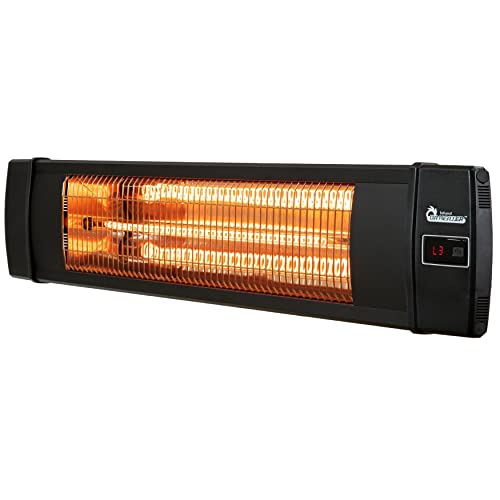
This compact carbon infrared heater is designed for both indoor and outdoor use and is one of the few true 120V ceiling/hanging electric heater options aimed at patios and small garages. It uses carbon fiber heating elements for instant, odorless radiant heat without moving parts.
- Mounting: Hanging or ceiling bracket — straightforward for overhead installation in covered garages.
- Power Settings: 900W, 1200W, 1500W — plug-and-play on standard 120V circuits.
- IP55 Rating: Suitable for covered outdoor areas and garages where occasional moisture or dust is present.
- Controls: Remote controlled with instantaneous infrared warmth, making it effective for spot heating work zones.
Ideal For: Small garages, hobby shops, and covered carports needing targeted radiant heat without rewiring. Note that infrared heaters warm objects and people directly rather than heating large air volumes.
Heat Storm HS-6000-GC Heater

The Heat Storm HS-6000-GC is a ceiling- or wall-mounted unit designed for commercial and residential garage spaces. It advertises adjustable output and quiet operation with smart connectivity on certain models.
Call 888-896-7031 for Free Local HVAC Quotes – Compare and Save Today!
- Mounting: Ceiling or wall hardwired installation recommended to secure overhead placement.
- Output Range: Lists 3000 to 6000 watts depending on configuration — typically requires a dedicated circuit and professional wiring.
- Smart Features: Some variants include Wi‑Fi control for scheduling and remote adjustments via phone.
- Use Case: Effective for garages and workshops where centralized ceiling-mounted heating and remote control matter.
Ideal For: Medium-size garages or workshops that can accommodate hardwired installation and higher wattage. Verify voltage/wiring requirements for your specific model before purchase, as many installations will need 240V circuits for higher outputs.
Ceiling Electric Outdoor Heater 1500W Infrared by sundate

This 1500W infrared heater offers fast warm-up and multiple control options. It’s marketed for patios and garages, with IP65 waterproofing in some listings and included brackets for ceiling mounting.
- Mounting: Brackets included for wall or ceiling mounting; adjustable angle for directional heating.
- Heating: Infrared carbon fiber tube provides near-instant radiant warmth; multiple heat levels and timers on some models.
- Durability: Rustproof metal cover and high IP rating on some configurations, making it suitable for semi-exposed garage spaces.
- Controls: Remote and Wi‑Fi control options available on certain SKUs for scheduling.
Ideal For: Garages with occasional exposure to moisture or dust, covered porches, and areas that benefit from directional radiant heating. Confirm whether the unit ships in a 120V plug-in configuration or requires hardwiring.
Electric Outdoor Heater 1500W Hanging Heater by Danluke

Danluke’s 1500W hanging heater is a compact infrared unit with an IP34 rating and safety protections. It’s designed as an affordable 120V-style plug-in solution for overhead mounting in garages and covered outdoor areas.
Call 888-896-7031 for Free Local HVAC Quotes – Compare and Save Today!
- Mounting: Hanging or fixed ceiling mount with adjustable height; suitable for covered garage ceilings.
- Safety: Tip-over and overheat protection, plus IP34 waterproofing for resistance to splashes and dust.
- Heat Delivery: 360° infrared coverage for direct warming of occupants and work surfaces.
- Portability: Typically sold as a plug-in unit for simple installation on standard 120V circuits.
Ideal For: Garage users seeking a plug-and-play 120V infrared heater that mounts overhead and provides fast spot heating. Check mounting clearances and local electrical codes before installing in a garage space.
TEMPWARE 5000-Watt Ceiling Mount Shop Heater

TEMPWARE’s 5000W unit is a powerful fan-forced heater that can be mounted on the ceiling to distribute warm air across a larger garage. This model is designed for more demanding spaces and generally requires 240V hardwired installation.
- Mounting: Ceiling or wall mount with adjustable louvers for directional airflow.
- Power Settings: Three heat levels (3000W / 4000W / 5000W) to modulate output based on need.
- Construction: Heavy-duty steel housing and ETL certification for safety in shop environments.
- Coverage: Rated to heat large garages or workshops where airflow-based heating is preferred.
Ideal For: Larger garages and workshops that require whole-space air heating rather than direct radiant spot heat. Installation will commonly need a 240V dedicated circuit; consult an electrician for code compliance.
Buying Guide: Choosing A Ceiling-Mounted Electric Garage Heater
Selecting the right ceiling-mounted electric heater for a garage depends on several technical and situational factors. Below are the core considerations to compare models objectively.
Voltage And Electrical Requirements
120V vs 240V: 120V heaters (typically 1500W or less) are plug-in and easier to install. They’re best for spot heating and small garages. 240V units deliver higher wattage for whole-space heating but usually require professional hardwiring and dedicated circuits.
Heating Method: Radiant Vs Fan-Forced
- Radiant (Infrared): Heats objects and people directly, efficient for targeted work areas and open garage doors. Works well in drafty spaces.
- Fan-Forced (Convection): Warms air and circulates it to raise ambient temperature across the entire garage; better for insulated spaces and whole-room comfort.
Mounting And Directional Control
Ceiling Brackets and Adjustable Louvers: Choose units with adjustable mounting angles and louvers to direct heat toward workbenches or vehicle bays. Hanging heaters are useful where ceiling height is high; ensure proper clearance from combustible materials.
Safety Features And Certifications
- Certifications: Look for ETL, UL, or CE listings indicating safety testing.
- Protection: Overheat shutoff, tip-over protection (for portable models), and thermal cut-out switches are important for garage environments.
- IP Rating: Higher IP ratings (IP44, IP55, IP65) help if your garage is exposed to moisture or dust.
Coverage Area And Output
Match wattage to garage size: a 1500W 120V infrared unit is effective for small garages or spot areas. For larger spaces, multiple infrared units or a single higher-wattage hardwired unit (240V) may be necessary. Check manufacturer coverage estimates and factor in insulation quality, ceiling height, and typical garage door usage.
Control Options And Convenience
Remote/Wi‑Fi Controls: Remote control, timers, and Wi‑Fi connectivity provide convenience for pre-heating your garage. Thermostatic control helps maintain set temperatures and avoid energy waste.
Durability And Installation Environment
For semi-outdoor garages or partially exposed installations, choose models with weatherproof housings and higher IP ratings. For fully enclosed insulated garages, fan-forced heaters with larger airflow may be more efficient.
Installation And Maintenance Considerations
- Professional Wiring: Hardwired 240V heaters should be installed by a licensed electrician to meet local codes and ensure correct circuit sizing.
- Clearance And Mounting Strength: Ensure ceilings and mounts can support the heater’s weight and follow manufacturer clearances to combustible surfaces.
- Maintenance: Periodic cleaning of louvers and fans and inspection of mounting hardware extend lifespan and performance.
Comparison Perspectives
- Small Garage/Plug-In Need: Choose 120V infrared (Dr Infrared DR-238, Danluke) for quick installation and spot heat.
- Durability/Outdoor Exposure: Pick units with IP-rated housings (sundate, DR-238 variants) for semi-exposed garages or covered patios.
- Whole-Garage Heating: Use higher-wattage fan-forced hardwired units (TEMPWARE, Heat Storm variants) for consistent ambient temperature across larger spaces.
- Smart Control & Scheduling: Select Wi‑Fi or remote-capable models (Heat Storm, sundate options) for remote scheduling and convenience.
When comparing models, verify the exact voltage/wiring needs on the Amazon product page and the manufacturer’s manual. For hardwired, high-wattage heaters, consult a qualified electrician to confirm circuit capacity and safe installation. For plug-in 120V units, confirm plug type, mounting hardware, and local code allowances for overhead electrical devices in garages.
Tips for Getting the Best HVAC Prices
- Prioritize Quality Over Cost
The most critical factor in any HVAC project is the quality of the installation. Don’t compromise on contractor expertise just to save money. - Check for Rebates
Always research current rebates and incentives — they can significantly reduce your overall cost. - Compare Multiple Quotes
Request at least three estimates before making your choice. You can click here to get three free quotes from local professionals. These quotes include available rebates and tax credits and automatically exclude unqualified contractors. - Negotiate Smartly
Once you've chosen a contractor, use the proven strategies from our guide — How Homeowners Can Negotiate with HVAC Dealers — to get the best possible final price.