
Choosing the right electric heater for spaces near 1,000 square feet requires balancing heating capacity, efficiency, safety features, and installation or placement flexibility. The table below summarizes five electric heaters selected for their relevance to larger rooms, supplemental heating for open plans, garages, or existing fireplace inserts.
| Product | Brand | Primary Heating Claim |
|---|---|---|
| Duraflame Freestanding Electric Fireplace Stove Heater | Duraflame | Up to 1,000 Sq. Ft. (Infrared) |
| Duraflame Electric Log Set Faux Logs Insert | Duraflame | Up to 1,000 Sq. Ft. (Infrared Insert) |
| NewAir 5600W Portable Electric Garage Heater | NewAir | Heats Up To 600 Sq. Ft.; High Power 5,600W |
| LifeSmart Electric Tower Infrared Quartz Space Heater | LIFESMART GLOBAL | Infrared Heating; Programmable Heat Settings |
| Dura Heat EUH1465 Electric Forced Air Heater | Dura Heat | 1500W PTC Ceramic Forced Air |
Content Navigation
- Duraflame Freestanding Electric Fireplace Stove Heater
- Duraflame Electric Log Set 1,000 Sq Ft Heater
- NewAir 5600W Portable Electric Garage Heater
- LifeSmart Electric Tower Heater With Remote Controls
- Dura Heat EUH1465 Electric Forced Air Heater
- Buying Guide: How To Choose An Electric Heater For ~1,000 Sq. Ft.
- 1. Heating Capacity And Wattage
- 2. Infrared vs Forced-Air Heat
- 3. Room Characteristics
- 4. Placement And Installation
- 5. Electrical Supply And Circuit Considerations
- 6. Safety Features
- 7. Controls, Programmability, And Smart Features
- 8. Noise And Airflow
- 9. Aesthetics And Multi-Function Use
- 10. Cost Efficiency And Supplemental Strategy
- Comparison Perspectives
Duraflame Freestanding Electric Fireplace Stove Heater

Overview: This Duraflame freestanding stove combines decorative elements with infrared heating technology. It is marketed to warm spaces up to 1,000 sq. ft. while providing a realistic flame display and portable placement.
- Design Features: Side viewing windows, opening glass door, and brick-style back panel create a traditional stove look.
- Heating Tech: Uses infrared heat suitable for supplemental heating of large open rooms.
- Portability: Built to be moved between rooms for on-demand supplemental warmth.
- Use Case: Useful where decor and heating both matter—living rooms, open dens, rental units with existing layouts.
Notes: Infrared heaters typically warm objects and people directly rather than solely heating air, which helps in larger open spaces. Verify room layout and insulation when relying on a single unit for a large area.
Duraflame Electric Log Set 1,000 Sq Ft Heater

Overview: This Duraflame electric log set is intended as an insert for existing fireplaces and lists heating coverage up to 1,000 sq. ft. It focuses on visual realism plus supplemental infrared heat.
Call 888-896-7031 for Free Local HVAC Quotes – Compare and Save Today!
- Realistic Flames: Lifelike logs and flame effects provide ambience even when heat is off.
- Remote Control: Adjust thermostat, flame intensity, and timer from a distance.
- Infrared Heat: Designed to produce comfortable supplemental warmth without extensive airflow noise.
- Installation: Fits into existing fireplace openings—measurements and clearance should be checked before purchase.
Notes: As an insert, performance depends on how well the unit fits the fireplace cavity and the home’s overall heat retention. Use as supplemental heat or décor-enhanced warming source.
NewAir 5600W Portable Electric Garage Heater

Overview: The NewAir 5600W model is a high-power forced-air electric heater intended for garages and workshops. It specifies heating up to 600 sq. ft. but stands out for raw wattage and robust construction.
- Power: 5,600 watts of fan-forced heating—higher capacity compared with typical household 1,500W units.
- Build: Steel body and powder-coated finish for durability in garage or workshop environments.
- Controls: Thermostat with auto-fan control to maintain set temperatures.
- Use Case: Best for poorly insulated or taller-volume spaces where higher heat output is needed.
Notes: This unit requires appropriate electrical supply and may need dedicated circuit capacity. While it does not claim 1,000 sq. ft., its high wattage can be an advantage in spaces with high ceilings or intermittent use.
LifeSmart Electric Tower Heater With Remote Controls

Overview: The LifeSmart LifePro tower uses infrared quartz heating and is designed for even heat distribution. It features programmable options and two remotes for convenience.
Call 888-896-7031 for Free Local HVAC Quotes – Compare and Save Today!
- Infrared Technology: Promotes direct-object warming and even distribution across a room.
- Programmability: Multiple heat settings and timers adapt operation to daily schedules.
- Design: Tower form factor improves footprint efficiency and airflow patterns.
- Use Case: Suitable as supplemental heating in living rooms, offices, or open-plan areas where discrete footprint and quiet operation matter.
Notes: Single 1,500W towers are generally optimized for supplemental heating rather than whole-home solutions for 1,000 sq. ft., but infrared distribution and placement can improve effective coverage.
Dura Heat EUH1465 Electric Forced Air Heater
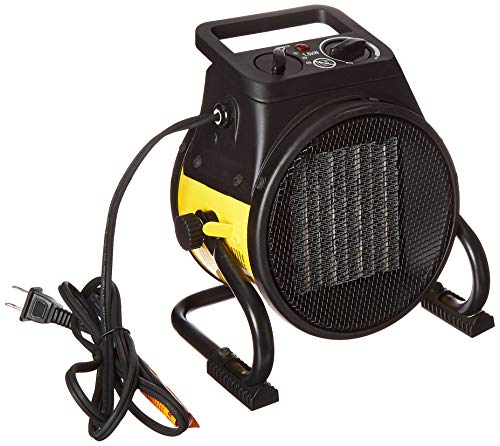
Overview: The Dura Heat EUH1465 is a compact forced-air electric heater using PTC ceramic elements to provide rapid warmth. It targets small to medium spaces and workshop use.
- Power Delivery: 1500W PTC ceramic heating for fast, consistent warmth.
- Construction: Rugged steel body suitable for garages and workspaces.
- Modes: Heat and fan-only settings provide year-round utility.
- Use Case: Portable spot heating, under desk warmth, or supplementary garage heat where concentrated airflow is helpful.
Notes: As a 1,500W unit, expect best results in smaller zones; multiple units or a larger capacity heater is typically required for rooms approaching 1,000 sq. ft.
Buying Guide: How To Choose An Electric Heater For ~1,000 Sq. Ft.
Selecting an electric heater for a space near 1,000 square feet requires focusing on capacity, efficiency, distribution, and safety. The following factors clarify tradeoffs and practical considerations.
1. Heating Capacity And Wattage
Electric heating roughly translates to 10 watts per square foot for moderate climates and good insulation. For 1,000 sq. ft., that math suggests around 10,000 watts, which is far above common single-unit household limits. That means:
- Expect to use multiple heaters or a purpose-built high-capacity unit (e.g., garage/workshop heaters) for full coverage.
- Infrared units often feel warmer at lower wattage by heating objects and people directly rather than trying to heat all air volume.
2. Infrared vs Forced-Air Heat
Infrared Heaters warm surfaces and occupants quickly and are efficient for open or drafty areas where air convection loses heat. Forced-air Heaters heat the air and can circulate warmth across a room more evenly but may be less efficient in large, poorly insulated spaces.
3. Room Characteristics
- Ceiling Height: Higher ceilings increase air volume—infrared or zone heating reduces lost energy to unused upper airspace.
- Insulation & Drafts: Well-insulated spaces need less continuous wattage; drafty garages require stronger output.
- Room Layout: Open-plan areas may need multiple units placed strategically for balanced coverage.
4. Placement And Installation
Decide between portable units (freestanding, tower, log inserts) and mounted or dedicated heaters (garage or workshop units). Consider clearance, airflow, and whether an insert requires fitting into an existing fireplace.
5. Electrical Supply And Circuit Considerations
High-wattage heaters may need dedicated circuits or special wiring. Verify the household panel capacity and outlets before selecting a 3,000W+ or 5,600W unit to avoid tripped breakers.
6. Safety Features
- Overheat Protection: Shuts unit off if internal temps exceed safe limits.
- Tip-Over Switch: Important for portable freestanding units.
- Cool-To-Touch Surfaces: Useful around children or pets.
- Certifications: Look for UL/ETL listings for added assurance.
7. Controls, Programmability, And Smart Features
Remote controls, timers, and programmable thermostats reduce runtime and save energy. Zone-targeting with timers or smart plugs can limit heating to occupied periods and areas.
8. Noise And Airflow
Infrared and fireplace-style units tend to be quieter. Forced-air heaters with fans provide better circulation but can be noisier; choose based on room use (sleeping vs workshop).
9. Aesthetics And Multi-Function Use
If the heater is in a living area, visual features like flame effects and log inserts combine ambience with function. Garage/workshop units prioritize durability over looks.
10. Cost Efficiency And Supplemental Strategy
Using supplemental heating (space heaters) in occupied zones while lowering whole-home thermostats is an energy strategy. Calculate expected runtime and wattage to estimate energy use and align with budget goals.
Comparison Perspectives
Large Living Areas: Duraflame freestanding or insert units with infrared tech emphasize comfort and ambience for open living rooms up to the manufacturer’s suggested coverage.
Poorly Insulated Or High-Volume Spaces: High-wattage forced-air units like the NewAir 5600W provide substantial output and are better at raising ambient air temperature quickly, though electrical demands increase.
Targeted Zone Heating: 1,500W towers and ceramic forced-air heaters (LifeSmart, Dura Heat) are effective for single rooms, offices, or supplementing central HVAC in specific zones.
Decor-First Solutions: Electric log sets and freestanding stove heaters offer dual-purpose visual appeal and supplemental warmth, useful where fireplace aesthetics are desired along with heat.
Tips for Getting the Best HVAC Prices
- Prioritize Quality Over Cost
The most critical factor in any HVAC project is the quality of the installation. Don’t compromise on contractor expertise just to save money. - Check for Rebates
Always research current rebates and incentives — they can significantly reduce your overall cost. - Compare Multiple Quotes
Request at least three estimates before making your choice. You can click here to get three free quotes from local professionals. These quotes include available rebates and tax credits and automatically exclude unqualified contractors. - Negotiate Smartly
Once you've chosen a contractor, use the proven strategies from our guide — How Homeowners Can Negotiate with HVAC Dealers — to get the best possible final price.