
Finding the right electric heater for a roughly 600 sq ft garage means balancing output, mounting style, electrical requirements, and safety. Below is a compact comparison of five electric heaters suited to garage and workshop spaces near this size, followed by individual product breakdowns and a detailed buying guide to help you choose the best fit for your space and setup.
| Product | Type | Notable Feature |
|---|---|---|
| NewAir 5600W Portable Electric Garage Heater | Portable/Floor Or Wall | Rated For Up To 600 Sq. Ft., Thermostat |
| Dura Heat EWH5510 Electric Forced Air Heater | Hard-Wired Wall/Heat Gun Style | Covers Up To 750 Sq. Ft., 240V / 5,000W |
| Dr Infrared Heater Portable Space Heater | Portable/Infrared + PTC | Dual Heating System, Quiet Fan |
| Dura Heat EUH1465 Electric Forced Air Heater | Portable Forced Air | 1500W PTC Ceramic, Pivoting Base |
| Heat Storm HS-1500-PHX-WIFI Infrared Heater | Wall-Mounted Infrared | Wi‑Fi Control, Space-Saving Wall Mount |
Content Navigation
- NewAir 5600W Portable Electric Garage Heater
- Dura Heat EWH5510 Electric Forced Air Heater
- Dr Infrared Heater Portable Space Heater
- Dura Heat EUH1465 Electric Forced Air Heater
- Heat Storm HS-1500-PHX-WIFI Infrared Heater
- Buying Guide: Choosing An Electric Heater For A 600 Sq Ft Garage
- 1. Required Heat Output And Coverage
- 2. Power Source And Electrical Requirements
- 3. Permanent vs Portable Installation
- 4. Heating Method: Forced-Air vs Infrared
- 5. Safety Features
- 6. Controls, Thermostat Accuracy, And Scheduling
- 7. Durability And Build For Garage Conditions
- 8. Noise And Air Movement
- 9. Multi-Perspective Comparison Tips
- 10. Installation And Code Considerations
- 11. Sizing Checklist
NewAir 5600W Portable Electric Garage Heater

The NewAir 5600W is designed specifically for workshops and garages and is explicitly rated to heat up to 600 sq. ft. Its core features include a high-output fan-forced heating element, a rugged steel body with a black powder-coated finish for durability, and an integrated thermostat with auto-fan temperature control. The unit also includes a convenient six-foot cord wrap and carrying handle for relocation and storage.
Key points based on listed features: it delivers 5,600 watts for substantial heat output, is built to withstand workshop conditions, and maintains set temperatures with auto-fan control. This model suits users wanting a powerful, portable electric heater rated for the target area without permanent installation.
Dura Heat EWH5510 Electric Forced Air Heater

The Dura Heat EWH5510 is a hard-wired 240V/5,000W electric heater designed for garage applications and is listed to cover up to 750 sq. ft. It requires professional installation and a 30A circuit. Features include remote control operation, an adjustable thermostat with an LED display (45–99°F), and an electric design optimized for constant, wide-area heating.
Call 888-896-7031 for Free Local HVAC Quotes – Compare and Save Today!
From the provided features: this unit emphasizes professional hard-wiring, remote thermostat control, and coverage slightly larger than 600 sq. ft., making it a candidate when a permanent, high-capacity solution is preferred and appropriate electrical service is available.
Dr Infrared Heater Portable Space Heater
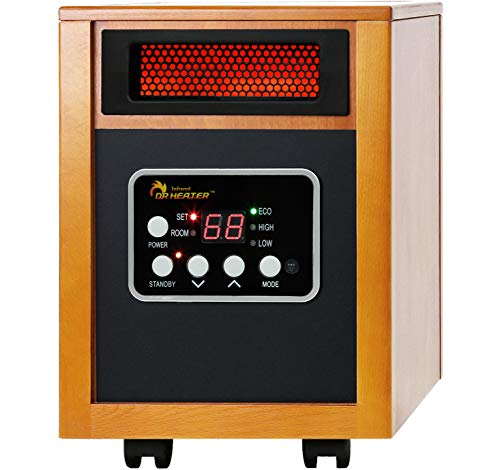
The Dr Infrared Heater uses a dual heating system combining infrared quartz tubes and PTC elements to deliver efficient warmth and is rated for large rooms. It includes safety features like tip-over and overheat protection, a 12-hour timer, remote control, and a quiet high-pressure blower. The manufacturer rates it around 5200 BTU equivalent and highlights energy-saving modes.
Although its nominal power is 1500W, the combination of infrared and PTC heating improves perceived warmth and distribution. This model suits users who prefer a portable heater with infrared characteristics and quiet operation for semi-insulated garages or workshops with modest heating needs.
Dura Heat EUH1465 Electric Forced Air Heater
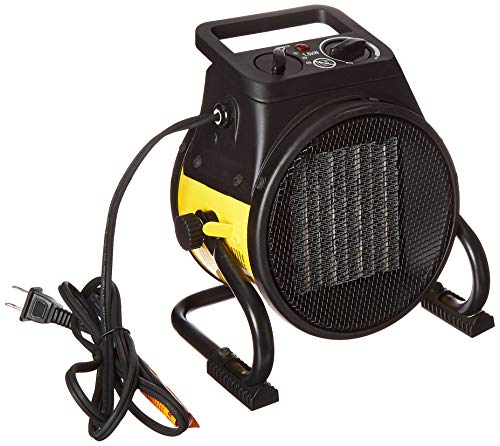
The Dura Heat EUH1465 is a compact forced-air heater offering 1500W PTC ceramic heating and a pivoting base for directional airflow. The unit is built with a durable steel body intended for workshop and garage duty and includes heat and fan-only settings for versatility.
Call 888-896-7031 for Free Local HVAC Quotes – Compare and Save Today!
Based on stated features: this heater is best-suited for spot-warming or supplementing other heat sources rather than being the sole heater for a full 600 sq. ft. garage. It is a practical option for localized task heating, short-term use, or as an auxiliary heat source in a multi-zone approach.
Heat Storm HS-1500-PHX-WIFI Infrared Heater

The Heat Storm HS-1500-PHX is a wifi-enabled wall-mounted infrared heater designed to save floor space and provide targeted radiant heat. It offers smartphone control, a touch screen with digital thermostat, remote control, and safety features. The space-saving design makes it suitable where floor clearance matters.
From listed features: its infrared operation and wall mounting favor direct radiant comfort, but its 1500W capacity suggests it will serve best in insulated garages or as supplemental heat. The Wi‑Fi control and programmable operation are practical for pre-heating a workspace before arrival.
Buying Guide: Choosing An Electric Heater For A 600 Sq Ft Garage
Selecting the right heater for a 600 sq. ft. garage involves examining heat output, electrical capacity, installation type, insulation, safety features, and controls. Below are the critical considerations to compare options objectively.
1. Required Heat Output And Coverage
Calculate required heat load roughly: well-insulated garages need less wattage than uninsulated ones. As a rough rule, 10–20 watts per sq. ft. is a starting point; for 600 sq. ft., that implies 6,000–12,000 watts for very cold/uninsulated spaces. Portable 1500W units can help in insulated garages or for spot heating, while 5,000–10,000W hard-wired units provide whole-space heating.
2. Power Source And Electrical Requirements
Check available circuits: many homes have 120V circuits limiting portable heater wattage to ~1500W. Dedicated 240V circuits (30A or 50A) support 5,000W–10,000W garage heaters but require professional installation. Match the heater’s electrical needs to your garage wiring to avoid overloads and ensure code compliance.
3. Permanent vs Portable Installation
Wall- or ceiling-mounted hard-wired heaters deliver even whole-space heat and preserve floor space but need installation. Portable heaters offer flexibility and lower upfront complexity but may not reach whole-garage comfort in cold conditions. Decide whether you want a fixed solution or a movable supplement.
4. Heating Method: Forced-Air vs Infrared
Forced-air heaters push heated air to raise ambient temperature quickly and often rely on insulation to retain heat. Infrared (radiant) heaters warm objects and people directly, which can be efficient for spot heating and workshops where you need direct warmth at benches. Consider mixing methods: radiant for work areas, forced-air for overall space.
5. Safety Features
Key safety features include overheat protection, tip-over shutoff, thermal cutouts, and certified housing for workshop conditions. For mounted units, ensure proper clearances and mounting hardware per manufacturer instructions. Look for units with robust construction if the heater will be in an active workshop.
6. Controls, Thermostat Accuracy, And Scheduling
Thermostat precision, remote control, timers, and smart features (Wi‑Fi/Alexa/Google) improve comfort and energy management. Accurate thermostats and scheduling let you preheat the space and reduce run time. For larger spaces, zoning or multiple units with individual controls can be more efficient.
7. Durability And Build For Garage Conditions
Garages may expose heaters to dust, tool impact, and fluctuating temperatures. Look for steel construction, powder-coated finishes, and serviceable air intakes. Units designed for light industrial or garage use typically include sturdier housings and mounting hardware for longer service life.
8. Noise And Air Movement
Forced-air models use fans that can be audible; check noise ratings or user feedback if quiet operation matters. Infrared heaters are generally quieter but do not circulate air. Consider the trade-off between airflow for drying/air exchange and the distraction of fan noise during tasks.
9. Multi-Perspective Comparison Tips
- Single Large Unit vs Multiple Smaller Units: One hard-wired 5k–10kW unit can heat evenly, but multiple smaller units provide redundancy and targeted control.
- Insulation Level Impact: Better insulation reduces required wattage and operating cost; prioritize sealing doors and walls before upsizing heaters.
- Temporary vs Year-Round Use: Portable or plug-in heaters suit intermittent use; permanent installs are preferable for frequent daily heating.
- Cost To Operate: Higher wattage units increase electrical draw; compare runtime expectations and thermostat strategies to manage energy use.
10. Installation And Code Considerations
Hard-wired 240V heaters often require a licensed electrician and must meet local electrical codes. Ceiling or wall mounts have specified clearances from flammable materials; follow the manual for safe placement. Confirm circuit amperage and breaker size before purchase.
11. Sizing Checklist
- Measure the garage square footage and ceiling height.
- Assess insulation: walls, doors, windows, and ceiling.
- Estimate desired temperature rise in coldest conditions.
- Match heater wattage/BTU to load with allowance for heat loss.
Using the product breakdowns above and the buying guide, prioritize heaters that match your garage’s insulation, electrical capacity, and whether you want a permanent or portable solution. Consider mixing radiant and forced-air products or zoning with multiple smaller units for flexibility and energy control.
Tips for Getting the Best HVAC Prices
- Prioritize Quality Over Cost
The most critical factor in any HVAC project is the quality of the installation. Don’t compromise on contractor expertise just to save money. - Check for Rebates
Always research current rebates and incentives — they can significantly reduce your overall cost. - Compare Multiple Quotes
Request at least three estimates before making your choice. You can click here to get three free quotes from local professionals. These quotes include available rebates and tax credits and automatically exclude unqualified contractors. - Negotiate Smartly
Once you've chosen a contractor, use the proven strategies from our guide — How Homeowners Can Negotiate with HVAC Dealers — to get the best possible final price.