
Choosing the right electric heater for your house depends on room size, safety features, noise, and control options. Below is a quick comparison of five top indoor heaters selected for household use.
| Product | Type | Key Features |
|---|---|---|
| Dreo 25″ Ceramic Space Heater | Tower Ceramic | Fast heat, remote, thermostat, safety protections |
| Dreo Smart Wall Heater WH719S | Wall-Mount PTC | 120° oscillation, app/Alexa, precise thermostat |
| Dreo 1500W Portable PTC Heater | Portable PTC | Digital display, 5 modes, 1°F increments |
| Comfort Zone CZ35E | Fan-Forced Portable | 600/1500W, adjustable thermostat, energy saving |
| Comfort Zone CZ798BK Utility Heater | Utility/Fan Utility | 1500W, adjustable thermostat, fan-only, garage use |
Content Navigation
Dreo Space Heater 25″ Tower

Type: Tower ceramic space heater designed for large rooms. The model emphasizes rapid warm-air delivery using an upgraded hyperamics thermal design and an extended impeller to increase reach.
Safety And Controls: Includes a remote control, thermostat, tip-over and overheat protection, a reinforced plug, V0 flame retardant materials, and a child lock setting. Certified by ETL for electrical safety.
Performance And Noise: Rated to deliver fast heat at higher airflow (11.5 ft/s). The airflow design claims low noise operation down to about 32 dB, suitable for bedrooms and offices where quieter operation is preferred.
Use Case: Positioned for large rooms where extended warm-air reach and quiet operation matter. The combination of remote, programmable thermostat, and safety features targets household living spaces including bedrooms and open living areas.
Call 888-896-7031 for Free Local HVAC Quotes – Compare and Save Today!
Dreo Smart Wall Heater WH719S

Type: Wall-mounted PTC ceramic heater with wide vertical oscillation to distribute heat from top to bottom across a room.
Smart Features: Works with the Dreo app and integrates with Alexa and Google Home. Offers remote scheduling, app-based control, and a 24-hour timer.
Thermostat Accuracy: Adjustable temperature range from 41°F to 95°F with 1°F increments and fast, stable heating using a PTC element with precise control.
Distribution And Efficiency: The 120° vertical oscillation aims to improve evenness of heat across a wall-mounted footprint, making it suitable for bedrooms, small living rooms, or spaces where wall installation saves floor space.
Dreo Portable 1500W PTC Heater

Call 888-896-7031 for Free Local HVAC Quotes – Compare and Save Today!
Type: Compact PTC ceramic portable heater with digital display and multiple modes.
Control And Modes: Features a digital display, remote control, 12-hour timer, and 5 modes for flexible operation. Precision thermostat with 1°F increments offers tight temperature control.
Safety: Incorporates enhanced tip-over detection, overheat protection, safety plug, and flame-retardant materials certified by ETL.
Performance: Designed for fast heat delivery and enhanced circulation via a heat funnel design. Suited for bedrooms, small living rooms, or office spaces where compact size and digital controls are preferred.
Comfort Zone CZ35E Portable Heater
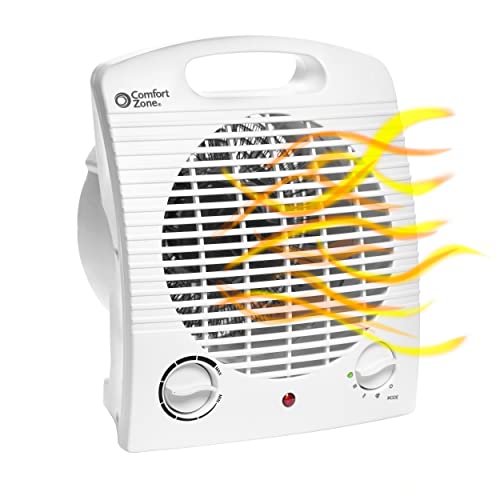
Type: Fan-forced portable electric heater with adjustable thermostat and two heat settings.
Energy Efficiency: Offers 600W and 1500W settings and advertises improved energy efficiency over previous models through an “Energy Save Technology” design.
Usability And Safety: Features an adjustable thermostat for user comfort, overheat sensor, and tip-over switch with a cool-touch housing for placement in living spaces or bedrooms.
Use Case: Suited for small rooms, home offices, or supplemental heating where a simple mechanical control layout and a fan-forced output are adequate. The fan-only setting can be used for air circulation without heat.
Comfort Zone CZ798BK Utility Heater

Type: Milkhouse-style utility heater rated at 1500W designed for garages, workshops, greenhouses, or similar enclosed utility spaces.
Heat Settings And Controls: Rotary adjustable thermostat with three settings (including fan-only) for flexible operation. The design supports targeted heating and straightforward control.
Durability And Purpose: Built as a cost-effective, utilitarian option for non-living spaces where robust performance and simple controls matter. Includes overheat protection and tip-over switch for safer use in work areas.
Use Case: Best suited for garages, greenhouses, sheds, or laundry rooms where focused, durable heating is needed rather than quiet or decorative indoor units.
Buying Guide: How To Choose An Electric Heater For Your House
1. Identify The Intended Room And Coverage: Match heater type to room size. Tower and wall-mounted PTC heaters distribute heat broadly and work well in living rooms and bedrooms. Fan-forced and utility heaters suit smaller rooms or utility spaces. Check the manufacturer’s suggested coverage and expect heat distribution to vary by room layout and insulation.
2. Heating Technology: Ceramic/PTC heaters heat quickly and maintain stable temperature. Fan-forced units use a heating element plus a fan to spread air; they warm spaces faster but can be noisier. Wall-mounted or oscillating designs improve distribution for larger or tall rooms.
3. Power And Settings: Typical household portable heaters are 1500W max on standard 120V circuits. Look for multiple power settings (low/high), a thermostat for temperature control, and timers to avoid unnecessary runtime.
4. Safety Features: Prioritize models with tip-over protection, overheat shutoff, cool-touch housing, and ETL/UL certification. Child lock and reinforced plugs add safety in family homes. For garages or damp spaces, confirm suitability and clearances from the manufacturer.
5. Controls And Convenience: Remote controls, digital displays, precise thermostat increments (1°F) and scheduling help maintain comfort with less manual adjustment. Smart features (app, voice control) add convenience but add complexity and potential network considerations.
6. Noise Level: Bedrooms and offices benefit from quieter units (look for low dB ratings). Fan-forced heaters typically produce more sound than PTC ceramic designs optimized for quiet operation.
7. Installation And Placement: Portable units require clear floor space and correct electrical circuits. Wall-mounted models need installation and should be placed to optimize airflow without obstruction. Utility heaters should be placed to avoid moisture and flammable materials.
8. Energy Efficiency And Running Costs: All electric heaters convert nearly all input power to heat, so energy use is proportional to wattage and runtime. Use thermostats and timers to reduce runtime. Zone heating (heating only the occupied rooms) can be more cost-effective than central heating in some cases.
9. Specific Use Cases Comparison:
- Bedrooms/Offices: Choose quiet PTC ceramic towers or compact portable models with timers and low-noise ratings.
- Living Rooms/Open Areas: Consider oscillating wall or tower models for better distribution.
- Garages/Workshops: Utility or milkhouse-style heaters offer rugged performance and direct heat.
- Small Bathrooms/Kitchens: Ensure unit is rated for the environment and positioned to minimize moisture exposure; follow local codes.
10. Longevity And Maintenance: Look for serviceable components, easy-to-clean grills, and replacement parts or a reputable warranty. Regular dusting and keeping vents clear prolong efficiency and lifespan.
11. Final Selection Tips: Balance coverage needs, noise tolerance, and desired features. If wall space is limited, choose floor towers or compact PTC models. For whole-room evenness, favor oscillation and strategic placement near cold spots or doorways.
Tips for Getting the Best HVAC Prices
- Prioritize Quality Over Cost
The most critical factor in any HVAC project is the quality of the installation. Don’t compromise on contractor expertise just to save money. - Check for Rebates
Always research current rebates and incentives — they can significantly reduce your overall cost. - Compare Multiple Quotes
Request at least three estimates before making your choice. You can click here to get three free quotes from local professionals. These quotes include available rebates and tax credits and automatically exclude unqualified contractors. - Negotiate Smartly
Once you've chosen a contractor, use the proven strategies from our guide — How Homeowners Can Negotiate with HVAC Dealers — to get the best possible final price.