
Choosing the right electric HVAC heater depends on room size, wiring, installation, and control needs. The table below summarizes five relevant electric heating products covering portable heaters, hard-wired garage heaters, and smart controls to match different HVAC electric heating scenarios.
| Product | Type | Key Feature |
|---|---|---|
| Dura Heat EWH5510 Electric Forced Air Heater | Hard-Wired Garage Heater (240V) | High output 5,000W with remote thermostat |
| Dura Heat EUH1465 Electric Forced Air Heater | Portable Forced Air Heater | 1500W PTC ceramic, pivoting base |
| NewAir NGH160GA00 Electric Portable Garage Heater | Portable Garage Heater (120V) | Internal thermostat, 200 CFM fan |
| Dreo Space Heater 1500W PTC | Indoor Portable Space Heater | Digital thermostat, remote, safety features |
| Mysa Smart Thermostat LITE | Smart Thermostat For Line-Voltage Heaters | Wi‑Fi control for 120–240V electric baseboard/fan-forced |
Content Navigation
- Dura Heat EWH5510 Electric Forced Air Heater
- Dura Heat EUH1465 Electric Forced Air Heater With Pivoting Base
- NewAir NGH160GA00 120V Electric Portable Garage Heater
- Dreo Space Heater, Portable Electric Heaters With Thermostat
- Mysa Smart Thermostat LITE For Electric Baseboard Heaters
- Buying Guide: How To Choose An Electric HVAC Heater
Dura Heat EWH5510 Electric Forced Air Heater

Type: Hard-wired 240V / 5,000W garage heater requiring professional installation. The unit is designed to deliver widespread warmth, with a claimed coverage area up to 750 sq. ft.
Key Features: Electric garage heater, 17,060 BTU rating, hard-wired 240V design, LED display, remote control with adjustable thermostat settable from 45–99°F. Intended for fixed mounting and central warming of larger garage or workshop spaces.
What To Know: This heater requires proper 240V wiring and a 30A breaker and should be installed by a qualified electrician. The remote thermostat and LED control allow centralized temperature adjustments. Suitable for spaces where a permanently mounted, high-output electric heater is appropriate.
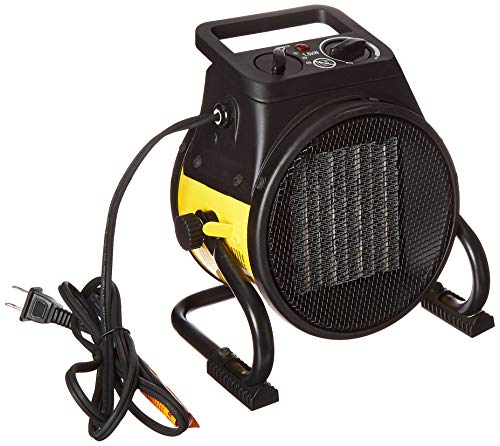
Dura Heat EUH1465 Electric Forced Air Heater With Pivoting Base
Call 888-896-7031 for Free Local HVAC Quotes – Compare and Save Today!
Type: Portable forced air heater delivering 1500W of PTC ceramic heating designed for workshops, garages, and small commercial areas.
Key Features: 1500W PTC ceramic heating element for rapid warm-up, rugged steel construction for durability, and selectable heat and fan-only modes. The pivoting base enables directional warm-air targeting.
What To Know: This unit is suited for spot heating and short-term use where a portable solution is required. The PTC ceramic design limits element overheating and provides stable output. Consider ventilation and outlet capacity when using in tight spaces.
NewAir NGH160GA00 120V Electric Portable Garage Heater

Type: Portable 120V garage heater designed for small garage spaces, with an integrated thermostat and safety features for frequent garage use.
Key Features: Cool-to-the-touch design, internal thermostat, automatic shut-off for overheating protection, adjustable temperature control, two heat modes, tilting head, carry handle, ceramic heating plate, and a 200 CFM fan for forced-air distribution.
Call 888-896-7031 for Free Local HVAC Quotes – Compare and Save Today!
What To Know: This heater provides a balance between portability and dedicated garage heating performance. The 200 CFM fan helps circulate heat more effectively than simple radiant units. It’s intended for spaces that do not require permanent 240V installation but need robust, transportable heating.
Dreo Space Heater, Portable Electric Heaters With Thermostat

Type: Indoor portable space heater with advanced PTC ceramic system and digital controls for room-by-room temperature management.
Key Features: 1500W Hyperamics PTC heating, heat funnel design for extended reach, digital thermostat with 1°F increments (41–95°F), remote control, 12-hour timer, 5 modes, tip-over sensor, V0 flame retardant materials, overheat protection, and ETL certification.
What To Know: The Dreo unit emphasizes precise temperature control and safety certifications. It is suited for bedrooms, offices, and living spaces where programmable thermostats and safety features reduce risk and enhance comfort. Use where 1500W portable heating is sufficient for the space size.
Mysa Smart Thermostat LITE For Electric Baseboard Heaters

Type: Wi‑Fi programmable smart thermostat designed specifically for line-voltage electric heating systems such as baseboard and fan-forced heaters operating at 120–240V.
Key Features: Remote control via a free mobile app, compatibility with HomeKit, Alexa, and Google Home, energy-saving schedules, and claimed energy savings up to 26%. Compatibility warning: requires high/line voltage systems and at least four wires including a neutral or second live wire.
What To Know: Mysa is a control-focused product rather than a heating element. It enables smarter operation of existing electric heaters, improving zoning, scheduling, and remote control. Verify wiring compatibility and system type before purchase, as it is not compatible with low-voltage or two-wire installations.
Buying Guide: How To Choose An Electric HVAC Heater
Understand Heater Type And Application: Distinguish between portable forced-air heaters, garage-mounted hard-wired units, and line-voltage baseboard systems. Portable units are best for spot heating and temporary use. Hard-wired garage heaters provide centralized, continuous heat for larger spaces. Thermostats like Mysa convert existing electric heaters into smart systems.
Match Output To Space: Calculate room or garage square footage and select a heater with appropriate wattage or BTU output. A hard-wired 5,000W unit will serve larger garages more effectively than a 1500W portable heater. Manufacturers often state suggested coverage; treat these as estimates and factor in insulation and ceiling height.
Electrical Requirements And Installation: Check circuit capacity and voltage. Portable 1500W heaters typically run on standard 120V outlets. Large garage or wall-mounted electric heaters may require 240V circuits and a 30A breaker and must be installed by a licensed electrician. Confirm plug type, breaker, and wiring before purchase.
Controls And Thermostats: Consider built-in thermostats, remote controls, and smart thermostat compatibility. Digital thermostats with narrow temperature increments improve comfort and can reduce energy use. Smart thermostats for line-voltage systems (e.g., Mysa) offer scheduling and voice control, but confirm wiring and compatibility first.
Safety Features: Look for tip-over protection, overheat shutoff, cool-to-touch housings, ETL/UL/CSA certification, and flame-retardant materials. Garage and portable heaters should have automatic shutoff if tipped or overheated. For permanent units, ensure proper clearances and mounting per manufacturer instructions.
Air Distribution And Fan Performance: Forced-air units and garage heaters with fans circulate warmth faster and over greater distances than purely radiant models. Higher CFM ratings indicate stronger air movement for faster room warm-up; however, fan noise and dust circulation should be considered.
Durability And Build Quality: Metal housings and ceramic heating elements generally withstand workshop and garage environments better than thin plastic housings. For dusty or high-use spaces, prioritize rugged construction and replaceable filters or maintenance options if applicable.
Energy Efficiency And Operating Cost: Electric resistance heating converts nearly all input energy to heat but can be more costly than gas in some regions. Using programmable thermostats, zoning, and timers reduces runtime and overall energy consumption. Smart thermostats can optimize schedules and reduce waste.
Noise And Placement: Portable forced-air and fan-assisted garage heaters produce noise. If low noise is a priority (bedrooms, offices), choose units with quieter fan designs or radiant/infrared models. Place heaters with adequate clearance from combustible materials and away from moisture sources.
Installation And Maintenance: For hard-wired units, plan professional installation and ensure mounting surfaces and clearances comply with specifications. Portable units require minimal setup but should be inspected for cord condition and stored safely when not in use. Follow manufacturer maintenance schedules.
Compatibility And Replacement Parts: When upgrading existing systems, verify control compatibility, thermostat wiring, and available replacement components. For electric furnaces and air handlers, OEM control boards or sequencers may be necessary for proper sequencing; replacement parts should match model specifications.
Tips for Getting the Best HVAC Prices
- Prioritize Quality Over Cost
The most critical factor in any HVAC project is the quality of the installation. Don’t compromise on contractor expertise just to save money. - Check for Rebates
Always research current rebates and incentives — they can significantly reduce your overall cost. - Compare Multiple Quotes
Request at least three estimates before making your choice. You can click here to get three free quotes from local professionals. These quotes include available rebates and tax credits and automatically exclude unqualified contractors. - Negotiate Smartly
Once you've chosen a contractor, use the proven strategies from our guide — How Homeowners Can Negotiate with HVAC Dealers — to get the best possible final price.