
Sheds and workshops need reliable, efficient heating that fits limited space and varying ventilation. Below is a quick comparison of five electric shed heaters chosen for different mounting styles, power levels, and control features.
| Product | Type | Key Feature |
|---|---|---|
| Heat Storm HS-1500-PHX-WIFI | Wall-Mounted Infrared | Wi‑Fi Thermostat, Wall-Saving Design |
| Dura Heat EUH1465 | Portable Forced-Air | Durable Steel, Pivoting Base |
| TEMPWARE 7500-Watt | Ceiling-Mount Fan-Forced | High Wattage, Timer & ECO Mode |
| NewAir 5600W | Portable Garage Heater | High Output For 600 Sq. Ft. |
| Dr Infrared DR-238 | Infrared Indoor/Outdoor | IP55 Rated, 3 Power Settings |
Content Navigation
- Heat Storm HS-1500-PHX-WIFI Infrared Heater, Wifi Wall Mounted
- Dura Heat EUH1465 Electric Forced Air Heater With Pivoting Base
- TEMPWARE 7500-Watt Digital Fan-Forced Ceiling Mount Shop Heater
- NewAir 5600W Portable Electric Garage Heater
- Dr Infrared Heater DR-238 Carbon Infrared Outdoor Heater
- Buying Guide: Choosing The Right Electric Shed Heater
- 1. Heater Type And How It Warms
- 2. Power, Coverage, And Electrical Requirements
- 3. Safety Features And Mounting Considerations
- 4. Controls, Timers, And Connectivity
- 5. Durability And Build For Workshop Environments
- 6. Heating Efficiency And Operating Cost
- 7. Installation And Maintenance
- 8. Comparison Perspectives
Heat Storm HS-1500-PHX-WIFI Infrared Heater, Wifi Wall Mounted

The Heat Storm HS-1500-PHX-WIFI is a wall-mounted infrared heater designed to save floor space while providing targeted warmth. It includes a touch screen and digital thermostat, plus remote control for local operation. The built-in Wi‑Fi control enables temperature adjustments from a smartphone, useful when you want to warm a shed before entering.
Safety features include tip-over protection and typical thermal safeguards for wall-mount units. This heater is suited for small to medium enclosed sheds where mounting is possible and direct radiant heat is preferred over forced airflow.
Dura Heat EUH1465 Electric Forced Air Heater With Pivoting Base
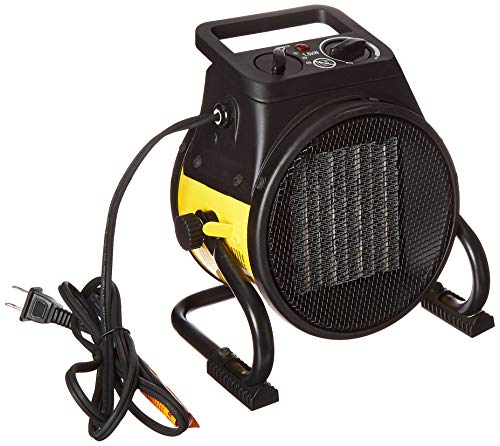
The Dura Heat EUH1465 is a portable forced-air heater delivering 1500W of PTC ceramic heat. The unit’s rugged steel construction and pivoting base make it appropriate for workshops and garages where durability and directional airflow matter.
Call 888-896-7031 for Free Local HVAC Quotes – Compare and Save Today!
Control options include heat and fan-only modes, giving flexibility to circulate air without heating. As a compact, movable option, it’s useful for spot heating in work areas or when you need to reposition heat quickly within a shed or garage.
TEMPWARE 7500-Watt Digital Fan-Forced Ceiling Mount Shop Heater
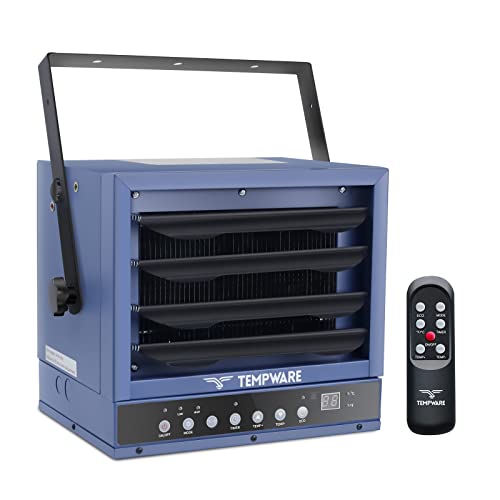
TEMPWARE’s ceiling-mounted heater is a high-capacity solution for large sheds and workshops. With up to 7,500 watts and adjustable louvers, it directs warm air across wide areas and lists coverage up to 1,250 square feet in suitable spaces.
Features include ECO mode, 12-hour timer, adjustable thermostat, and overheating protection. This hardwired 240V heater is appropriate for larger, well-insulated sheds or commercial outbuildings where permanent installation and high output are needed.
NewAir 5600W Portable Electric Garage Heater

The NewAir 5600W is a portable high-output heater intended for garages and large workshops. It provides significant wattage capable of warming spaces up to roughly 600 sq. ft. and features a heavy steel body for durability in work environments.
Call 888-896-7031 for Free Local HVAC Quotes – Compare and Save Today!
Built-in thermostat and auto-fan control allow the unit to maintain set temperatures, and the design includes a carrying handle and cord wrap for mobility. Best for larger sheds with adequate electrical supply and where forced-air distribution is acceptable.
Dr Infrared Heater DR-238 Carbon Infrared Outdoor Heater
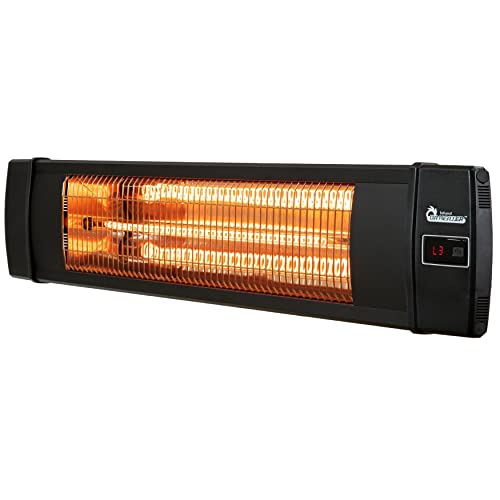
The DR-238 is an IR-style heater rated IP55 for indoor and outdoor use, offering three power settings (900W, 1200W, 1500W). Its plug-and-go design and remote control make it simple to operate in covered sheds, porches, or semi-open workspaces.
Infrared warmth is effective for spot heating people and objects rather than relying on air temperature alone. Its weather-resistant construction makes it an option for sheds with occasional exposure to dampness or outdoor-adjacent work areas.
Buying Guide: Choosing The Right Electric Shed Heater
Selecting an electric heater for a shed depends on factors like shed size, insulation, power availability, intended use, and safety considerations. Below are important purchase points and comparison perspectives to evaluate before buying.
1. Heater Type And How It Warms
- Forced-Air Heaters: Use a fan to circulate heated air. They warm the ambient air faster and help distribute heat across larger spaces. Ideal for workshops with occupants moving around. Examples: Dura Heat, NewAir, TEMPWARE.
- Infrared/Radiant Heaters: Heat people and objects directly via infrared waves without needing to warm the entire air volume. Efficient for targeted warmth and lower heat loss in drafty spaces. Examples: Heat Storm, Dr Infrared.
- Ceiling-Mounted vs Wall-Mounted vs Portable: Ceiling mounts free floor space and are good for larger sheds; wall-mounted units save floor space and provide consistent radiant heat; portable units offer flexibility and spot heating.
2. Power, Coverage, And Electrical Requirements
- Match heater wattage to shed size. Higher wattage or BTU ratings suit larger, insulated spaces. Portable 1500W units are common for small sheds; heavy-duty workshop heaters require 240V hardwiring or high-amp circuits.
- Check your shed’s electrical capacity. Ceiling shop heaters like TEMPWARE often require a 240V circuit and professional installation. Portable plug-in heaters typically run on standard 120V outlets.
- For larger square footage, consider multiple units or a central high-capacity ceiling heater to avoid overloading circuits.
3. Safety Features And Mounting Considerations
- Tip-Over And Overheat Protection: Essential for portable units used in cluttered workspaces. Wall or ceiling mounts reduce tip-over risk.
- IP Rating: If your shed is damp or partially exposed, choose a unit with moisture resistance (e.g., IP55) or rated for indoor/outdoor use.
- Clearances And Installation: Follow manufacturer clearance specs from walls, ceilings, and combustibles. Hardwired units need secure mounting and proper electrical work.
4. Controls, Timers, And Connectivity
- Thermostats: Built-in thermostats allow temperature regulation and improved energy efficiency. For consistent workshop temperatures, a precise thermostat matters.
- Timers & ECO Modes: Timers and ECO settings enable scheduled operation and energy savings, useful for preheating before starting work.
- Smart Controls: Wi‑Fi or app-enabled heaters (like Heat Storm and some Dreo models) provide remote control and scheduling, convenient for pre-warming a shed from inside the house.
5. Durability And Build For Workshop Environments
- Material And Protection: Steel-bodied units withstand bumps and shop conditions. Powder-coated exteriors resist scratches.
- Portability: Handles and cord storage are helpful if you move a heater between locations.
- Noise: Fan-forced heaters produce noise; consider this if you need a quieter workspace or recording area.
6. Heating Efficiency And Operating Cost
- Electric heaters convert nearly all input energy to heat, but running cost depends on wattage and run time. Use thermostats and timers to reduce wasted runtime.
- Infrared units can be more efficient for spot heating because they don’t need to heat all air in a drafty shed.
- Balance desired comfort level with electricity availability and long-term operating expenses.
7. Installation And Maintenance
- DIY vs Professional: Portable plug-in units are generally DIY-friendly. Hardwired ceiling heaters often require a licensed electrician for safe installation.
- Maintenance: Keep fan intakes clear of dust, check mounts and fasteners periodically, and test safety switches for tip-over and thermal cutoffs.
8. Comparison Perspectives
- Best For Small Enclosed Sheds: Wall-mounted infrared with thermostat and Wi‑Fi offers quick targeted heat without taking floor space.
- Best For Large Workshops: Hardwired ceiling fan-forced models provide broad distribution and higher BTU output for larger square footage.
- Best For Portability: Compact forced-air or portable high-watt units let you move heat to the active work area.
- Best For Moist Or Semi-Open Sheds: Weather-resistant infrared models rated for outdoor use handle occasional exposure better than standard indoor-only heaters.
Use these considerations to match your shed’s size, layout, insulation level, electrical setup, and typical use cases to the heater type that provides safe, efficient warmth for your workspace.
Tips for Getting the Best HVAC Prices
- Prioritize Quality Over Cost
The most critical factor in any HVAC project is the quality of the installation. Don’t compromise on contractor expertise just to save money. - Check for Rebates
Always research current rebates and incentives — they can significantly reduce your overall cost. - Compare Multiple Quotes
Request at least three estimates before making your choice. You can click here to get three free quotes from local professionals. These quotes include available rebates and tax credits and automatically exclude unqualified contractors. - Negotiate Smartly
Once you've chosen a contractor, use the proven strategies from our guide — How Homeowners Can Negotiate with HVAC Dealers — to get the best possible final price.