
Finding the right 240V electric shop heater means balancing power, safety, installation type, and controls. Below is a concise comparison table of five well-reviewed hardwired and plug-in models chosen for 240-volt shop and garage use, followed by focused product summaries and a detailed buying guide.
| Model | Power / Voltage | Mounting | Key Features |
|---|---|---|---|
| CTSC 10000W Electric Garage Heater | 10000W / 240V | Hardwired | Digital thermostat, remote, voltage display, ETL |
| TEMPWARE 7500-Watt Garage Heater | 7500W / 240V | Ceiling mount, hardwired | Adjustable louvers, ECO mode, timer, thermostat |
| VEVOR 10000-Watt Garage Heater | 10000W / 240V | Wall/Ceiling mount, hardwired | Digital control, wide coverage, ETL, overheat protection |
| Dura Heat 10000W Garage Heater | 10000W / 240V | Hardwired ceiling mount | High BTU, ECO system, remote, 50A design |
| Dr Infrared DR-988A Garage Shop Heater | 5600W / 208–240V | Plug-in (NEMA 6-30) | Plug/cord option, 6-30R plug, compact for smaller spaces |
Content Navigation
- CTSC 10000W Electric Garage Heater, 240v Hardwired
- TEMPWARE 7500-Watt Digital Ceiling Mount Shop Heater
- VEVOR 10000-Watt Digital Wall/Ceiling Mount Heater
- Dura Heat Hard-Wired 10,000W Garage Space Heater
- Dr Infrared DR-988A Garage Shop 208/240V Heater
- Buying Guide: How To Choose A 240V Electric Shop Heater
- 1. Heating Capacity And Coverage
- 2. Electrical Requirements And Installation
- 3. Mounting Options And Airflow Direction
- 4. Controls, Thermostats, And Automation
- 5. Safety Features And Certifications
- 6. Build Quality And Long-Term Reliability
- 7. Noise, Air Movement, And Comfort
- 8. Budget And Operating Costs
- Comparison Perspectives
CTSC 10000W Electric Garage Heater, 240v Hardwired

The CTSC 10000W is a heavy-duty 240V hardwired fan-forced heater aimed at larger workshops. Its noteworthy innovation is a voltage display screen to help troubleshoot common low-voltage issues during installation. The unit features a digital thermostat, remote control, timer, and an ECO function to modulate output.
Constructed from SPCC cold-rolled steel, it emphasizes a sturdy structure and safety protection, and includes overheating protection and ETL listing. The heater offers three heat settings (10000W, 7500W, and fan-only) to adapt to varying needs. The voltage display, multiple controls, and safety features make it suitable for professional or serious DIY spaces requiring clear diagnostic feedback.
TEMPWARE 7500-Watt Digital Ceiling Mount Shop Heater
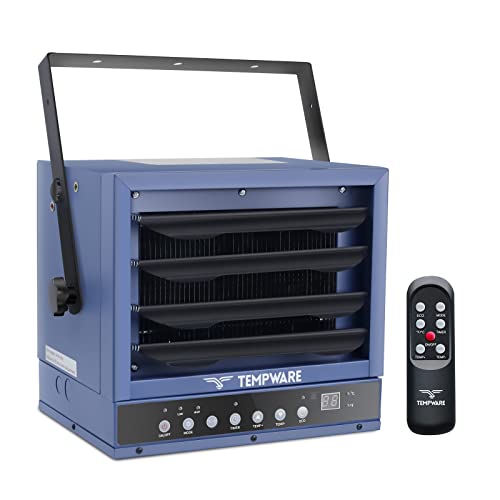
TEMPWARE’s 7500W model is a 240V ceiling-mount hardwired heater designed for large garages and workshops. It includes adjustable louvers and variable mounting angle for directional air distribution. The vendor cites coverage up to 1,250 sq ft with a maximum BTU figure to match the wattage.
Call 888-896-7031 for Free Local HVAC Quotes – Compare and Save Today!
Built-in features include a precise sensor with ECO mode and a 12-hour timer to reduce runtime and save energy. The heater incorporates a thermostat and overheat protection, enabling automatic shutdown if temperatures exceed safe limits. These features position it as a reliable mid-power central heating option for spaces where airflow direction and energy control matter.
VEVOR 10000-Watt Digital Wall/Ceiling Mount Heater

VEVOR’s 10000W unit is another high-output 240V option meant for thorough coverage. The manufacturer emphasizes wide coverage and high air circulation to evenly warm large spaces. Two adjustable power levels let users tailor output to conditions, improving flexibility.
It includes precise temperature control with a small temperature differential (about 2°F) for stability, along with overheat automatic shutoff. The SPCC cold-rolled steel casing enhances structural durability and supports long-term operation. As with similar models, it is ETL certified and aims to combine high power with temperature stability for consistent shop comfort.
Dura Heat Hard-Wired 10,000W Garage Space Heater

Dura Heat’s 10,000W hardwired unit is positioned as a high-capacity solution with a reported BTU output covering up to 1,500 sq ft. The design requires professional installation due to its 50A hardwired configuration, and includes an ECO system, remote control, and adjustable thermostat (45–99°F).
Call 888-896-7031 for Free Local HVAC Quotes – Compare and Save Today!
The product emphasizes wide-area performance, LED display for settings, and a timer function. The manufacturer warns that correct installation is necessary for the power indicator and safe operation. This model is tailored for users who need extensive coverage and are prepared to meet the electrical service requirements for a high-amp hardwired heater.
Dr Infrared DR-988A Garage Shop 208/240V Heater

The Dr Infrared DR-988A supports 208–240V operation and offers 4800/5600W power variants with a plug-in configuration using a NEMA 6-30P plug (receptacle 6-30R required). Its plug-in nature distinguishes it from the larger hardwired heaters, simplifying installation for many users.
This unit is compact relative to the 10,000W models and is suited to smaller garages or shops where the NEMA 6-30R outlet can be installed. The cord and plug option provides adaptability without full hardwiring, but it still requires the appropriate dedicated circuit. It’s a practical choice when high but not extreme output is needed with simpler electrical work.
Buying Guide: How To Choose A 240V Electric Shop Heater
Selecting the right 240V electric heater for a shop or garage depends on five primary factors: heating capacity, mounting and space, electrical service, controls & safety, and build quality. Evaluate each factor against your workshop’s needs to find the best fit.
1. Heating Capacity And Coverage
Match heater wattage/BTU ratings to room size. Rough guidance:
- 3,000–5,000W: Small garages or workshops up to ~400–600 sq ft
- 5,000–7,500W: Medium areas or partially insulated spaces around 600–1,200 sq ft
- 10,000W+: Large, poorly insulated shops approaching 1,200–1,500+ sq ft
Consider insulation, ceiling height, and how quickly you need the space warmed. High-power units heat larger volumes faster but have greater electrical demands.
2. Electrical Requirements And Installation
Verify your electrical service before buying. Many 240V heaters require dedicated circuits, specific amperage (30A, 50A), or specific receptacles (NEMA 6-30). Hardwired models often demand professional installation. Plug-in units with a NEMA 6-30P plug can be easier if your panel supports a 240V 30A circuit.
Check the manufacturer’s required voltage range; models like Dr Infrared list both 208V and 240V compatibility, which matters for buildings with 208V three-phase service.
3. Mounting Options And Airflow Direction
Decide between ceiling-mounted, wall-mounted, or floor options. Ceiling mounts free floor space and provide broad distribution; wall mounts can direct heat where needed. Adjustable louvers and tilting mounts help target airflow for workbenches or specific zones.
4. Controls, Thermostats, And Automation
Look for precise thermostats or digital controllers to maintain a target temperature. Features to consider:
- Remote control and timers for convenient scheduling
- ECO mode or smart sensors to reduce runtime
- Voltage display or diagnostics for installation troubleshooting
Precise control reduces cycling and saves energy while maintaining comfort for people and temperature-sensitive tools.
5. Safety Features And Certifications
Prioritize models with overheat protection, thermal cut-outs, and ETL or UL listings. Metal housings made from SPCC or heavy-gauge steel resist deformation and protect internal components. Automatic shutoff if the unit overheats or if the fan stalls is critical for enclosed spaces with flammable materials.
6. Build Quality And Long-Term Reliability
Steel construction, durable heating elements, and reputable manufacturing practices contribute to longevity. Consider units that provide clear diagnostic information (voltage display or indicator lights) and support for replacement parts or service.
7. Noise, Air Movement, And Comfort
Fan-forced units provide quicker distribution but generate noise. If noise is a concern, compare decibel ratings or look for lower-RPM fans and efficient airflow designs. Louvers and directional vents help place heat where people work most.
8. Budget And Operating Costs
Higher wattage increases electricity usage. Use thermostat setpoints, ECO modes, and timers to minimize runtime. Compare warranty terms and expected service life to understand total cost of ownership beyond initial purchase.
Comparison Perspectives
- For Maximum Coverage: 10,000W hardwired heaters (CTSC, VEVOR, Dura Heat) provide the greatest capacity for large shops but require adequate electrical service and professional installation.
- For Energy Control: Models with ECO modes and precise thermostats (TEMPWARE, Dura Heat, VEVOR) help reduce runtime and manage costs.
- For Easier Installation: Plug-in options like Dr Infrared (NEMA 6-30) reduce installation complexity if a compatible outlet is available.
- For Diagnostic Support: CTSC’s voltage display can help identify common installation and voltage issues quickly.
When comparing models, cross-check claimed coverage with your space’s insulation, ceiling height, and intended use. Always consult a licensed electrician to confirm circuit capacity, outlet types, and whether hardwiring is required for your selected model.
Tips for Getting the Best HVAC Prices
- Prioritize Quality Over Cost
The most critical factor in any HVAC project is the quality of the installation. Don’t compromise on contractor expertise just to save money. - Check for Rebates
Always research current rebates and incentives — they can significantly reduce your overall cost. - Compare Multiple Quotes
Request at least three estimates before making your choice. You can click here to get three free quotes from local professionals. These quotes include available rebates and tax credits and automatically exclude unqualified contractors. - Negotiate Smartly
Once you've chosen a contractor, use the proven strategies from our guide — How Homeowners Can Negotiate with HVAC Dealers — to get the best possible final price.