
The following guide compares top fan-forced electric heaters for home, garage, and commercial spaces. Each selection highlights construction, power, mounting type, and safety features to help match a heater to your space and use case.
| Model | Type | Power / Notable Feature |
|---|---|---|
| Dura Heat EUH1465 | Portable Forced-Air | 1500W PTC Ceramic, Rugged Steel |
| Comfort Zone CZ35E | Portable Room Heater | 600/1500W, Adjustable Thermostat, Safety Sensors |
| Comfort Zone CZ220BK | Ceiling-Mount Garage Heater | Hard-Wired 5000W, Louvers & Adjustable Angle |
| TEMPWARE 7500-Watt | Digital Fan-Forced Ceiling Heater | 7500W, ECO Mode, Timer, Thermostat |
| DR. INFRARED HEATER DR-PS11024 | Portable Salamander / Floor Mount | 10,000W, Heavy-Duty Steel, Safety Guards |
Content Navigation
- Dura Heat EUH1465 Electric Forced Air Heater
- Comfort Zone CZ35E Portable Fan Forced Space Heater
- Comfort Zone CZ220BK Ceiling Mount Garage Heater
- TEMPWARE 7500-Watt Digital Fan-Forced Ceiling Shop Heater
- DR. INFRARED HEATER DR-PS11024 Salamander Portable Fan Forced Heater
- Buying Guide: How To Choose A Fan Forced Electric Heater
- 1. Match Heater Output To Space
- 2. Mounting Type: Portable Vs. Hard-Wired Vs. Ceiling
- 3. Electrical Requirements And Installation
- 4. Control Options And Energy Management
- 5. Safety Features To Look For
- 6. Construction And Durability
- 7. Noise And Air Movement
- 8. Maintenance And Serviceability
- 9. Cost-Effectiveness And Efficiency Considerations
- 10. Comparing Use Cases
Dura Heat EUH1465 Electric Forced Air Heater
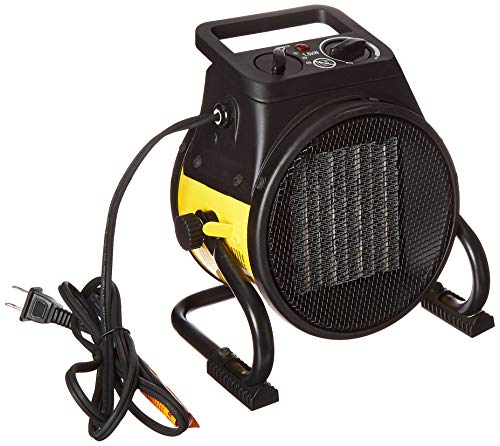
The Dura Heat EUH1465 is a compact 1500W PTC ceramic forced-air heater built for quick warmth in small to medium spaces. Its rugged steel construction and pivoting base are intended for garages, workshops, and jobsite use. The unit offers a heat setting and fan-only mode, allowing it to act as a circulator during mild conditions.
Relevant Features: Powerful Forced Air Heater delivering 1500W PTC ceramic heat; Rugged Steel Construction for durability; Versatile Heating Options with heat and fan-only selections. The pivoting base helps direct airflow where needed without permanent installation. This design emphasizes mobility and targeted spot heating.
Comfort Zone CZ35E Portable Fan Forced Space Heater
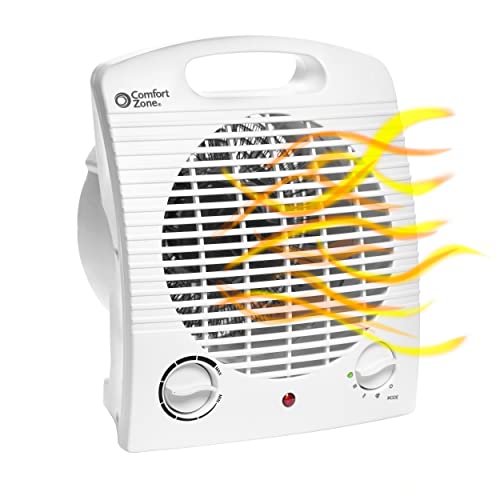
The Comfort Zone CZ35E is a small portable fan-forced electric heater targeted at bedrooms, offices, and small rooms. It supports 600W and 1500W power options, an adjustable thermostat, and multiple heat settings for incremental comfort control. Built-in safety features include an overheat sensor and tip-over switch.
Call 888-896-7031 for Free Local HVAC Quotes – Compare and Save Today!
Relevant Features: Energy-Efficient Heating (claimed improved energy save tech), Customizable Comfort with adjustable thermostat and three heat modes, and safety protections including overheat and tip-over cutoff. The unit’s stay-cool housing makes it suitable for indoor living spaces where user contact might occur.
Comfort Zone CZ220BK Ceiling Mount Garage Heater

The Comfort Zone CZ220BK is a hard-wired, ceiling-mounted fan-forced heater rated at 5000 watts for 240V systems. Its design preserves floor space and provides wide heat distribution via louvers and an adjustable mounting angle. The heavy-gauge steel construction suits garages, warehouses, and workspaces.
Relevant Features: Efficient Ceiling Mount to save floor area, Robust Steel Construction for durability in fluctuating temperatures, and Precise Heat Distribution with louvers and angle adjustment. Built-in thermal cut-out and overheat protection reduce risk in harsh environments. Installation is hard-wired and intended for permanent overhead placement.
TEMPWARE 7500-Watt Digital Fan-Forced Ceiling Shop Heater
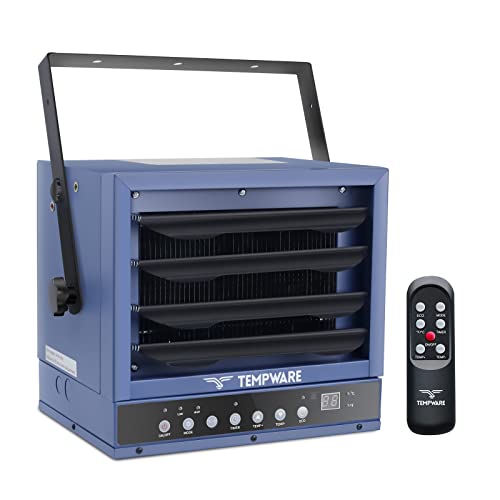
The TEMPWARE ceiling heater is a high-capacity 7500W fan-forced unit for larger workshops and garages. It includes a digital thermostat, ECO mode, and a 1–12 hour timer for automated control. Adjustable louvers and mounting angle allow directional heating across larger footprints.
Call 888-896-7031 for Free Local HVAC Quotes – Compare and Save Today!
Relevant Features: Adjustable Angle & 2 Heat Settings with a high max BTU output suitable for substantial areas; ECO Mode & Timer Function for automated energy management; and Thermostat & Overheat Protection to maintain target temperature and safety. The unit emphasizes controllability for maintained comfort and energy savings in larger spaces.
DR. INFRARED HEATER DR-PS11024 Salamander Portable Fan Forced Heater

The DR. INFRARED DR-PS11024 is a heavy-duty 10,000W portable fan-forced salamander heater designed for construction and large workshop applications. It requires a 240V single-phase supply and a 55-amp circuit breaker. The unit provides instant, odor-free heat from a robust steel frame with safety guards on intake and output ends.
Relevant Features: Clean, Instant, Odor-Free Heat; Heavy-Duty Steel Frame with protective guards; and Floor Mount portability for jobsite repositioning. The power and design are intended for large, open environments requiring high output and durable construction.
Buying Guide: How To Choose A Fan Forced Electric Heater
Selecting the right fan-forced electric heater requires evaluating space size, power needs, mounting preferences, safety features, and control options. The sections below outline the key purchase considerations and direct comparisons to guide selection.
1. Match Heater Output To Space
Calculate required capacity by considering the area, ceiling height, insulation, and typical ambient temperature. Portable room heaters like 1500W units suit small rooms and spot heating. Ceiling or hard-wired units in the 5000–7500W range fit larger garages and workshops. High-output models (7,500–10,000W) are intended for open or poorly insulated spaces.
2. Mounting Type: Portable Vs. Hard-Wired Vs. Ceiling
- Portable Fan-Forced: Offers flexibility and targeted spot heating; ideal for temporary or multi-room use.
- Ceiling-Mount / Hard-Wired: Preserves floor space and distributes heat across a larger footprint; better for permanent heating solutions in garages and shops.
- Floor-Mounted Salamander: High-output units for jobsites and large open areas; often require dedicated electrical circuits.
3. Electrical Requirements And Installation
Confirm voltage and circuit capacity. Portable 120V units plug into standard outlets. Ceiling and high-power units typically require 240V hard-wiring and specific breaker sizes. Check the product’s stated requirements (e.g., required amp breaker) and plan professional electrical installation when necessary.
4. Control Options And Energy Management
Controls range from basic two- or three-position switches to digital thermostats, remote controls, timers, and ECO modes. For consistent temperature and energy savings in frequently used spaces, thermostat control, timers, and ECO modes provide better automated management.
5. Safety Features To Look For
- Overheat Protection: Automatically cuts power if internal temperatures exceed safe limits.
- Tip-Over Switch: Essential for small portable units used in living areas.
- Enclosed Elements And Guards: Important for high-output or portable jobsite heaters to prevent contact and debris ingress.
- ETL/UL Listing: Confirms safety testing and compliance to electrical standards.
6. Construction And Durability
Steel housings and heavy-gauge construction are preferred for workshops, garages, and jobsite heaters. For indoor living spaces, plastic housings with stay-cool surfaces reduce contact risk. Consider environmental exposure—dusty, oily, or workshop areas benefit from enclosed motors and protective grilles.
7. Noise And Air Movement
Fan-forced heaters circulate warm air more quickly but produce fan noise. In quiet spaces like bedrooms or offices, review product noise levels or choose lower-speed settings. For workshops, higher fan output supports rapid temperature equalization.
8. Maintenance And Serviceability
Check for accessible air intakes and easily cleanable grilles. Units with replaceable motors or elements facilitate long-term maintenance. For hard-wired or high-capacity heaters, verify availability of technical support and replacement parts.
9. Cost-Effectiveness And Efficiency Considerations
Electric resistance heaters convert electrical energy to heat at near 100% efficiency at the point of use, but operational costs depend on local electricity rates and how the heater is used. For intermittent or spot heating, portable or zone heaters can be more cost-effective than heating an entire building. ECO modes and programmable timers help reduce runtime and energy consumption.
10. Comparing Use Cases
- Bedroom/Office: Choose compact 1500W units with tip-over protection and adjustable thermostats for comfort and safety.
- Garage/Workshop: Prefer ceiling-mounted or high-wattage units with louvers and robust steel construction for even distribution and durability.
- Construction/Jobsite: High-output salamander or floor-mounted heaters with steel frames and protective guards are designed to tolerate rough handling and deliver high BTUs.
Use the checklist above to prioritize features that match your intended installation, electrical capacity, and usage pattern. Confirm installation requirements and safety certifications before purchasing, and when in doubt consult a licensed electrician for hard-wired or high-amperage installations.
Tips for Getting the Best HVAC Prices
- Prioritize Quality Over Cost
The most critical factor in any HVAC project is the quality of the installation. Don’t compromise on contractor expertise just to save money. - Check for Rebates
Always research current rebates and incentives — they can significantly reduce your overall cost. - Compare Multiple Quotes
Request at least three estimates before making your choice. You can click here to get three free quotes from local professionals. These quotes include available rebates and tax credits and automatically exclude unqualified contractors. - Negotiate Smartly
Once you've chosen a contractor, use the proven strategies from our guide — How Homeowners Can Negotiate with HVAC Dealers — to get the best possible final price.